How to Write Emails That Get Clicks and Sales starts with one simple idea, your email should make the reader want to take the next step. That means your sales email needs a clear goal, a strong reason to care, and one action that feels easy to take.
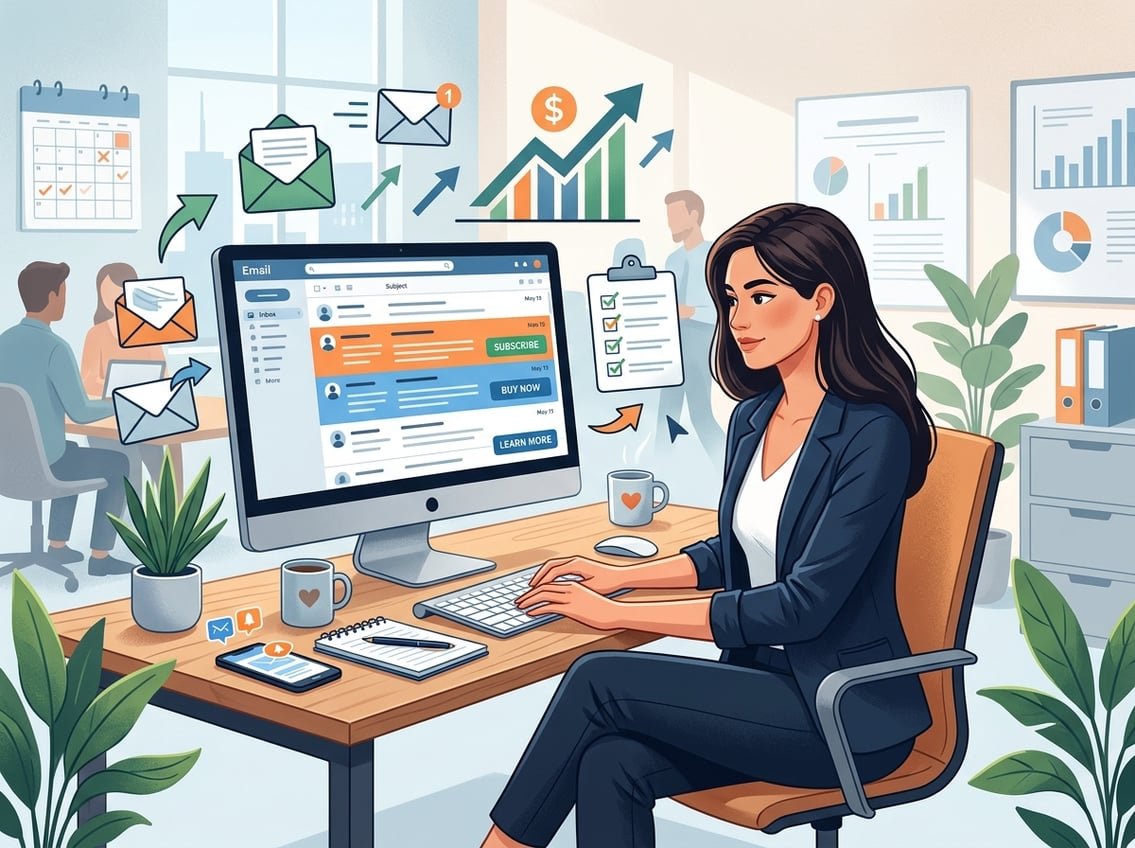
If you want more clicks and sales, write each email around one reader need, one clear offer, and one action.
This matters whether you send a sales email to a warm list, a cold outreach message to a prospect, or an email sequence for content marketing. The same rule applies across the board, make the message useful, easy to scan, and specific enough to earn attention.
Key Takeaways
- Focus on one goal per email.
- Make the subject line feel relevant fast.
- Keep the body simple, clear, and easy to act on.
Start With the Goal, Audience, and Offer

Before you write sales emails, get clear on what the email must do. A strong value proposition comes from knowing who you are writing to, what they already know, and what action you want them to take.
Choose One Conversion Goal Per Email
Every effective sales email should push one main action. That action might be a click, a reply, a booked call, or a sale, not all four at once.
If you try to do too much, the reader hesitates. In lead generation, simple sales communication usually wins because it removes friction.
Match the Message to Cold, Warm, and Existing Readers
A cold email needs more context than an email sent to your list. Cold outreach, email outreach, and prospecting emails usually need a short intro, a reason for reaching out, and a clear next step.
Warm readers from your newsletter or social selling flow already know you a bit, so you can move faster. Existing subscribers may respond better to a direct email sequence with a softer, more helpful angle.
Build a Clear Value Proposition Before You Write
Your value proposition should answer one question, why should this person care now? If you cannot say that in one sentence, the email will likely feel vague.
I like to write that sentence before the draft. It keeps the offer focused and helps you avoid long, boring sales communication that tries to say everything at once.
Write Subject Lines and Openers That Earn Attention
Your subject lines do two jobs, they get the email opened and set up the promise inside. The first lines then decide whether the reader keeps going.
Use Sales Email Subject Lines That Create Relevance
Strong sales email subject lines are short, clear, and tied to the reader’s world. They work better when they mention a known problem, a useful result, or a specific context.
A good sales email subject line often sounds like a useful note, not an ad. For examples and patterns, Salesforce’s sales subject line ideas show how sales subject lines can stay direct without sounding forced.
Personalize the First Lines Without Sounding Forced
A personalized email does not need to mention ten details. One real observation is usually enough, such as a recent post, product launch, new offer, or site change.
AI-powered personalization and personalization at scale can help you move faster, especially when you send many outreach emails. Keep the line natural, though, because people spot fake flattery quickly.
Connect Curiosity, Specificity, and Trust
The best openers give a reason to keep reading. You want enough curiosity to pull the reader forward, enough specificity to feel real, and enough trust to feel safe.
When writing sales emails, think about open rate, reply rate, and response rate together. A clever opener that feels misleading may raise opens for a moment, yet it can hurt replies and long-term trust.
Structure the Body for Clicks, Replies, and Sales
A strong email body makes the next step easy. You want the reader to understand the benefit fast, see proof, and know exactly what to do next.
Lead With Reader-Centered Value
Your email pitch should speak to the reader’s goal, not your own agenda. That means showing how the click, reply, or purchase helps them, not listing everything you sell.
A simple way to write a sales email is to start with the problem, add one useful idea, and end with one clear ask. That approach works well for effective sales emails because it respects the reader’s time.
Use Proof, Clarity, and One Strong Call to Action
Add one piece of proof when possible, such as a result, a client outcome, a case study email, or a short testimonial email. Proof does not need to be long, it only needs to reduce doubt.
Then use one call to action, not several. A single click-through rate goal usually beats a cluttered message with three different links and two competing asks.
Format for Mobile Readability and Scannability
Most readers skim on mobile, so use short paragraphs and a single-column layout. Keep the email signature clean and make sure the CTA stands out without looking pushy.
For a useful overview of email best practices tied to engagement, HubSpot explains how opens, clicks, and spam complaints affect deliverability. That connection matters because good sales engagement starts with readable, relevant emails.
Use Proven Email Types and Templates by Intent
Different goals need different sales email templates. A good template gives you structure, while the message still feels personal and specific.
Cold Outreach and Prospecting Templates
A cold email template should be short, direct, and relevant. Your prospecting email templates need a clear reason for reaching out, a small amount of proof, and one low-friction next step.
Use a simple flow:
- Personal greeting
- One-line reason for the message
- Short value statement
- One CTA
Sales email examples from Instructional Solutions show how a brief intro, a value point, and a clear ask can make cold outreach easier to write. That structure also works for referral request email outreach when the warm lead comes from a shared contact.
Follow-Up and Breakup Messages
Follow-up emails often get more replies than the first message because the reader needs a reminder. A follow-up email template should stay useful, not needy.
A sales follow-up email can add one new detail, one fresh benefit, or one simple question. If you are sending a breakup email, keep it polite and leave the door open.
Proposal, Referral, and Social Proof Emails
A proposal email should summarize the offer, the next action, and the value in plain language. A sales proposal email works best when it removes confusion, not when it repeats every detail from the call.
A referral request email is strongest when it is specific. A social proof email, including a case study email or testimonial email, can help move a hesitant reader toward a closing the deal email when trust is the main barrier.
Improve Deliverability and Performance With Testing
Good copy only works if your email reaches the inbox and gets acted on. That means you need basic technical setup, steady testing, and a habit of measuring the right numbers.
Avoid Spam Filters and Technical Red Flags
Set up SPF and DKIM properly before sending at scale. Weak domain setup, too many broken links, or aggressive wording can raise spam risk and hurt your bounce rate.
Deliverability also depends on how people interact with your mail. As HubSpot notes, positive engagement helps your sender reputation over time.
Track the Metrics That Matter Most
The main numbers to watch are open rate, ctr, click-through rate, reply rate, and response rate. Each one tells you something different about how your message is performing.
If opens are low, your subject line may need work. If opens are fine and clicks are weak, the body or CTA may be unclear.
Use A/B Testing and AI Tools to Improve Results
A/B testing helps you compare subject lines, CTAs, and short body changes. Test one variable at a time so you know what caused the result.
An ai sales tool can speed up drafts, subject line ideas, and personalization, which is useful when you write sales emails often. iProfitLab often recommends keeping the system simple, so you can test and improve without turning email into a full-time maze.
Frequently Asked Questions
What elements make a sales email engaging enough to earn clicks?
A strong sales email has a clear subject line, a relevant opening, one useful idea, and one CTA. It feels personal, easy to read, and worth the reader’s time.
How do I structure a cold email so it drives replies and conversions?
Start with a short intro, a specific reason for reaching out, one clear benefit, and one simple ask. Keep the message brief and focused on the reader’s needs, not your full offer.
What’s the best sales email template for reaching out to new clients?
The best cold email template is usually the simplest one. Use a personalized opener, a one-sentence value proposition, one proof point, and a single next step.
Can you share proven sales email examples that consistently perform well?
Yes, the most reliable sales email examples are the ones that stay short and specific. Intro emails, referral emails, and follow-up emails tend to work well when they sound natural and give the reader a clear reason to respond.
How can I write a clear, compelling sales pitch email without sounding pushy?
Focus on the reader’s problem and keep your tone calm and direct. Ask for a small next step, such as a reply or quick click, instead of trying to force a sale too early.
What are the 30/30/50 rule and the 5 C’s, and how do they improve email performance?
The 30/30/50 rule is often used as a rough way to think about balance across subject line, body, and CTA, while the 5 C’s usually point to clarity, conciseness, consistency, credibility, and customer focus. These ideas help you write emails that are easier to open, read, and act on.