A common email marketing mistake is treating Broadcast Emails vs Automated Emails: What Matters More as a choice you have to make once and never revisit. In practice, you need both, and the better question is which one should carry more weight at your current stage.
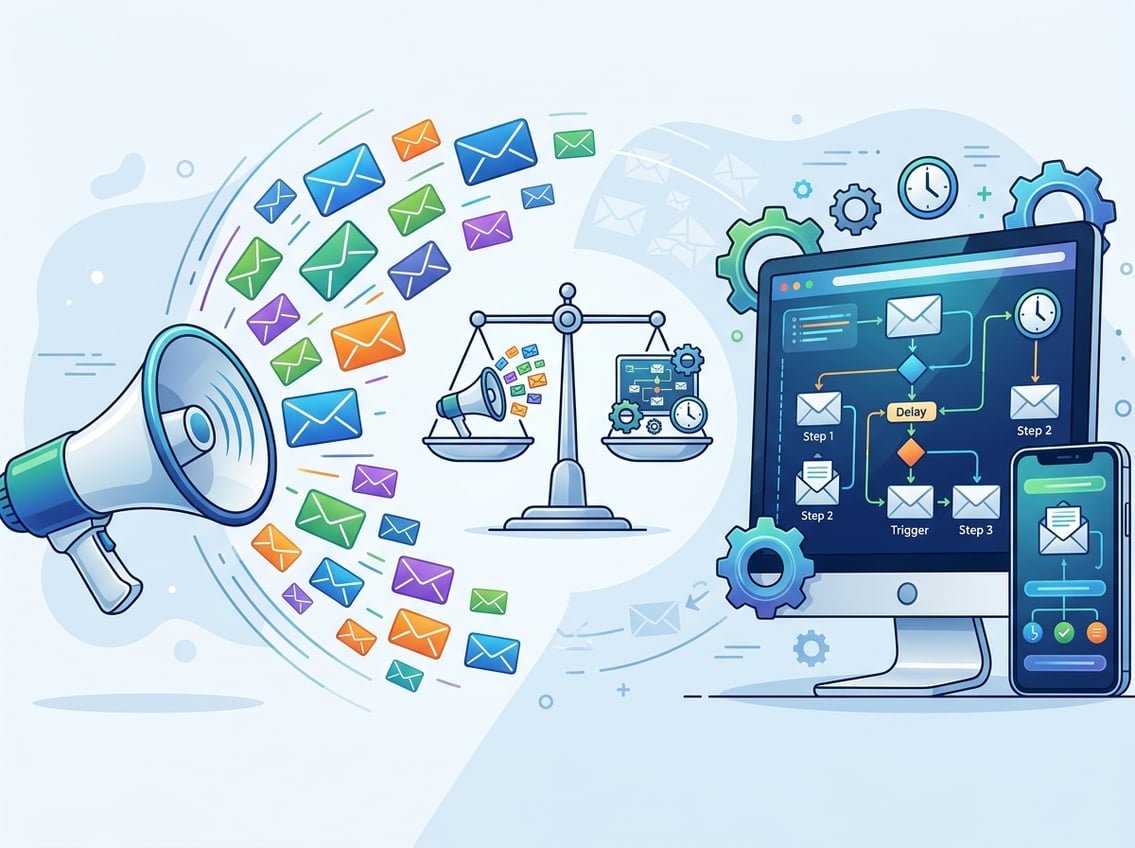
If you are building a blog, newsletter, or affiliate system, the answer changes as your list grows. A simple broadcast can spark attention fast, while a well-built automated email sequence can keep working long after you write it.
If you want long-term growth, automated emails usually create more compounding value, while broadcast emails still matter for trust, traffic spikes, and timely promotions.
Key Takeaways
- Use broadcasts for timely messages.
- Use automation for repeatable growth.
- The best email program uses both.
What Each Email Type Actually Does
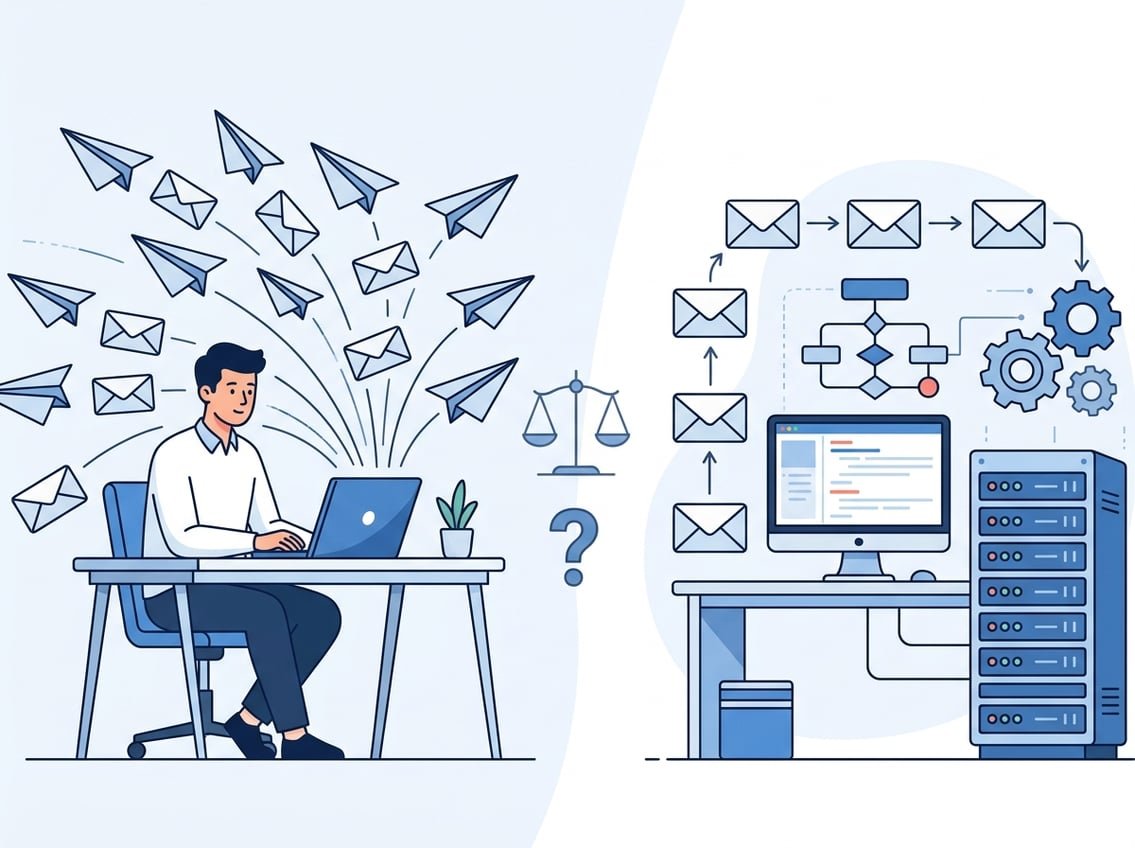
Broadcast emails and automated emails solve different problems. A newsletter or one-off message helps you speak to your list right now, while automation helps you respond to actions without sending each message by hand.
That difference changes how you plan your entire email marketing strategy. It also affects how you use broadcasts, email flows, and autoresponders as your business grows.
What a Broadcast Email Is
A broadcast email is a single message you send to a list or segment at one chosen time. It is also called an email broadcast, one-off email, email blast, bulk email, mass email, or email broadcasting.
You use it when the message is tied to a date, event, or timely update. That includes newsletters, sales announcements, content updates, and special promotions.
What an Automated Email Is
An automated email sends after a trigger, such as a signup, link click, purchase, or form fill. It is part of email automation, email automations, autoresponders, drip campaigns, email flows, triggered emails, automated sequences, or email sequences.
A workflow-style setup can send one message or many messages based on behavior. That makes it useful for welcome series, nurture paths, onboarding, and post-purchase follow-up.
The Core Difference in Timing, Trigger, and Purpose
The simplest rule is this, if you choose the time and audience, it is a broadcast. If a user action starts the send, it is automation.
Broadcasts are built for speed and relevance. Automated emails are built for consistency, scale, and repeatable results.
Which One Matters More Depends on the Goal
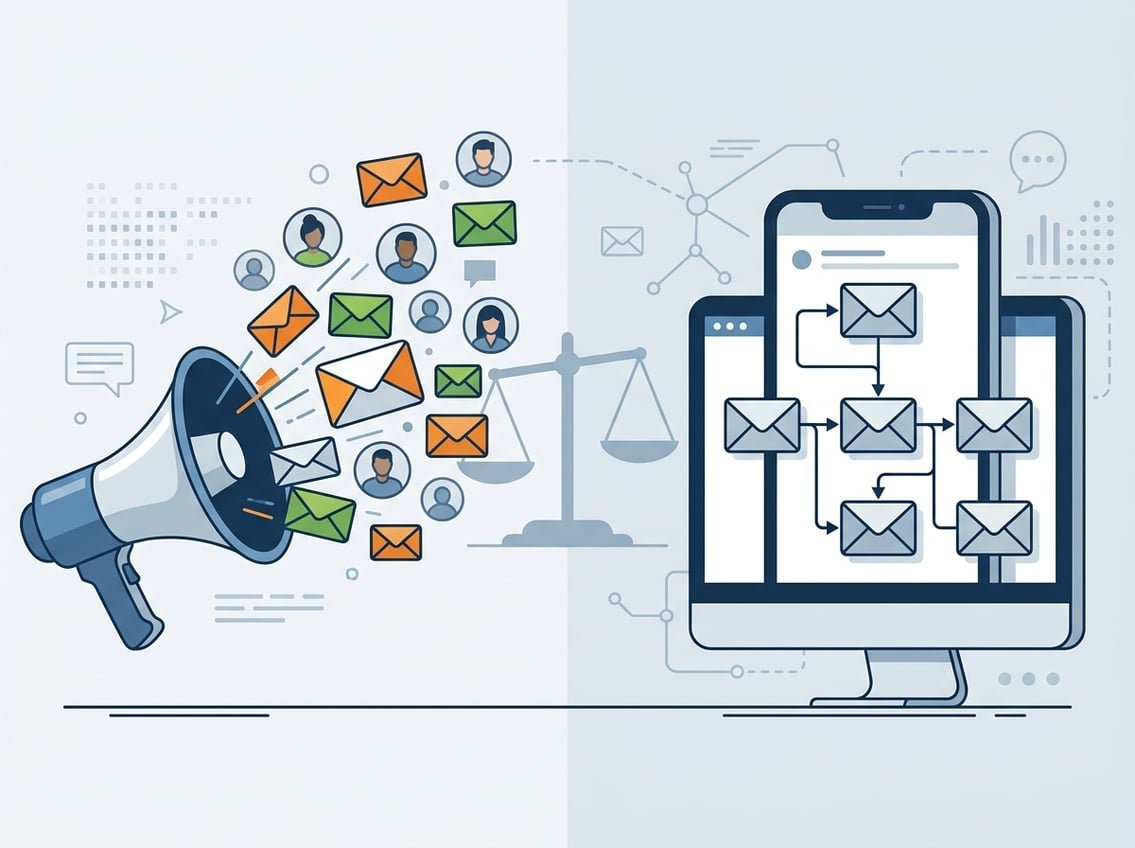
The right choice changes with your goal, your list size, and how close someone is to buying. For short-term attention, broadcasts usually win. For long-term value, automation tends to do more of the heavy lifting.
That is why strong email programs use both newsletters and campaigns as well as welcome sequence and nurture campaigns. The balance matters more than trying to pick a single winner.
When Broadcasts Make More Sense
Broadcasts work well for timely newsletters, product launches, content drops, and special sales campaigns. They are also useful when you need to react to what is happening in your niche.
If you are speaking to a cold audience or testing a new angle, broadcasts help you learn fast. They are also the simplest way to stay visible without building a complex marketing automation system first.
When Automation Creates More Long-Term Value
Automation creates more long-term value when you want every subscriber to receive the same core experience. A welcome email, onboarding sequence, or nurture campaign can keep working for months or years.
According to Emercury’s guide on broadcast email, broadcast messages are great for announcements and promotions, while automated emails are triggered by individual actions. That makes automation a better fit for evergreen offers, affiliate education, and recurring follow-up.
Why Most Businesses Need Both Instead of Choosing One
Most businesses do best with a mix. Broadcasts keep your list active, while automation turns new subscribers into engaged readers and buyers.
That mix is especially useful if you build income through blogging, SaaS affiliate links, or digital tools. You can use a welcome sequence to explain your best content, then use broadcasts to send fresh traffic and timely recommendations.
How Broadcasts and Automation Fit Into the Customer Journey
The customer journey is where the real difference shows up. Some emails are meant to start the relationship, some are meant to deepen trust, and some are meant to bring people back.
Broadcast email, newsletter sends, and personalization all play different roles at each stage. Once you map them to the journey, your email plan becomes much easier to manage.
Top-of-Funnel Audience Building and First Contact
At the first contact stage, broadcasts often help you build awareness fast. A newsletter can introduce your point of view, share a useful post, or promote a lead magnet.
Automation matters here too, since a welcome sequence can greet new subscribers right away. That first reply often gets more attention than a later send because the subscriber is most interested at signup.
Lead Nurturing, Trust Building, and Conversion Paths
Nurture campaigns are where automation really earns its place. A short email sequence can explain who you help, what problems you solve, and which tools or offers make sense next.
Trigger-based personalization can make this feel more relevant without extra manual work. When you add behavior-based automation, the right person gets the right next step based on what they clicked, joined, or bought.
Retention, Repeat Engagement, and Recurring Revenue
Broadcasts keep your audience engaged over time. A steady newsletter gives people a reason to return, which supports trust and repeat traffic.
Automation supports retention through follow-ups, resource delivery, and post-purchase emails. If you are building recurring affiliate income, that steady follow-through can matter more than a one-time send.
Performance Factors That Change the Outcome
Good email results rarely come from format alone. The message, list quality, and timing often matter more than whether the email is a broadcast or part of advanced automations.
Small changes in segmentation and personalization can shift click-through rates in a real way. That is why testing matters once your list starts growing.
Segmentation and Personalization
Segmentation lets you send different messages to different groups. You can separate by interest, lead source, topic, or past clicks, then use personalization variables and dynamic content to match the message.
That works for both broadcast emails and automation, not just one of them. A focused email sent to the right segment usually performs better than a broad message sent to everyone.
Content Relevance, Frequency, and Timing
Relevance is often the biggest factor. A well-timed broadcast can outperform a weak automation, and a strong automated sequence can outperform a random broadcast.
Watch your send frequency too. Too many email broadcasts can cause fatigue, while too many email automations can feel repetitive if they are not updated.
Testing and Metrics That Matter
A/B testing helps you compare subject lines, calls to action, and offers. Track open rates, click-through rates, unsubscribes, and conversion results so you can see what each type of send does.
If you want a simple benchmarking view, HubSpot recommends tracking opens, clicks, bounces, and unsubscribes. Those numbers help you decide whether your broadcasts or your automations need work.
A Practical Setup for Creators, Bloggers, and Affiliate Marketers
For your kind of business, the best setup is simple first, then more advanced later. You do not need a huge stack of email marketing software to start building real results.
Focus on a newsletter, a welcome sequence, and one or two core email automations before you chase complex setups. That keeps your system clear and easier to maintain.
The Minimum Viable System for Beginners
Start with a basic autoresponder that sends a welcome email after signup. Add a short automated sequence that introduces your best content, your main topic, and one helpful next step.
Then send a weekly or biweekly broadcast email to keep your list warm. If you want beginner-friendly tools, platforms like Beehiiv for newsletters, Mailchimp, Brevo, Omnisend, or Emercury can cover the basics well depending on your goals.
A Simple Mix of Weekly Broadcasts and Core Automations
A strong starter setup might look like this:
- 1 weekly broadcast with a useful tip, post, or offer
- 1 welcome sequence for new subscribers
- 1 nurture email sequence that explains your content and tools
- 1 follow-up automation for clicks or signups
That mix gives you both freshness and consistency. It also supports recurring affiliate marketing because new subscribers keep entering a system that works on its own.
Tool Categories to Consider as You Grow
As your list grows, you may want email marketing tools with better tagging, behavior-based automation, and reporting. You may also want templates that make it faster to send consistent broadcasts.
If you are using iProfitLab’s simple systems approach, the goal is not more tools for the sake of it. The goal is a setup that helps you publish, follow up, and monetize without extra clutter.
Common Mistakes and the Smartest Next Step
Many people make email harder than it needs to be. They either rely only on broadcast email, or they build automation before they have a clear offer and traffic source.
A good email marketing strategy starts with the smallest system that can actually move people through the journey. From there, you add depth only where it helps.
Relying Only on Broadcasts
If you only send broadcasts, every new subscriber starts from zero. That means you repeat the same introduction, the same offer, and the same key links by hand.
A simple automated sequence solves that problem. It gives every new reader a consistent path, even if they sign up while you are busy or away.
Overbuilding Automation Too Early
Some people build long drip campaigns before they have enough traffic to justify them. That can waste time and make your list feel stiff or over-scripted.
Start with basic autoresponders and a few high-value emails. You can add marketing automation, drip, and behavior-based branches later, once you know what subscribers actually do.
How to Decide What to Build First
If you have no welcome sequence, build that first. If your list is active but your updates are irregular, improve your broadcast habit next.
A simple rule works well, first create the emails that every subscriber should see, then create the broadcasts that keep your audience engaged. That order keeps your system useful without turning it into a project you never finish.
Frequently Asked Questions
When should I use a one-time email blast instead of an automated sequence?
Use a one-time email blast when the message is tied to a date, event, sale, or announcement that should go out now. Use an automated sequence when every new subscriber should get the same follow-up in the same order.
How do broadcast and automated emails affect engagement and conversions differently?
Broadcasts often get quick engagement because they are timely and tied to current interest. Automated emails usually convert better over time because they reach people at the right moment in the customer journey.
What types of messages perform best as broadcasts versus in automation?
Broadcasts work well for newsletters, launches, promotions, content updates, and special sales campaigns. Automation works best for welcome series, nurture campaigns, onboarding sequences, and behavior-based follow-up.
How do I decide what percentage of my email program should be automated versus broadcast?
A simple starting point is to keep your core onboarding automated and send regular broadcasts for ongoing communication. Many creators do well with a system where automation handles the first experience and broadcasts handle the ongoing relationship.
How can rules like the 80/20 or 60/40 framework guide my email marketing strategy?
Use them as rough planning tools, not strict rules. For example, you might let automation handle 60 to 80 percent of the subscriber journey, while broadcasts handle the rest through fresh content, offers, and updates.
What metrics should I track to compare the success of campaigns versus automations?
Track opens, clicks, unsubscribes, and conversions for both. Then compare them by goal, since a broadcast may drive traffic well while an automated sequence may generate more steady signups or sales.