You can build How to Build a Simple Affiliate Funnel That Converts without complicated pages, flashy tactics, or a big budget. The simplest version is traffic, opt-in, trust-building, offer, and follow-up. When you set it up around a real problem and a useful solution, you give people a clearer path from first click to purchase.
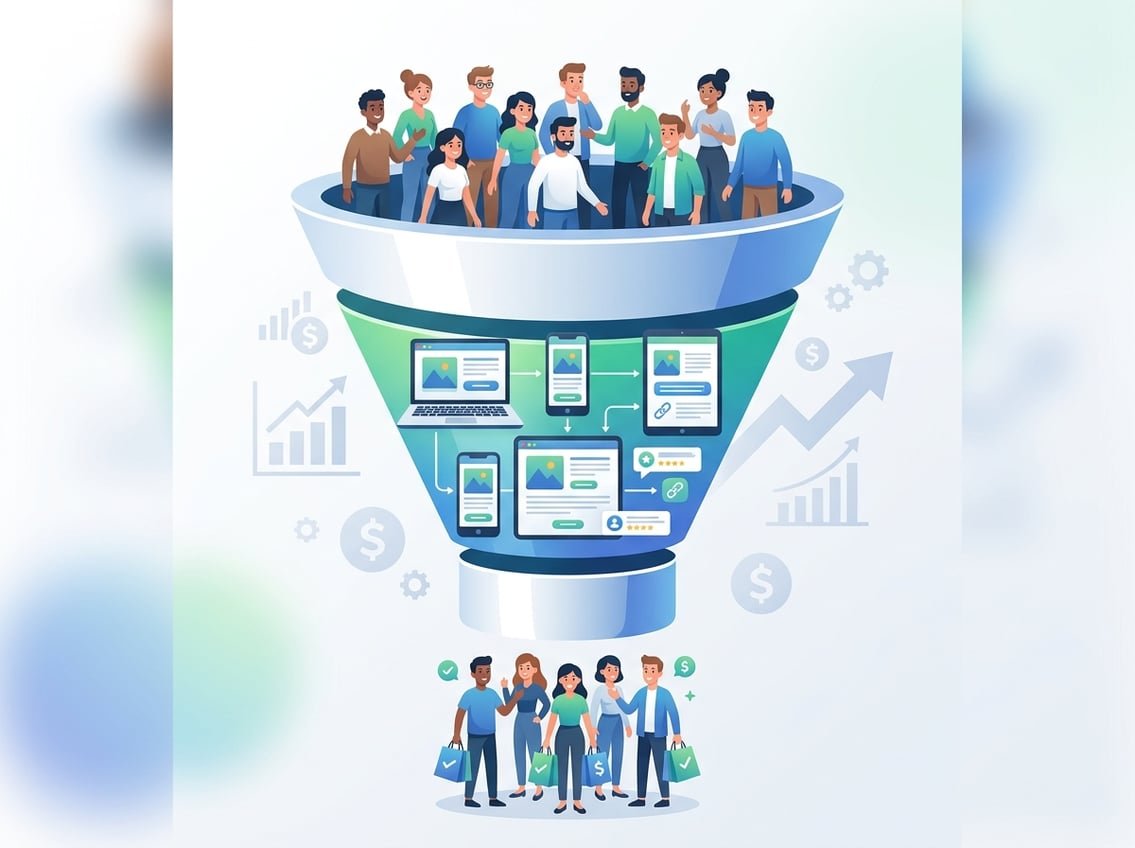
A good affiliate marketing funnel works because it respects the buyer’s journey. Instead of sending strangers straight to an affiliate link and hoping they buy, you guide them through small steps that build trust. That is what turns random traffic into passive income, affiliate commissions, and a repeatable system.
Key Takeaways
- Start with one clear offer and one clear audience.
- Use a simple opt-in and email sequence to build trust.
- Focus on recurring products when you want steadier income.
What a Simple Funnel Needs to Convert
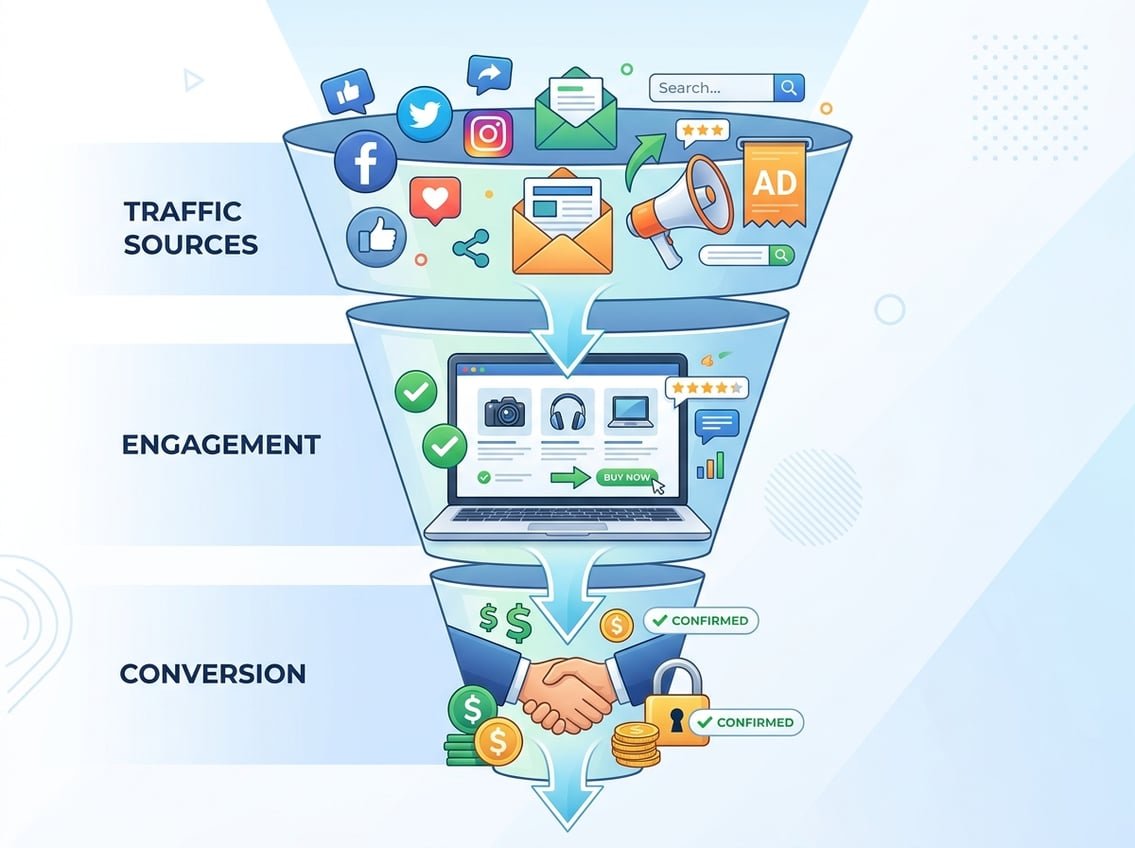
A marketing funnel does not need many moving parts to work. What matters is that each step matches the buyer’s journey and moves the person closer to a decision without confusion.
A funnel that converts usually does three things well. It captures attention, builds trust, and gives a clear next step at the conversion stage.
How an Affiliate Funnel Differs From Direct Linking
Direct linking sends traffic straight to an affiliate product. That can work for warm traffic, yet it leaves little room to explain value, answer objections, or capture leads.
An affiliate funnel gives you more control. You build an affiliate marketing sales path that lets you educate first, then recommend the offer with more context.
The Core Funnel Structure for Beginners
Keep your funnel structure simple:
- Traffic source
- Lead capture page
- Thank-you or bridge page
- Email follow-up sequence
- Affiliate offer page
That setup gives you a real funnel instead of just a link. It also helps you build an affiliate marketing funnel that can improve over time, which is why tools like ClickFunnels or systeme.io are often mentioned in beginner discussions, along with landing page builders such as Leadpages.
Matching Each Step to the Buyer’s Journey
At the start, your reader is just aware of a problem. Next, they compare possible fixes, then they look for proof, and then they buy.
Your funnel should mirror that path. If you skip from awareness to sale too fast, your conversion rate usually suffers.
Choose the Right Offer and Audience First
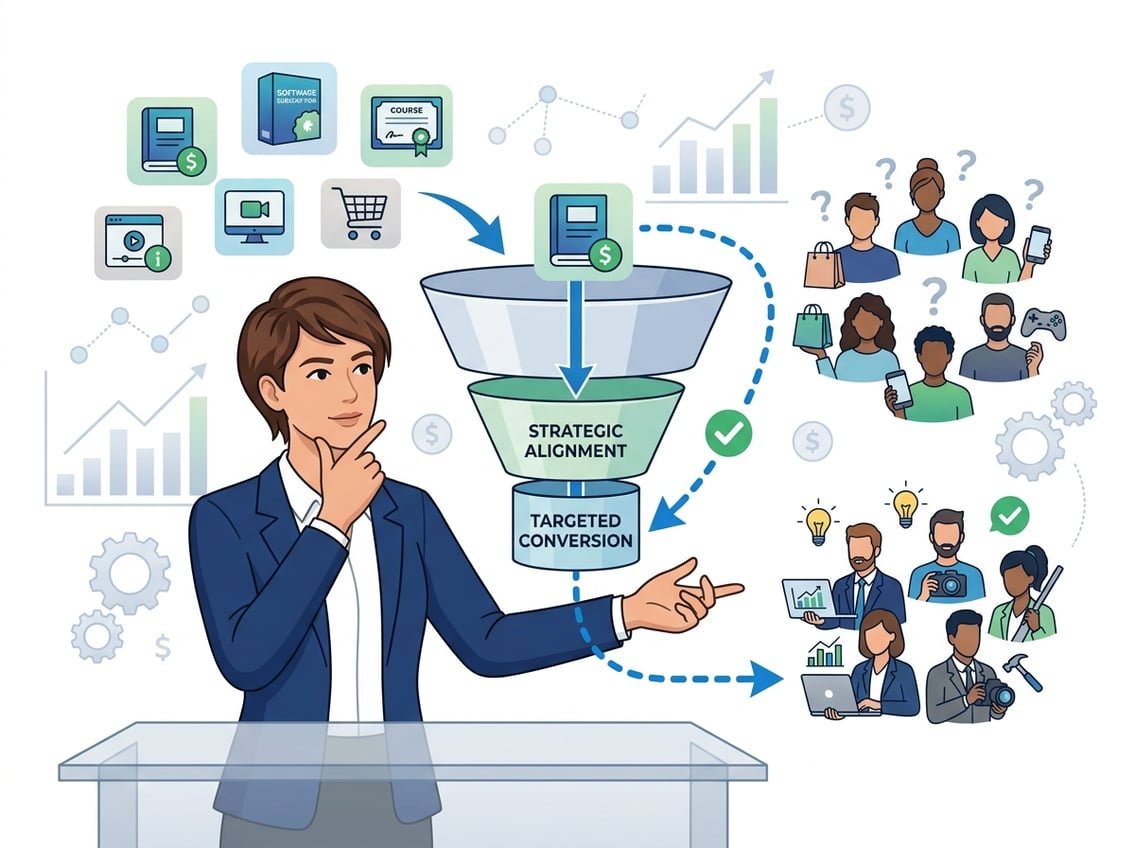
Your funnel only works when the audience and offer fit each other. If you try to promote everything to everyone, your message gets weak and your results stay inconsistent.
Start with a specific target audience, then choose an affiliate offer that solves a real problem for that group. This is where recurring affiliate income becomes much easier to build.
How to Define Your Target Audience
Write down who you want to help, what they want, and what problem they are trying to solve. For example, you might target beginner bloggers who want traffic, creators who want email growth, or SaaS users who want automation.
The best target audience is narrow enough to understand, yet large enough to reach with content marketing, SEO, or email.
What Makes an Affiliate Offer Easier to Sell
An affiliate offer is easier to sell when the value proposition is clear. The product should solve a visible pain point, have a simple setup, and show a direct result.
Affiliate products with demos, free trials, or strong onboarding usually convert better because they reduce fear. A clean affiliate program page, a clear commission structure, and strong support also help.
Why Recurring SaaS and Digital Products Often Work Best
Recurring SaaS and other digital products can be a strong fit for beginners because they can create recurring affiliate income from one referral. That matters if you want a system that compounds instead of one-time wins.
As noted in Deadline Funnel’s guide to affiliate marketing funnels, strong funnels also help you recruit and activate the right partners when you are on the program side. For your own funnel, the lesson is the same, clear positioning and a useful offer make everything easier to sell.
Build the Lead Capture Path
Your lead capture path is where you turn traffic into leads. If you do this well, you stop losing visitors and start building an asset you own.
Keep the path short. A strong lead magnet, a focused landing page, and a simple thank-you page are enough to start.
How to Create a Lead Magnet People Actually Want
Create a lead magnet that solves one small, urgent problem. Good lead magnets include checklists, short guides, templates, or swipe files.
The best lead magnets are specific. Instead of “affiliate marketing tips,” try “a 7-day affiliate funnel checklist” or “the 5-email welcome sequence template.”
What to Include on the Opt-in Page
Your opt-in page should explain one promise, one result, and one action. Use a clear headline, a few benefit bullets, and a simple opt-in form.
Keep the page clean. If you want to build a landing page fast, tools like Systeme.io or other landing page builders make it easier to launch without extra tech work.
Using a Bridge or Thank You Page to Pre-Sell the Offer
After opt-in, use a thank-you page or bridge page to set the next step. This page can explain what the subscriber should expect, then introduce the problem your affiliate product solves.
A strong bridge page does not feel pushy. It simply warms up the reader before the sales page, which improves lead capture quality and can improve affiliate marketing sales.
Write the Email Sequence That Builds Trust
Email marketing is where a simple funnel starts to earn trust on autopilot. Your email sequence should educate, answer objections, and point readers toward the right next step.
Short, useful emails work better than long sales pitches. If you keep the tone calm and helpful, people are more likely to click, read, and buy.
The Welcome Email and First Impressions
Your welcome email should arrive right away. It should deliver the lead magnet, set expectations, and tell the reader what kind of help they will get next.
This is also where you make a first impression. A clear subject line and a simple call to action are enough.
A Simple Follow-Up Sequence for New Subscribers
A basic follow-up email sequence can look like this:
- Email 1, deliver the freebie and set expectations
- Email 2, share a useful tip or quick win
- Email 3, explain a common mistake
- Email 4, introduce the affiliate offer
- Email 5, answer objections with a product review or comparison
- Email 6, remind them why the solution matters
For automation, tools like ConvertKit, MailerLite, or ActiveCampaign can handle email automation and automated follow-ups with less manual work.
How to Promote Affiliate Products Without Sounding Pushy
Lead with value first, then add the affiliate link only when it helps the reader. Mention what the product does, who it is for, and why it may be worth trying.
A simple CTA works better than pressure. Phrases like “see how it works,” “compare the options,” or “check the details” usually feel more natural than aggressive sales language.
Drive Traffic With Evergreen and Paid Channels
Your funnel needs a steady traffic source, or it cannot convert consistently. The best traffic plan for beginners is usually one evergreen channel plus one or two supporting channels.
Evergreen traffic takes time to build, yet it tends to keep working after the content is published. That makes it a strong fit for an affiliate marketing business that should grow over time.
Why Blogging and SEO Are the Best Long-Term Traffic Source
Blogging and SEO are often the best long-term traffic source because people search for solutions when they are ready to act. A helpful article can keep bringing in targeted visitors for months or years.
If you want recurring traffic, focus on search intent. Write content around real questions, comparisons, and “best tool” searches that match your offer.
Using Pinterest, Video, and Content Marketing to Reach More Buyers
Pinterest can support blog traffic, especially for beginner-friendly topics. Video content can also help you explain a tool or method faster than text alone.
Content marketing works best when it is connected. A blog post, a short video, and an email sequence can all point to the same opt-in page.
When Paid Ads Make Sense for a Simple Funnel
Paid ads make sense when you already know your funnel converts. If your page, email sequence, and offer are untested, paid advertising can get expensive fast.
Start small with paid ads only after you have proof from organic traffic. Recent paid affiliate marketing guidance shows that channels like Facebook Ads and Google Ads can work, yet they need tracking and careful budget control.
Improve Conversion Rate Without Making the Funnel Complicated
Improving conversion rate is usually about removing friction. You do not need more pages, more buttons, or more urgency tricks.
Watch each step closely, then make small changes that help people move forward. That is the core of conversion optimization and CRO in a simple funnel.
Key Metrics to Watch at Each Funnel Stage
Track opt-in rate, email open rate, click-through rate, and sales conversion rate. If one number is weak, that stage is probably where your funnel is leaking.
Do not fix everything at once. Change one page, one subject line, or one CTA at a time so you know what actually helped.
Easy CRO Tweaks for Pages, Emails, and CTAs
Make your CTA clear and specific. Test stronger headlines, shorter forms, better button text, and cleaner page layouts.
Exclusive bonuses and exclusive discounts can help when they are real and relevant. Urgency and scarcity should stay honest, and countdown timers should only be used when there is a true deadline.
Common Affiliate Funnel Mistakes to Avoid
The most common affiliate funnel mistakes are easy to spot. You may be sending traffic to a weak offer, skipping email follow-up, using too many pages, or promoting before building trust.
A funnel builder can help with speed, yet the software is not the main fix. Your message, timing, and audience match matter much more than fancy design.
Frequently Asked Questions
What are the essential stages of a basic affiliate conversion funnel?
You need traffic, a lead capture page, a trust-building follow-up sequence, and an offer page. The goal is to move the reader from curiosity to action without rushing the process.
If you want recurring income, the email list is the part you should protect most. That is where you can keep selling useful affiliate products over time.
How do you choose the right affiliate offer for a high-converting funnel?
Choose an offer that matches the problem your audience already cares about. The product should feel useful, simple to explain, and relevant to the traffic source you plan to use.
Recurring SaaS products, blogging tools, and email platforms often fit this model well because they solve ongoing problems and can create recurring affiliate commissions.
What’s the simplest way to drive targeted traffic into an affiliate funnel without a big budget?
Start with blogging and SEO, then add Pinterest or short-form video if you can stay consistent. These channels help you reach people who are already looking for answers.
If you publish helpful content around one topic cluster, your traffic becomes more focused and easier to convert.
Which funnel pages do you actually need (opt-in, bridge, sales, thank-you) and what should each include?
At minimum, you need an opt-in page, a thank-you or bridge page, and a sales page. The opt-in page should make one clear promise, the bridge page should warm up the offer, and the sales page should explain the product and next step.
A thank-you page can also reinforce trust and set expectations. That small page often helps more than people think.
How can you improve opt-in and click-through rates with better messaging and calls to action?
Use simple language that focuses on one result. Your CTA should match the reader’s intent, such as “get the checklist,” “see the demo,” or “compare the tools.”
When your message sounds useful instead of salesy, people are more likely to keep moving through the funnel. That is true whether you are using email automation or a one-page bridge.
What metrics should you track to know whether an affiliate funnel is converting, and where it’s leaking?
Track opt-in rate, open rate, click-through rate, and sales conversion rate. Those four numbers show you where people are dropping off.
If your opt-in is weak, fix the lead magnet or landing page. If clicks are weak, fix the email sequence. If clicks are fine but sales are low, the offer or sales page may be the issue.
A simple funnel wins because it stays focused. If you want a practical starting point, you can also use the Free AI Income Starter Kit from iProfitLab to map your content, email, and affiliate steps with less guesswork.