Blogging vs YouTube for Affiliate Marketing Beginners is one of the first real choices you make when you want to build affiliate income online. Both can work, and both can grow into real traffic sources, but they reward different strengths and different timelines.

If you want the simplest answer, YouTube can bring attention faster, while blogging usually gives you stronger control, better SEO value, and more stable compounding over time.
The better choice depends on whether you want speed, control, or a system that can keep working with less daily pressure. For most affiliate marketers, the smartest path is not choosing forever, it is choosing a starting point that matches your skills, then building the second platform later.
Key Takeaways
- YouTube usually gives faster visibility.
- Blogs usually give steadier long-term traffic.
- A hybrid system creates more reliable affiliate income.
The Short Answer: Which Platform Makes More Sense First?
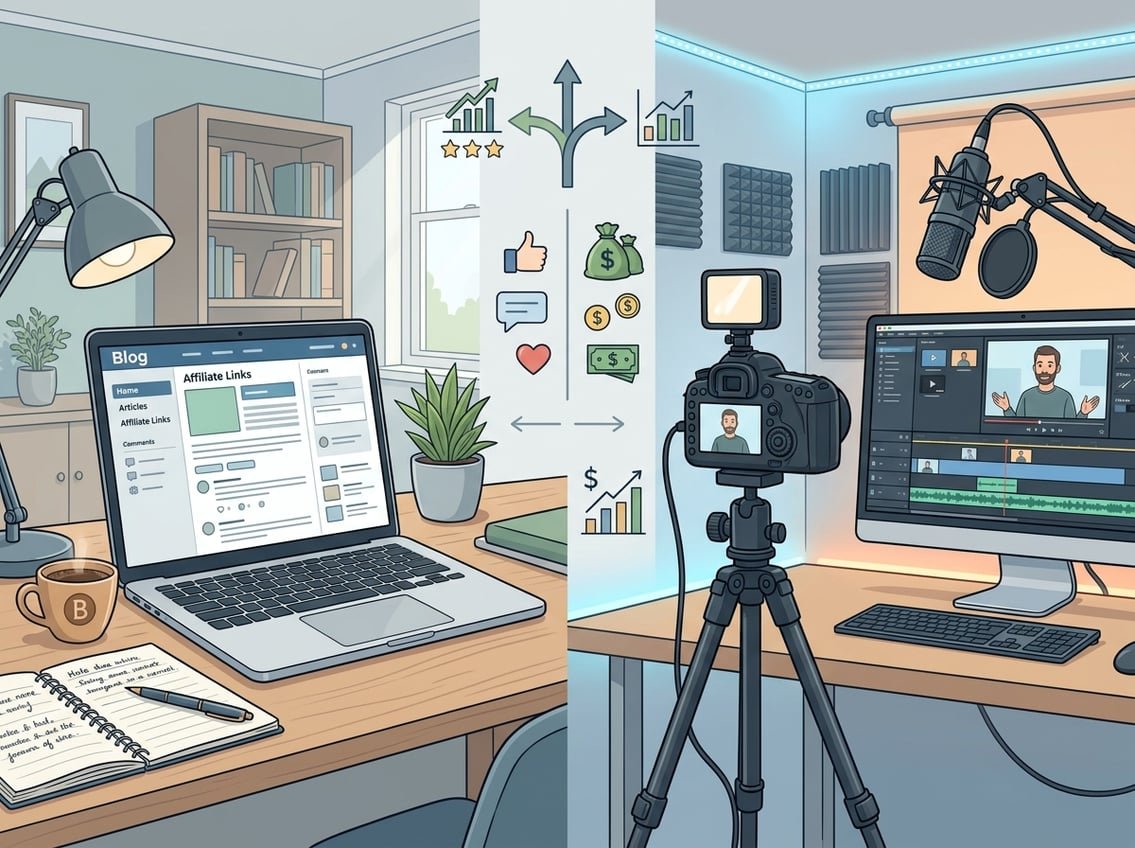
If you are comparing blogging vs YouTube, the short answer is this, YouTube often feels faster, and blogging often feels more durable. If you want to start a blog or start a YouTube channel, your choice should come down to your comfort with writing, speaking, and showing up consistently.
For many beginners, the real question is not is blogging more profitable than YouTube, it is which one helps you build momentum without burning out. Your best choice depends on your affiliate business goals, your traffic sources, and how quickly you need engagement.
When YouTube Is Usually the Better Starting Point
YouTube is often the better first move if you are comfortable on camera, can explain things clearly, and want faster feedback. A single video can get discovered quickly through search or recommendations, which can lead to early affiliate clicks.
This works well for product reviews, tutorials, demos, and comparisons. If you like talking through a topic, youtube for affiliate marketing may feel more natural than writing long posts.
When Blogging Is Usually the Better Starting Point
Blogging usually makes more sense if you prefer writing, want more control, and want to build around evergreen seo traffic. A blog can rank in Google and keep sending visitors for months or years, which is useful for affiliate marketers who want more stable results.
It also gives you more room for deep comparison posts, detailed product reviews, and SEO-focused content. As noted in a practical breakdown of the topic, blogging tends to build income deeper over time, while YouTube often feels faster at the start, according to this affiliate income comparison.
Why Most Beginners Should Eventually Use Both
A single platform can work, yet a hybrid system gives you more control. A blog can capture search traffic, while YouTube can build trust and expand reach.
That mix also helps if one platform changes its rules, ranking patterns, or recommendation behavior. If you build both into the same affiliate business, you reduce risk and create more traffic sources.
How Each Platform Actually Generates Affiliate Revenue
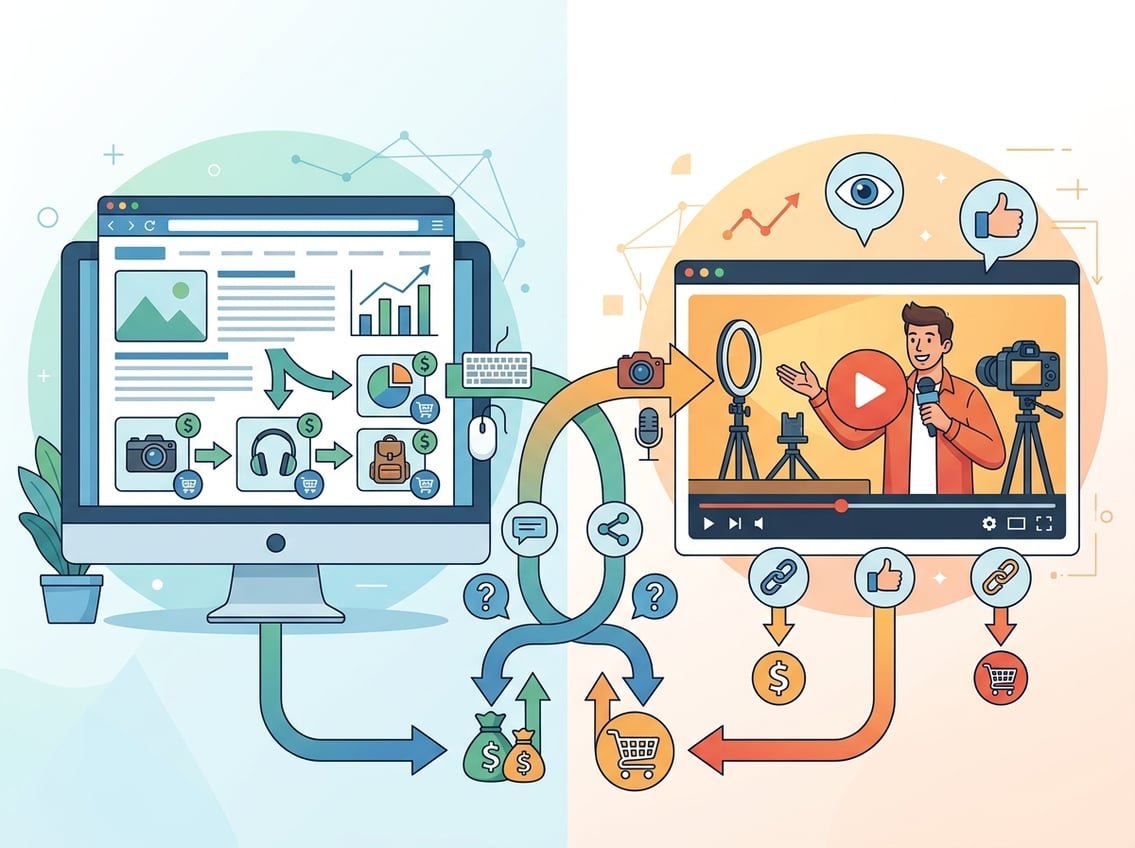
Both platforms make money through attention, trust, and a clear next step. The difference is how that trust gets built and how your audience reaches your affiliate link or affiliate links.
Bloggers often win with search intent, while YouTubers often win with personality and demonstration. The best content quality is the kind that matches what the viewer or reader wants right now.
How Blogs Turn Search Intent Into Affiliate Commissions
Blogs work well when someone types a problem into Google and lands on your article. A strong post can place your affiliate programs in front of readers who are already looking for a solution.
That is why tutorials, product reviews, and comparison posts often convert well on blogs. When the article answers a specific question, the reader is more likely to click and trust your recommendation, which can lead to better affiliate conversion rates.
How YouTube Builds Trust and Drives Affiliate Clicks
Affiliate marketing on YouTube works through voice, face, screen shares, demos, and direct explanation. Viewers often feel connected faster because they can hear how you think and see how a product works.
That connection can improve click behavior, especially when you show the product in action. Clear thumbnails, honest content, and practical examples can lead to more affiliate commissions when the video solves a real need.
Best Content Formats for Conversions on Both Platforms
The highest-converting formats are usually the ones tied to intent. On both platforms, that often means:
- Product reviews
- Comparisons
- How-to tutorials
- “Best of” lists
- Setup guides
- Problem-solving walkthroughs
If you focus on content that helps people choose, set up, or use something, your affiliate links are more likely to get clicks. That is the core of content creation that supports real affiliate revenue.
Traffic, Speed, and Content Lifespan
Your traffic pattern matters as much as your topic. Blogs and YouTube both bring visitors, yet they do it in very different ways, and those differences shape how stable your affiliate income feels.
SEO tends to favor content that stays useful. YouTube tends to reward content that gets strong early response, then keeps momentum through discovery and engagement.
Google Search and Evergreen SEO Traffic for Blogs
Blogs can earn evergreen seo traffic when your posts rank for the right keywords. Strong keyword research matters here because it helps you target topics that people search for all year.
This is where blogging often shines. A post can keep bringing traffic long after you publish it, which gives you a better chance at passive affiliate sales without constant reposting or paid ads like google ads.
YouTube Algorithm Momentum and Discovery Potential
The youtube algorithm can give a video a fast push if the topic, title, thumbnail, and watch time perform well. That makes YouTube appealing when you want momentum and quick discovery.
YouTube SEO also matters, since search-driven videos can keep bringing traffic after the initial launch. Still, many videos depend more on the platform’s recommendation system than blogs do, so the traffic can move around faster.
Why Fast Traffic and Stable Traffic Are Not the Same
Fast traffic can feel exciting, yet it does not always last. Stable traffic is slower to build, but it often gives you better planning power and steadier affiliate commissions.
A blog usually behaves more like a long-term asset. YouTube often behaves more like a high-energy launch system, which can be powerful when you keep publishing regularly.
Costs, Skills, and Setup for Beginners
Your upfront setup affects how easy it feels to keep going. Some beginners do best with writing and website setup, while others do better with recording and editing.
The right choice is the one that lets you publish without overthinking every step. If the setup feels too heavy, your content pace will slow down.
What It Takes to Set Up a Blog on WordPress
If you want to know how to start a blog and set up your blog, WordPress is the most common path. You usually need a domain and hosting, a theme, and a few basic plugins.
Your blogging costs can stay fairly low, especially if you start simple with affordable hosting like Bluehost or WPX. Tools like Ahrefs can help with SEO research, though you do not need every tool on day one.
What It Takes to Launch a YouTube Channel
A YouTube channel has a lower cash barrier, but it often needs more on-camera comfort and editing time. Your main tools may include a phone or camera, a microphone, video editing software, and thumbnail design tools like Canva or Adobe Premiere Pro.
The hard part is not always the gear. It is being willing to speak clearly, stay consistent, and improve each video without expecting instant results.
Tools That Can Reduce Friction Without Overcomplicating Things
Beginners often get stuck by trying to use too many tools. A simple setup is usually better than a crowded one.
If you want a practical starting point, iProfitLab’s Free AI Income Starter Kit is designed around that idea, with beginner-friendly templates and systems. A few focused tools are enough to launch, test, and learn without adding unnecessary complexity.
Monetization Beyond Affiliate Links
Affiliate income is strong, but it should not be your only plan. The best creators build more than one monetization method so they are not stuck with a single platform or a single offer.
That is where owned assets matter. A personal brand, an email list, and digital products can make your business more durable.
Display Ads, Google AdSense, and Sponsorship Potential
Blogs can earn from display ads and Google AdSense once traffic grows. YouTube can also monetize through ad placements when your channel qualifies.
Sponsorships can work on both platforms too. On YouTube, sponsors often like the video format because it shows the product and the creator at the same time.
Why Email Lists Often Outperform Platform-Only Audiences
If you want more control, you should build an email list early. Platform traffic can change, but your email list stays yours.
That matters a lot for affiliate income because you can send useful follow-ups, promote relevant offers, and keep the relationship alive beyond one visit. A trusted email list often becomes the most valuable part of a long-term affiliate business.
Adding Digital Products and Recurring Income Streams Over Time
You can also sell ebooks, templates, mini-courses, or checklists once you know what your audience wants. These products can support passive income and add layers beyond one-time affiliate payouts.
Recurring commissions are especially useful if you recommend software or subscriptions. That is why many creators move toward systems that combine affiliate income, email, and digital products instead of relying on traffic alone.
A Smarter Beginner Path: Start Simple, Then Build a Hybrid System
You do not need to master everything on day one. A better path is to choose one main platform, publish consistently, and then reuse each idea across more than one channel.
That keeps your workload manageable while still giving you room to grow. It also helps you test affiliate niches before you invest too much time in the wrong one.
Choose One Core Platform Based on Your Strengths
If you like writing, start a blog. If you like speaking, start a YouTube channel. If you are still unsure, pick the format you can produce weekly without dragging your feet.
This is one place where iProfitLab’s systems-first philosophy fits well, because the goal is not random content, it is repeatable output. Pick the platform that lets you stay consistent long enough to see results.
Repurpose One Topic Into a Blog Post, Video, and Email
A single topic can power three assets. You can write a blog post, turn the same idea into a YouTube video, and send a short email summary to your list.
That approach gives you more reach without needing three separate ideas every week. It also helps you test which format converts better for your audience and your affiliate business.
A Practical 90-Day Plan for Building Long-Term Momentum
For the first 30 days, pick one niche, one platform, and five to ten content ideas. During days 31 to 60, publish consistently and track which topics bring clicks, views, or email signups.
During days 61 to 90, add the second platform and start collecting emails. If you want a simple roadmap with trusted tools and beginner steps, the Recommended Tools page and the Free AI Income Starter Kit can help you stay focused on the right systems.
Frequently Asked Questions
Should I start with a blog or a YouTube channel if I’m new to affiliate marketing?
If you are new, choose the format you can publish consistently without feeling stuck. A blog is often easier if you like writing and want SEO traffic, while YouTube is often easier if you are comfortable speaking and want faster visibility.
Which platform tends to make affiliate commissions faster for beginners?
YouTube often brings faster early traffic because videos can gain views quickly through search and recommendations. Blogging usually takes longer to rank, yet it can produce steadier commissions once your posts start showing up in Google.
What are the typical startup costs for blogging versus running a YouTube channel?
A blog usually needs a domain, hosting, and WordPress setup, so there is some upfront cost. A YouTube channel can start with very little money, although a decent microphone, lighting, and editing tools can make the process smoother.
How do SEO and YouTube search compare when it comes to getting consistent traffic?
SEO on blogs is usually better for long-lasting search traffic, especially for evergreen topics. YouTube search can also bring consistent views, yet many videos still depend on the recommendation system, which can change faster than Google rankings.
Can I use AdSense alongside affiliate links, and does it work better on blogs or YouTube?
Yes, you can use AdSense with affiliate links on blogs, and you can also earn ad revenue through YouTube once you qualify. Blogs often give you more room to place both ad income and affiliate links in a structured way, while YouTube works best when your videos are built around strong viewer trust.
What does the 80/20 rule look like for creating content that actually drives affiliate sales?
Focus most of your effort on the small set of topics that match buying intent, like reviews, comparisons, tutorials, and setup guides. Those formats usually bring more affiliate clicks than broad, general content that does not help someone make a decision.