You probably do not need a longer welcome email sequence for affiliate marketing, you need a better one. The best sequences feel useful from the first email, build trust fast, and point new subscribers toward one clear next step without sounding forced.
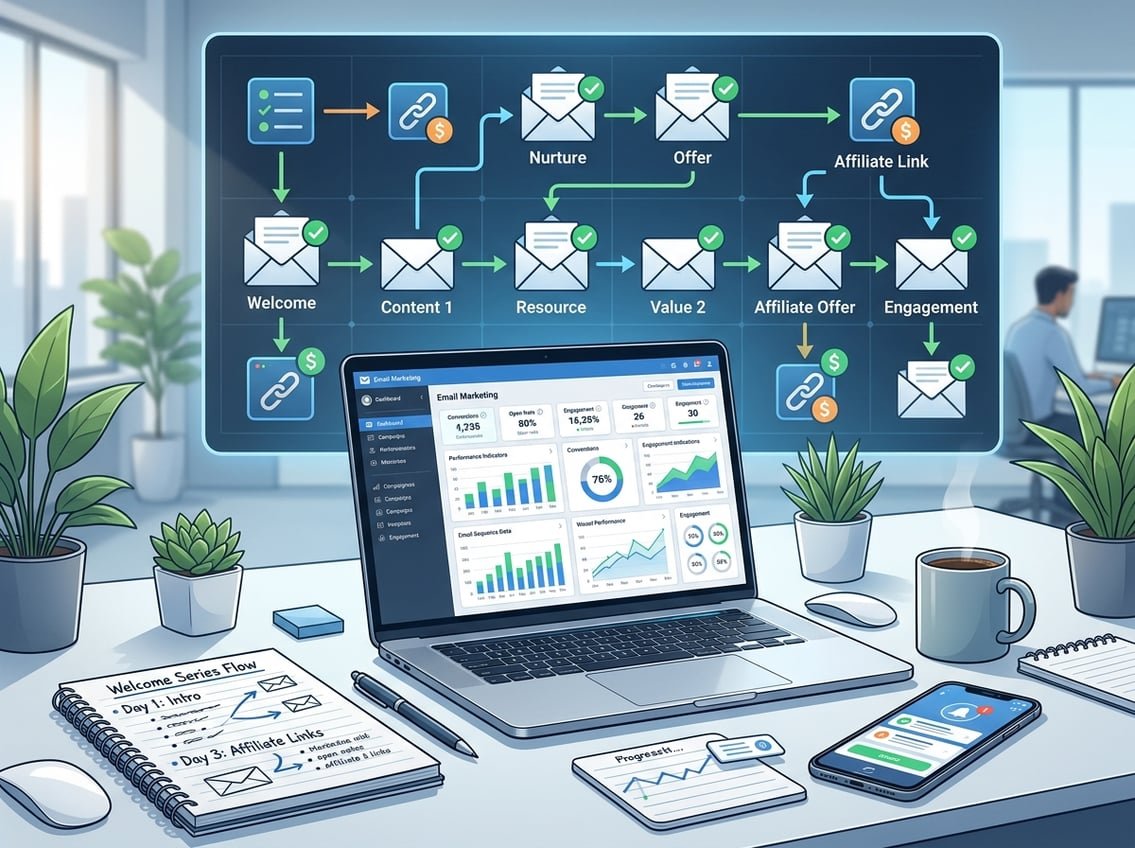
If you are using email marketing to grow affiliate commissions, your welcome series should do three jobs at once, set expectations, teach something useful, and introduce the right offer at the right time. That works best when your lead magnet, your welcome email flow, and your product promotion email all match the same reader intent.
The best welcome email sequence for affiliate marketing gives value first, introduces one relevant tool naturally, and then asks for a small next step.
Key Takeaways
-
Start with trust, not a pitch.
-
Match the sequence to the lead magnet.
-
Promote one relevant offer after you teach the problem.
What the Ideal Sequence Looks Like
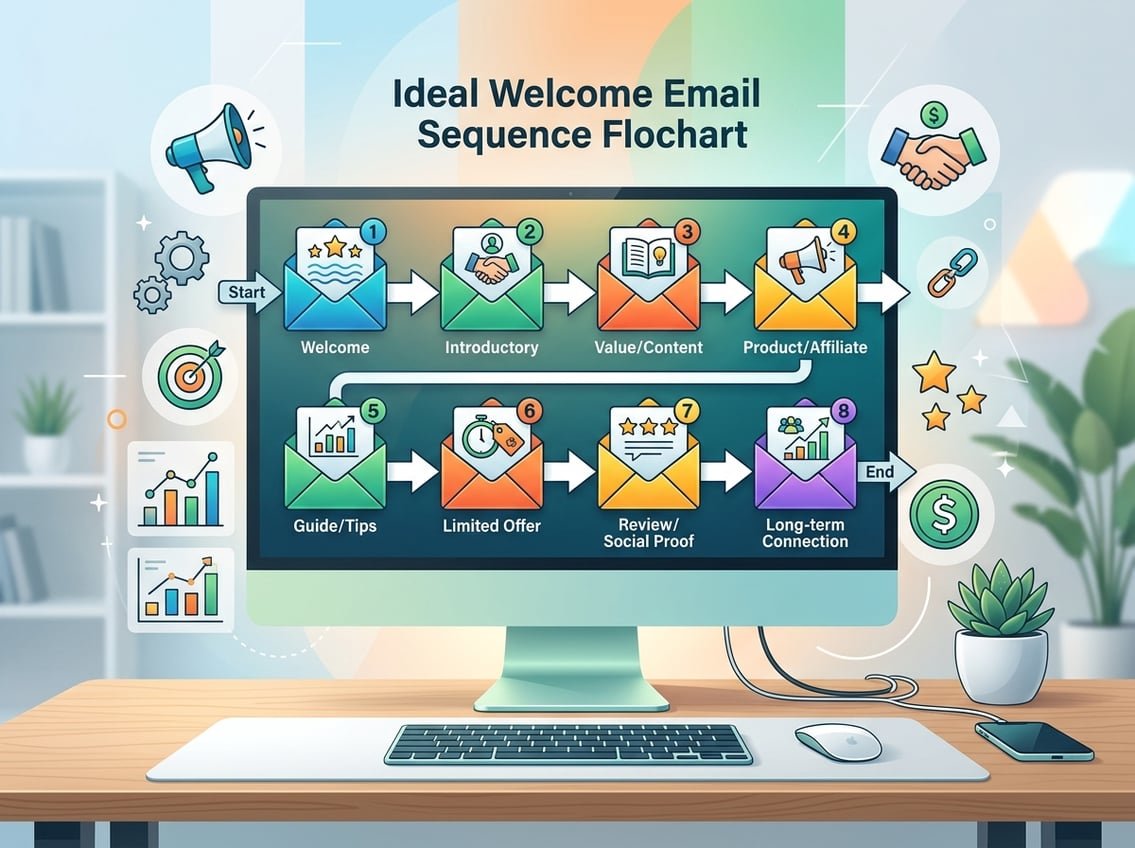
A strong welcome series gives your new subscriber a clear path. Your automated welcome email should move from delivery, to trust, to education, to a soft product mention, then to a clear call to action.
A high-converting welcome sequence is usually short, direct, and easy to scan. For most beginner affiliate marketers, 5 emails is enough to warm up the reader without rushing the sale, which lines up with the 3 to 5 email approach often used in welcome series best practices, such as the guidance from Just Think AI’s affiliate welcome templates guide.
Email 1: Deliver the Promise and Set Expectations
Your first email should deliver the lead magnet right away and tell the subscriber what happens next. Say what kind of emails you send, how often you send them, and what they can expect from you.
Keep this email short. A simple thank-you, a link to the promised resource, and a sentence about the main topic of your emails is enough.
Email 2: Build Trust With a Story or Quick Win
The second email should help the reader see why your advice matters. You can share a quick story, a mistake you made, or a small win that came from using a better system.
This is where your welcome email series starts to feel human. A short story builds more trust than a long product list.
Email 3: Teach the Problem Before the Product
Your third email should explain the problem your subscriber is trying to solve. If they downloaded a blogging guide, talk about traffic, SEO, or content consistency before you mention a tool.
This is the email that makes the later recommendation feel natural. If the reader does not understand the problem, the offer feels random.
Email 4: Introduce the Recommended Tool Naturally
Now you can introduce the product or service that fits the problem. Keep it framed as a helpful option, not a hard sell.
If you are promoting a SaaS tool, explain what it does, who it helps, and why it fits the reader’s goal. This is usually the best place for affiliate links in emails because the reader already has context.
Email 5: Close With a Clear Next Step
The last email should make the next action easy. You can send readers to a tool, a tutorial, a checklist, or a comparison page.
Use one main call to action and keep the message focused. A clean close helps your email welcome series turn attention into clicks without pressure.
How to Write Emails That Convert Without Losing Trust
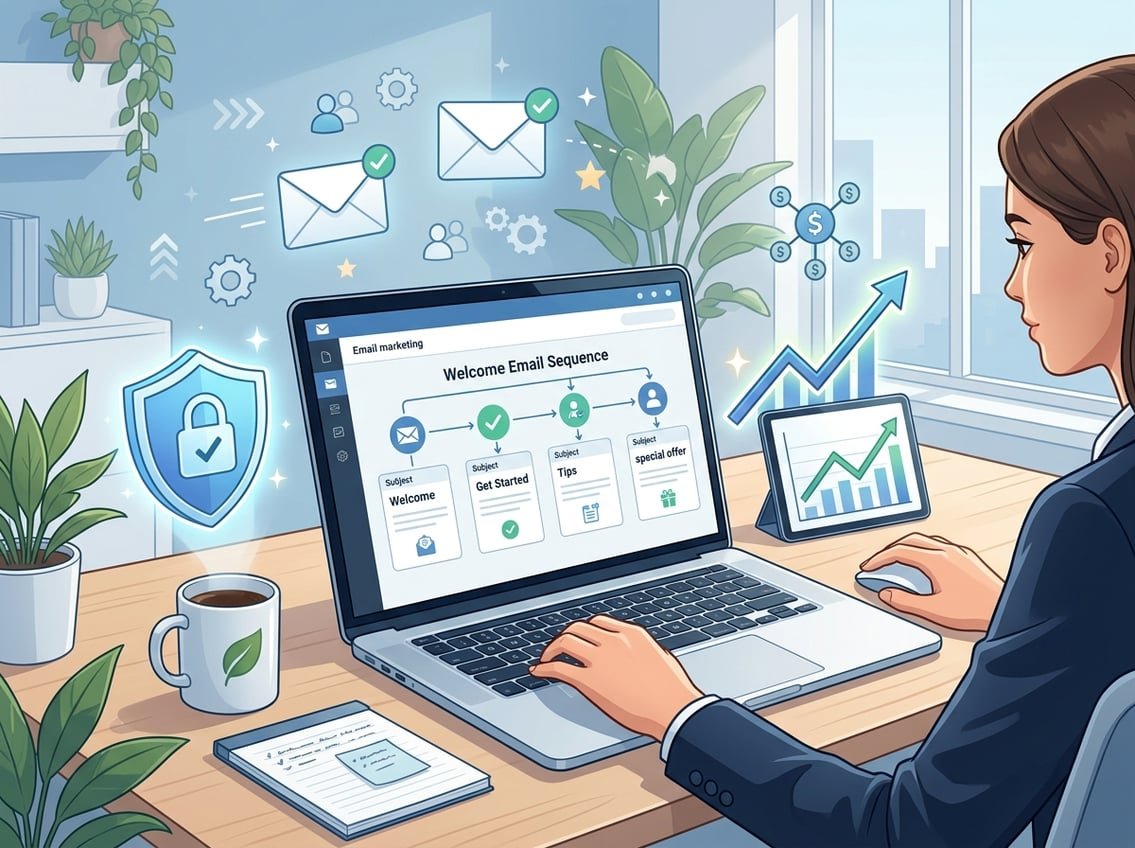
Your copy matters as much as your sequence order. A strong welcome email template should feel helpful first, then promotional second.
The best affiliate welcome email template is clear about intent, uses one main idea per email, and avoids stuffing in too many links. That matters even more when you are comparing commission rates, cookie duration, and epc across different offers.
Subject Lines, Hooks, and First-Email Framing
Use subject lines that promise a useful result, not a sales pitch. Good examples are direct, simple, and tied to the lead magnet or problem.
Your first sentence should confirm that the subscriber is in the right place. Then move fast into the value you promised.
Where to Place the Affiliate Link and Why Timing Matters
Do not lead with the affiliate link. Place it after you have explained why the offer matters and who it helps.
A unique affiliate link works best when the reader already sees the fit. That timing usually improves trust and keeps the email from feeling like a promotional email instead of a helpful message.
Using Value-First Copy for SaaS and Digital Tool Offers
SaaS offers and digital tools work well when you show use cases. Explain the task the tool solves, the time it saves, or the result it helps create.
I have seen this work best when the email reads like a short recommendation from a peer, not a sales page. If the tool has a free trial, demo, or clear starter plan, mention that in plain language.
Simple Welcome Email Template Ideas for Beginners
You do not need a complex welcome email template to start. Try one of these:
-
Problem-Solution Email: name the problem, show a simple fix, then point to the tool.
-
Quick Win Email: teach one small action, then suggest the tool that makes it easier.
-
Comparison Email: explain why one option fits beginners better than another.
-
Story Email: share what changed for you, then link the helpful resource.
If you want a broader system for blog traffic and automation, iProfitLab’s practical approach to tools and recurring income fits this style well.
Segmentation, Automation, and Platform Setup
Your welcome sequence works better when it matches why the subscriber joined. A list from a blog post about SEO should not get the same follow-up as a list from a free AI checklist.
Email automation lets you send the right sequence without manual work. Most email marketing tools make this easy once you set the trigger and tag the contact correctly.
Matching the Sequence to the Signup Source or Lead Magnet
Tie each lead magnet to a specific welcome series. Someone who signs up for a Pinterest guide should get different emails than someone who joins from a SaaS roundup.
This is where segmentation matters. A reader who wants traffic needs a different message than a reader who wants better content creation.
Building Nurture Flows After the First Five Emails
After the first five emails, move people into a nurture flow. That flow can share blog tips, tool ideas, case studies, and occasional offers.
The goal is to keep the relationship warm without repeating the same pitch. A simple nurture flow also makes your welcome series more valuable over time.
Choosing an Email Marketing Platform for Automation
Pick an email marketing platform that handles tagging, automation, and basic segmentation well. Tools like ActiveCampaign and Mailchimp are common choices because they support automation and list management.
If your main focus is blogging, affiliate funnels, and recurring income, choose the platform that makes automation easy to maintain. The best tool is the one you will actually use consistently.
Basic Automation Rules for Bloggers and Content Creators
Start with a few simple rules:
-
Tag the subscriber by lead magnet.
-
Send the welcome series immediately.
-
Stop the sequence once the subscriber buys or joins a different flow.
-
Move engaged readers into a nurture path.
These rules keep your email sequences organized and reduce confusion later.
Metrics That Show Whether the Sequence Is Working
Your welcome series should be measured against simple signals, not guesswork. Open rate, click-through rate, conversion rate, unsubscribe rate, and deliverability tell you where the sequence is strong and where it needs work.
You do not need perfect numbers. You need patterns that tell you which subject lines, offers, and calls to action are doing the heavy lifting.
Open Rate, Click-Through Rate, and Conversion Rate Benchmarks
Track each email separately. The first email usually gets the most opens, while later emails show how well your content keeps interest.
Click-through rate shows whether your call to action is clear. Conversion rate tells you whether the email actually helped move someone toward the offer.
How to Spot Weak Emails Using Unsubscribe and Reply Signals
A rising unsubscribe rate can mean the email was too promotional, off-topic, or too frequent. Replies can tell you even more, because they show what confused or interested the reader.
If readers ask the same question again and again, your copy probably needs to explain the offer more clearly. That is useful feedback, not a failure.
Simple A/B Tests for Subject Lines, CTAs, and Timing
Test one thing at a time. Start with subject lines, then test your call to action, then test send timing.
Small tests make it easier to find wins without breaking the whole sequence. Even a modest lift in click-through rate can improve affiliate commissions over time.
Improving Email Deliverability as the List Grows
Keep your list clean and avoid sending to inactive subscribers forever. Strong email deliverability depends on good list hygiene, steady engagement, and fewer spam complaints.
If a welcome series is doing well but your emails start landing in junk folders, even a strong offer will struggle. That is why deliverability is part of the system, not an afterthought.
Affiliate Program Fit and Long-Term Monetization
The best welcome sequence for affiliate marketing only works if the offer fits the reader. You want affiliate programs that match the lead magnet, the subscriber intent, and your long-term content plan.
Recurring affiliate commissions can make your email work more durable. A single welcome flow can keep producing revenue when the offer has real fit and a solid retention model.
Picking Offers That Match Subscriber Intent
Promote tools that solve the exact problem the subscriber came for. A reader who wants to start a blog should see hosting, SEO, or email tools, not random software.
The closer the offer is to the signup reason, the better your message will land. That alignment also lowers the chance of unsubscribes.
Why SaaS and Recurring Affiliate Programs Work Well in Email
SaaS offers work well because they can be explained in simple use-case language. They also often support recurring affiliate commissions, which makes each subscriber more valuable over time.
That matters when you are building a content asset that should compound. One helpful sequence can support monthly revenue instead of only one-time payouts.
Evaluating Program Details Before You Promote
Before you add an offer, check the affiliate dashboard, commission rates, cookie duration, epc, and any promotional materials provided. Those details tell you how much upside the offer has and how easy it will be to promote well.
If the program gives you clean assets and clear positioning, your emails will be easier to write. If the terms are weak or the brand is unclear, move on.
Turning the Welcome Sequence Into a Long-Term Revenue Asset
Your sequence should keep earning as your list grows. Each new subscriber gets the same helpful path, which makes your email list a real business asset.
That is the systems-first approach iProfitLab talks about in its blogging and email strategy content. You are not chasing quick wins, you are building a repeatable asset that can support recurring income.
Mistakes Beginners Should Avoid
Most beginner mistakes come from rushing the sale. If your welcome emails feel crowded, unclear, or overly promotional, readers will stop paying attention fast.
Keep the sequence focused, useful, and easy to follow. That is what protects both trust and affiliate commissions.
Promoting Too Early Before Trust Is Built
If you drop affiliate links in the first email with no context, many readers will ignore them. A welcome series works better when the reader gets value first.
Give people a reason to trust your recommendations before you ask them to click.
Overloading New Subscribers With Too Many Links
One email, one main action. That rule keeps the message clean and prevents decision fatigue.
Too many affiliate links in emails can make the message feel scattered. It also makes it harder to know what is working.
Sending Generic Emails With No Clear Reader Path
A generic welcome email does not help the reader move forward. If every subscriber gets the same message, your sequence will miss the reason they signed up.
Make the emails feel specific to the lead magnet or topic. That small change usually improves clicks and replies.
Ignoring Re-Engagement and List Quality Maintenance
Some subscribers will stop opening your emails, and that is normal. A simple re-engagement email can help you clean the list and recover a few readers.
If inactive contacts stay on the list forever, your unsubscribe rate and deliverability can suffer. Keeping list quality healthy is part of long-term email marketing.
Frequently Asked Questions
How many emails should a new-subscriber welcome series include before I start promoting offers?
A 3 to 5 email sequence is a strong starting point. You can introduce a helpful offer after you have delivered value and explained the problem clearly.
What should I say in the first welcome email to build trust and set expectations?
Thank the subscriber, deliver the lead magnet, and tell them what kind of emails they will get from you. Keep it short, friendly, and clear.
How often should I send messages in the first week to maximize opens without annoying subscribers?
A common setup is one email on day 0, then every 2 to 3 days. That gives you enough contact to build momentum without crowding the inbox.
What are a few proven welcome series structures I can model for different affiliate niches?
You can use a problem-solution flow, a story-plus-tip flow, or a quick-win flow. For SaaS and digital tools, a teach-then-recommend structure usually works well.
How do I introduce affiliate recommendations in a way that feels helpful instead of salesy?
Tie the offer to the exact problem the reader is trying to solve. Explain why you recommend it, who it helps, and what the first small next step looks like.
Which key metrics should I track to know if my welcome sequence is actually converting?
Track open rate, click-through rate, conversion rate, unsubscribe rate, and email deliverability. If clicks are low, the offer or call to action may need work. If unsubscribes rise, the timing or message may be off.