Pinterest vs Google SEO: Which Is Better for Beginners comes down to one simple tradeoff, you can chase faster early visibility with Pinterest or build slower, steadier compounding traffic with Google SEO. If you are trying to grow a blog, an email list, or affiliate income, the better choice depends on how soon you need traffic and how long you want that traffic to keep working for you.
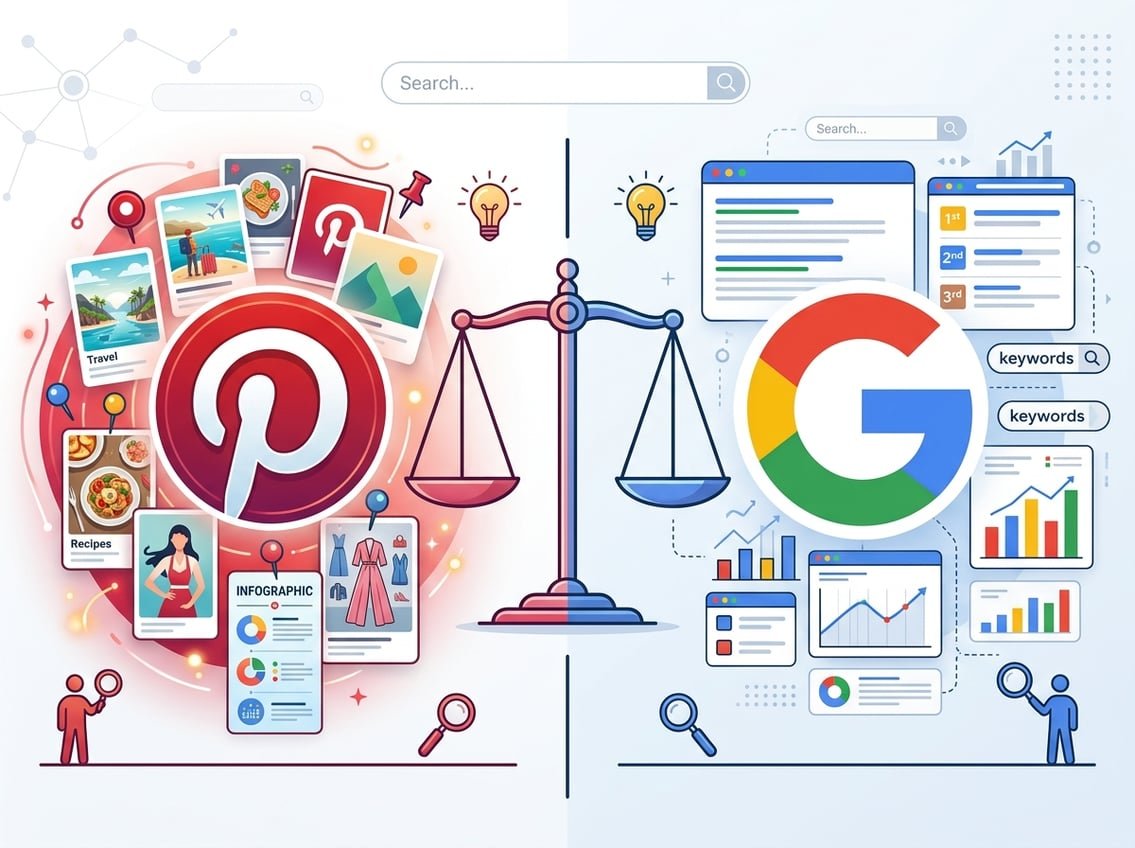
The best beginner move is usually not choosing one platform forever, it is choosing the one that matches your current time, skills, and monetization goals, then building the other beside it.
You will get better results when you treat Pinterest and Google as different traffic sources with different user behavior, not as a simple seo vs pinterest contest. Pinterest can bring quick wins, while Google SEO can create sustainable growth that compounds over time.
Key Takeaways
- Pinterest can drive earlier impressions and clicks.
- Google SEO usually builds stronger long-term value.
- A hybrid system often gives the best results for beginners.
The Short Answer for Beginners
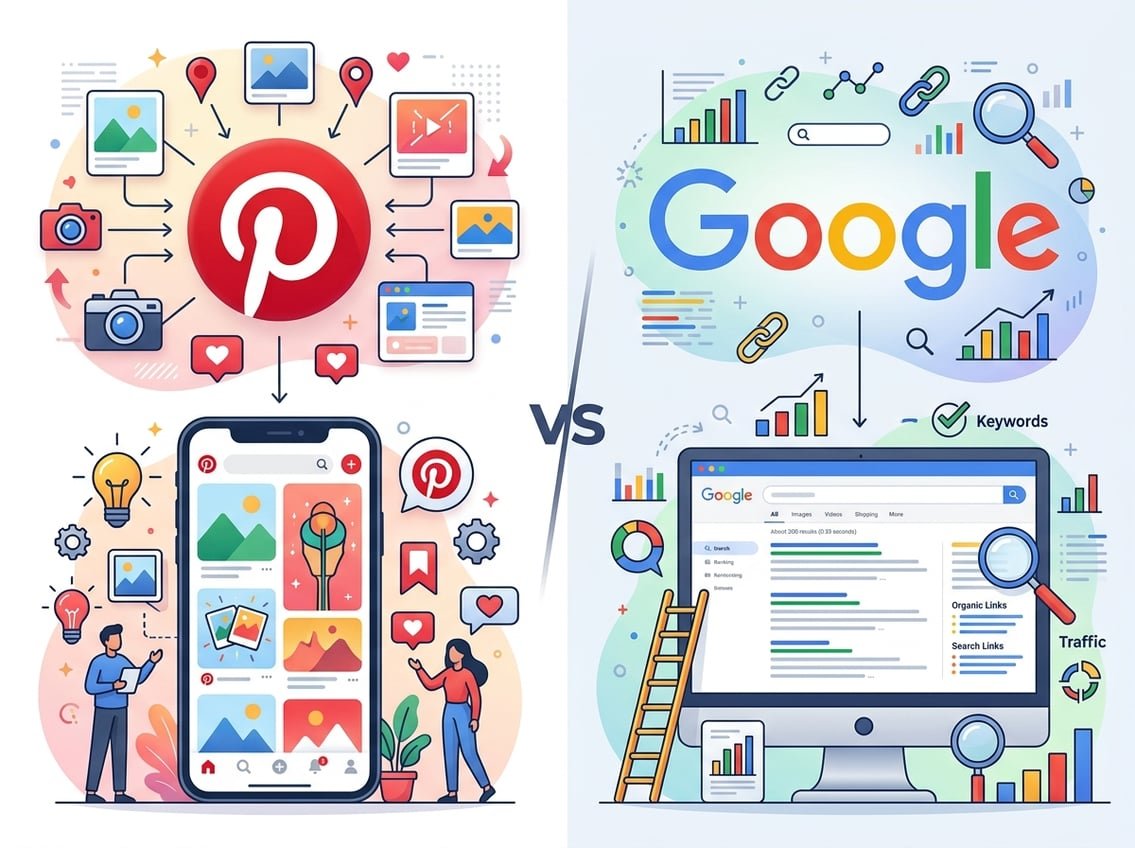
If you want pinterest traffic faster, Pinterest is often easier to start with. If you want organic traffic that can keep flowing from google search and search results for a long time, Google SEO is usually the better long-term investment.
Pinterest tends to reward clean visuals, simple keywords, and early engagement, so you may see impressions and clicks sooner. Google usually asks for stronger content, better structure, and more patience before it sends steady traffic to your website.
When Pinterest Is the Easier Starting Point
Pinterest is often the easier first step if you are new, do not have much technical confidence, or can create decent visuals quickly. It works well when your topic has visual appeal, such as home decor, recipes, travel, fashion, or blogging tips.
It can also be a strong option if you want to test ideas fast. For beginners who want quicker feedback before investing heavily in SEO, traffic from Pinterest can feel less intimidating.
When Google SEO Is the Better First Investment
Google SEO is usually better if your content solves a clear problem or answers a specific question. That includes tutorials, product comparisons, reviews, and buyer-style articles that can support affiliate marketing.
It is a stronger fit when you want traffic that can compound through one strong article, especially if you plan to build a blog as a digital asset. In many cases, Google traffic converts well because readers are already searching with intent.
Why a Hybrid Approach Often Wins
A hybrid approach gives you both speed and staying power. You can use Pinterest for early visibility while your Google content ages into stronger rankings.
That mix also fits recurring income systems well. If your blog post captures email subscribers and promotes a SaaS affiliate offer, Pinterest can help you get first clicks while Google helps the page keep earning.
How Search Intent Changes the Game
Pinterest and Google do not attract the same mindset, so your content should not look the same on both platforms. One is built more around discovery and visuals, while the other is built around direct questions and specific solutions.
That difference changes what people click, what they save, and what they buy. It also changes the kind of content you should create first.
Pinterest User Intent and Visual Discovery Behavior
Pinterest user intent is usually about inspiration, planning, and ideas. People browse with an open mind, not always a clear purchase in hand.
That is why Pinterest acts more like a visual discovery tool and visual search engine than a traditional search engine. Search terms like “italian travel” or “how to make a cake” often work because the user wants ideas they can look at and save.
Google User Intent and Problem-Solving Searches
Google user intent is usually more direct. People want an answer, a comparison, a fix, or a product choice.
A search like “how to make a cake” may lead to a recipe blog post, while “best cake pan for even baking” shows stronger buyer intent. Google search works best when your article matches that problem-solving mindset clearly.
Matching Content Types to Each Platform
For Pinterest, use content that is easy to scan and visually clear. Lists, style ideas, how-to ideas, and inspiration posts often do well because they fit the platform’s visual search behavior.
For Google, write content that solves one problem at a time. A focused blog post about italian food, a comparison page, or a step-by-step tutorial usually matches search intent better than a broad inspiration post.
What You Need to Rank on Each Platform
Both platforms use keywords, but they do not use them the same way. Pinterest leans into visuals, freshness, and simple keyword signals, while Google leans into content depth, technical health, and authority.
You do not need advanced tools to start, but you do need a basic system. Strong keyword research, clean formatting, and consistent publishing matter on both sides.
Pinterest SEO Basics for Pins and Boards
For Pinterest SEO, start with relevant keywords in your pin titles, board names, and pin descriptions. Good pinterest keyword choices usually sound natural and visual, not stiff or overly technical.
Your pins and boards should stay focused on one topic cluster. Add text overlays, use strong high-quality images, and publish fresh content regularly so the platform sees new activity.
Google SEO Foundations for Blog Posts
For Google SEO, start with google keyword research that checks search volume and competition. Your page should use the main keyword in the title and meta tags, then support it with keyword-rich content that fully answers the query.
You also need backlinks, strong internal links, and a good page structure. Tools like Google Search Console and Google Analytics help you track what ranks and what converts.
Shared Technical Factors That Still Matter
Both platforms reward good user experience. Fast load times, mobile optimization, and a mobile-friendly layout help users stay longer and click more.
Your site should also have strong visual hierarchy, readable formatting, and clean meta tags. If your pages are slow or messy, neither Pinterest nor Google will send you great traffic for long.
Speed, Stability, and Traffic Quality
Pinterest and Google differ a lot in how fast they show results and how strong those results feel over time. Some beginners care most about getting seen quickly, while others care more about building traffic they can trust month after month.
The right choice depends on whether you want faster signals or stronger compounding value. Your analytics will also look very different from one platform to the other.
How Fast Beginners Can Expect Early Signals
Pinterest often gives early signals faster because a new pin can start earning impressions soon after publishing. That makes it easier to test headlines, visuals, and topics without waiting months.
Google usually moves more slowly at first. Your post may sit quietly until it gains trust, better rankings, and enough relevance to show up in search results.
Why Google Usually Compounds More Slowly but Longer
Google SEO is slower in the beginning, yet it often lasts longer once it gains traction. A single well-optimized page can keep bringing organic traffic for months or years.
That is why many bloggers treat Google as the long game. The payoff is not instant, but the compounding effect can be stronger for a site that wants stable traffic sources.
Which Traffic Converts Better for Affiliate Content and Email Opt-Ins
For affiliate marketing, Google often converts better because the reader is closer to a decision. Someone searching with commercial intent is more likely to click an affiliate link or join your email list.
Pinterest can still work well for opt-ins and softer offers, especially when your funnel is simple. If your page leads to a useful freebie, like iProfitLab’s Free AI Income Starter Kit, Pinterest can help fill the top of the funnel while Google supports stronger buyer traffic later.
A Beginner-Friendly Strategy to Use Both Together
The best beginner systems usually start with one content plan, then repurpose it across channels. That keeps your content marketing simple and avoids the chaos of trying to create separate ideas for everything.
A good content calendar can make this process repeatable. Once one blog post is live, you can turn it into multiple pins, test different angles, and track what brings the best traffic to your website.
Build One Search-Focused Blog Post First
Start with one blog post that matches a clear keyword and a real search intent. Tools like Google Keyword Planner and Google Search Console help you confirm what people are asking for, while a tool like Keysearch can help with keyword ideas and competition checks.
Write the post for Google first, because that gives you the strongest structure. Once it is live, you can turn the same article into Pinterest-friendly ideas.
Turn Each Article Into Multiple Pinterest Assets
From one post, create several pins with different hooks, images, and text overlays. Add a mix of direct-topic pins, benefit-based pins, and curiosity-based pins.
If you want to stay organized, a Pinterest strategy using tools like Tailwind and a Pinterest trends tool can help you schedule and test ideas. You can also make idea pins and standard pinterest pins from the same blog post to widen reach.
Capture Traffic With Email and Recurring Monetization Systems
Do not stop at traffic. Send visitors to an email list so you own the audience, not just the platform.
That matters a lot for recurring commissions, especially with SaaS affiliate offers, newsletters, and automated follow-up sequences. A blog post, a pin, and an email opt-in can work together as one system instead of three separate tasks.
How to Choose Based on Your Niche, Skills, and Goals
Your niche changes the answer more than most beginners realize. A platform that works well for one topic can feel weak in another because search intent and visual appeal are not the same.
You should also think about your own strengths. If you are better at design and quick iteration, Pinterest may feel easier. If you are better at writing and problem solving, Google search may be a stronger fit.
Best Fit for Visual Niches and Idea-Driven Content
If your niche has strong visual content or strong visual search potential, Pinterest can be a natural fit. Topics like recipes, travel, home, style, printables, and DIY often do well because users want inspiration before action.
Pinterest is also useful for idea-driven content where people browse before they buy. The platform’s pinterest algorithm tends to respond well when your content is attractive, specific, and easy to save.
Best Fit for Problem-Solving and Buyer-Intent Topics
If your niche is built around questions, comparisons, and buying decisions, Google search is usually stronger. That includes software reviews, tutorials, finance topics, blogging tools, and affiliate marketing content.
Google is often the better match when you want to rank for keywords that show clear intent. If you are comparing something like google ads alternatives or tools for a content system, search traffic can bring more serious readers.
A Simple Decision Matrix for New Site Owners
Use Pinterest first if you want quicker signals, visual content, and easier early testing. Use Google first if you want durable rankings, deeper trust, and stronger buyer intent.
If you want the simplest path, choose this rule:
- Visual and idea-driven niche, start with Pinterest.
- Problem-solving and affiliate-heavy niche, start with Google.
- Want both traffic speed and long-term growth, build both from one blog post.
That approach fits a systems-first model and keeps you focused on assets that can grow with time. It also keeps you from relying on random traffic spikes.
Frequently Asked Questions
Is Pinterest or Google Search easier to get traffic from when you’re just starting out?
Pinterest is often easier for the first signs of traffic because you can get impressions faster with a good pin and basic keyword use. Google Search is usually harder at the start, since rankings take more time and stronger content.
If you want early feedback, Pinterest often feels more beginner-friendly. If you want traffic that can keep building in the background, Google is the better long-term asset.
How long does it typically take to see results from Pinterest compared to traditional SEO?
Pinterest can show activity within days or even sooner if your pin gets decent engagement. Google SEO usually takes weeks or months before you see steady movement in rankings.
The pace also depends on your niche, your content quality, and how well you match user intent. Some pages move quickly on Pinterest and slowly on Google, while others do the opposite.
What kind of content performs best on Pinterest versus what ranks well on Google?
Pinterest tends to favor visual, inspirational, and simple-to-scan content. List posts, how-to ideas, before-and-after concepts, and design-heavy topics usually work well.
Google usually ranks content that answers a clear question in depth. Tutorials, reviews, comparisons, and problem-solving articles are often better fits for Google search.
Do you need a website to succeed with Pinterest, or can you grow without one?
You can grow an audience on Pinterest without a website, but a website gives you more control and better monetization options. If you want affiliate income, email growth, or long-term ownership, a website is a much stronger base.
A site also lets you create content that can rank on Google later. That makes your traffic plan more stable and less dependent on one platform.
How can beginners monetize Pinterest traffic, and what does earning potential look like per 1,000 views?
You can monetize Pinterest traffic with blog ads, affiliate links, digital products, and email opt-ins. The best results usually come when Pinterest sends people to a landing page or blog post that has one clear next step.
Earnings per 1,000 views vary a lot by niche, offer, and conversion rate, so there is no honest universal number. High intent traffic with a strong offer can earn far more than broad inspiration traffic, especially in affiliate marketing.
Is SEO in 2026 still worth learning for beginners, or is it changing in ways that affect newcomers?
Yes, SEO is still worth learning in 2026 because search traffic remains one of the best ways to build a long-term digital asset. The way content is ranked keeps changing, but the core idea still holds, you want to match search intent and help people well.
For beginners, the best move is to focus on clear topics, helpful writing, and strong site basics. If you want a practical starting point, the Free AI Income Starter Kit and the Recommended Tools page on iProfitLab can help you avoid random tools and build a cleaner system from the start.