Affiliate marketing email mistakes can quietly drain your clicks, conversions, and commissions before you notice what is happening. If you are building an affiliate marketing business through email marketing, the problem is rarely “not sending enough emails,” it is usually sending the wrong message to the wrong person at the wrong stage.
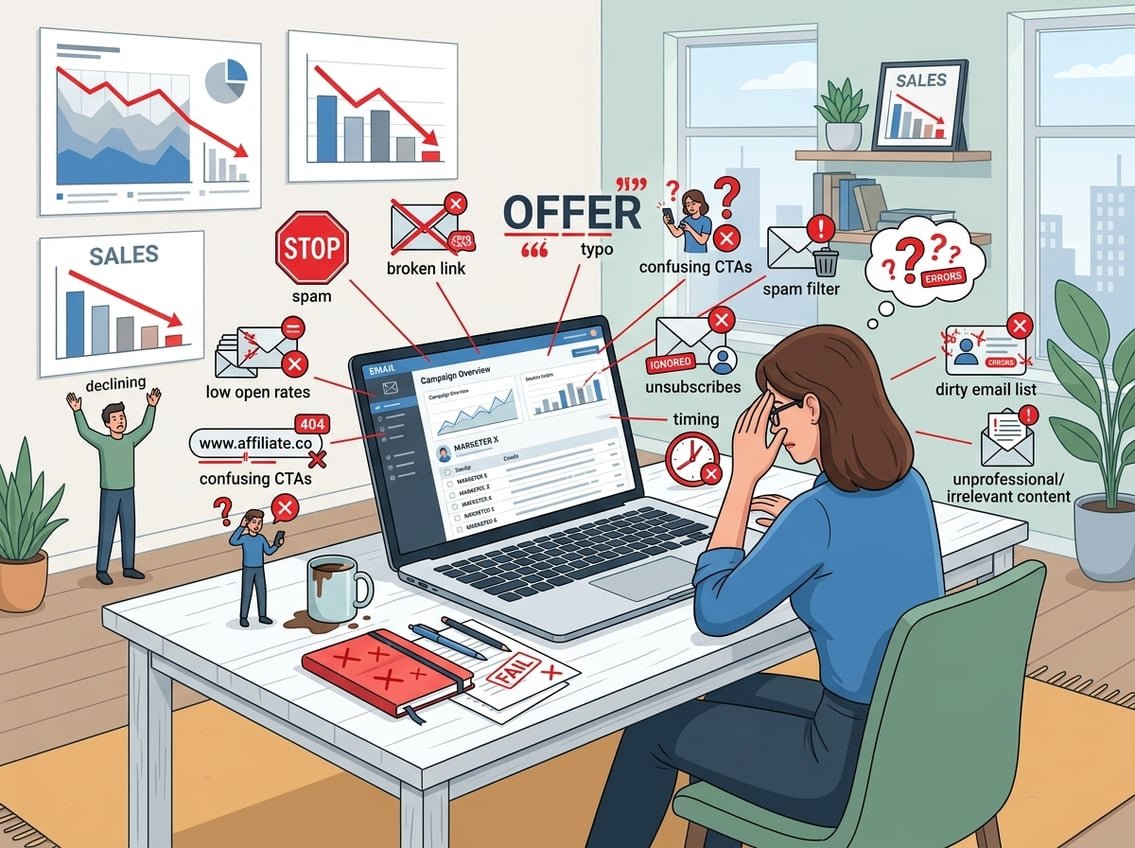
The fastest way to improve affiliate sales is to make your emails more relevant, more useful, and better connected to the rest of your system, especially audience research, content, and tracking.
That matters because email works best as part of a compounding model, not as a random promo channel. You build trust with content, capture subscribers with a clear offer, and send them emails that match what they actually want to buy.
Key Takeaways
- Send offers that match buyer intent.
- Treat email as part of a bigger system.
- Track results so you can improve fast.
Mistake 1: Promoting Before Understanding Buyer Intent

If you promote before you know what your readers want to buy, your affiliate promotions will feel random. That usually leads to weak conversions, lower commission rates, and fewer long-term sales.
Buyer intent tells you whether someone is ready to compare, evaluate, or buy. Without that signal, you are building relationships with the wrong people for the wrong offers.
Why Audience Research Matters More Than More Emails
Audience research helps you match your email content to real problems, not guesses. When you know what your readers are trying to solve, your affiliate program choices get much easier.
A small list with strong intent usually outperforms a bigger list that never planned to buy. That is why audience research matters more than volume.
How the Wrong Niche Weakens Affiliate Promotions
The wrong niche makes every email harder to monetize. If your audience is there for entertainment, free tips, or broad general content, they may not respond well to affiliate program offers.
A focused niche gives you clearer purchase intent and better conversions. It also makes your email topic, product angle, and call to action easier to align.
Matching Offers to Subscriber Problems and Purchase Readiness
Think about what your subscriber needs next, not just what pays you. A beginner may need education, while a warmer lead may want a comparison or a direct recommendation.
When you match affiliate promotions to readiness, you protect trust and improve conversions. This is one of the simplest ways to stop wasting clicks.
Mistake 2: Sending Traffic to Weak Offers and Pages
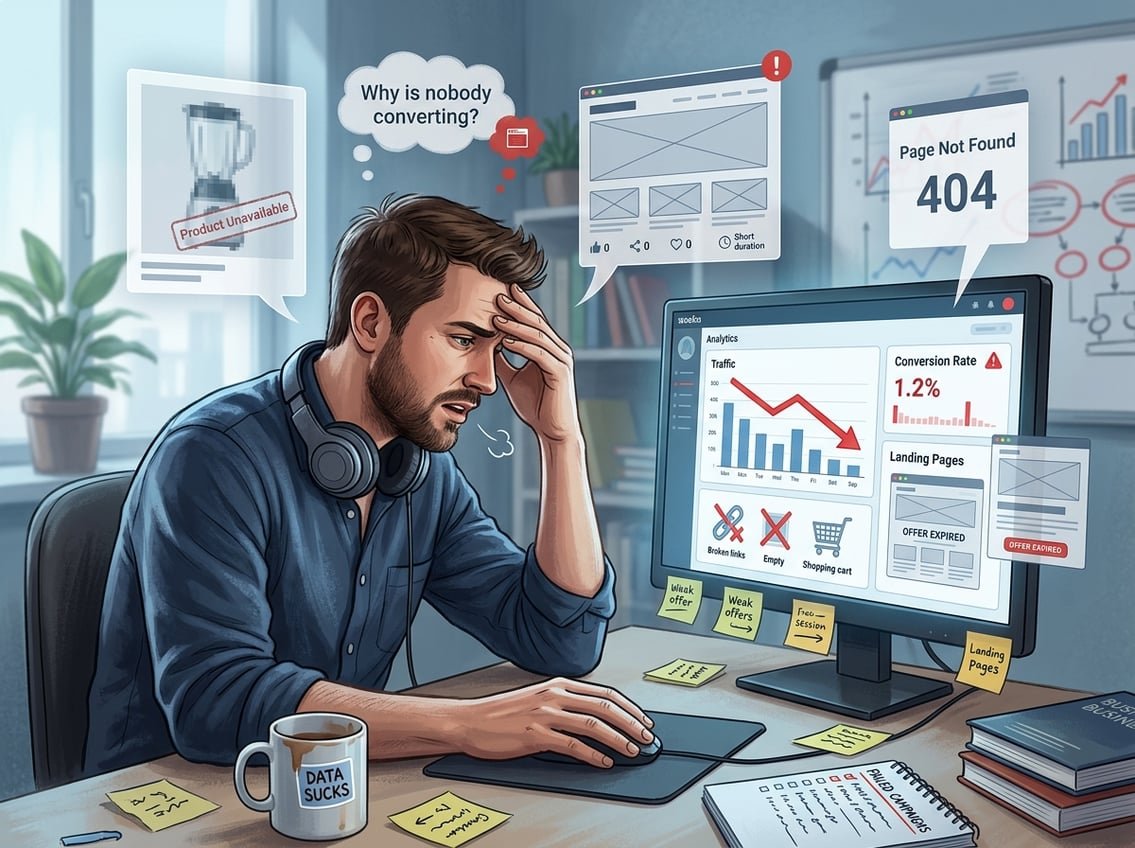
Even a strong email will underperform if it sends readers to a weak landing page or a product that does not fit. Your clicks only matter if the page, offer, and content keep the sale moving.
The best affiliate business owners pay attention to the full path from inbox to purchase. That includes the offer, the page, and the content around it.
Choosing Products Based on Fit Instead of Hype
It is easy to chase high payouts, trending tools, or flashy promises. A better approach is to choose products that solve a clear problem for your audience.
This is where product fit beats hype. A smaller commission on a useful tool often beats a big commission on something people do not need.
Why Product Reviews and Tutorials Convert Better Than Generic Pitches
Product reviews and tutorials help readers picture how the product works in real life. That is why they usually convert better than a plain sales email.
Tutorials also build trust because they teach before they sell. If you want stronger results, pair your affiliate links with valuable content that answers real questions.
Improving the Landing Page Experience for More Clicks and Sales
Your email may get the click, but the landing page closes the sale. If the page is slow, unclear, or too pushy, your conversion rate will drop.
Check the page for clear benefits, simple language, and one main action. Better page quality often leads to better clicks and sales from the same list.
Mistake 3: Treating Email as a Standalone Channel
Email is stronger when it supports your larger content strategy. If you only think about newsletters and promos, you miss the traffic and trust that come from blogging, SEO, and social media.
The goal is not just to send more messages. The goal is to build an email list from people who already know, like, and trust your content.
How Blogging and SEO Strengthen Email Monetization
Blogging and SEO give you evergreen content that keeps attracting the right readers. Those readers can then join your list and move into your email funnel.
This is where search engine optimization pays off twice. You get organic traffic, and you build a list you can monetize more than once.
Using Organic Traffic to Build an Email List Consistently
Organic traffic works well when your blog posts solve specific problems and offer a clear lead magnet. That lets you build an email list without relying on constant ad spend.
In practice, the best subscribers often come from content that matches a very specific search. For example, a post about a beginner-friendly SaaS tool usually attracts better leads than a broad money-making article.
Reducing Dependence on Social Media Algorithms
Social media can help, yet it should not carry your whole affiliate system. Algorithms change, reach drops, and your revenue can swing with them.
Owned traffic through email gives you more control. That is why iProfitLab leans so hard on simple systems that keep working after a platform update.
Mistake 4: Writing Emails That Sound Like Ads
If every email sounds like a sales pitch, readers stop opening them. They can feel when the message exists only to push an affiliate link.
Useful emails sell better because they feel relevant. Trust grows when your emails teach, guide, and recommend with context.
Why Trust and Relevance Beat Constant Selling
Readers buy from people who help them solve a real problem. If your messages feel generic, your audience will ignore them even when the offer is decent.
Common affiliate marketing mistakes often come from rushing straight to the pitch. A better approach is to build trust first, then promote.
Balancing Education, Storytelling, and Affiliate Promotions
You do not need to hide the promotion. You just need to make it part of a useful email.
A short story, one practical tip, and one relevant offer can work well together. That mix keeps your emails human and helps affiliate marketing success feel natural instead of forced.
Using Reviews, Comparisons, and Use Cases to Support Conversions
Reviews and comparisons give readers a reason to click. Use cases help them see how a product fits their own situation.
When you frame the offer around a real problem, your affiliate promotions feel helpful. That usually improves conversions more than a hard sell ever will.
Mistake 5: Ignoring Tracking, Testing, and Compliance
If you do not track performance, you are guessing. And if you ignore compliance, you can lose trust or get removed from an affiliate network.
Strong email marketers watch clicks, conversions, and affiliate sales, not just open rates. They also disclose affiliate links clearly and keep their campaigns clean.
What to Measure Beyond Opens and Clicks
Open rates matter, yet they do not tell the whole story. You also want to watch clicks, conversion rate, and actual commissions.
If an email gets opens but few clicks, the subject line may be fine while the message body is weak. If clicks are strong but sales are low, the offer or landing page needs work.
How Analytics Improves Conversion Rate Over Time
Analytics helps you spot patterns. You may find that certain topics, offers, or send times produce better tracking performance.
That is how small changes turn into better results over time. It is a simple system, and it is much more reliable than guessing what might work.
Disclosing Affiliate Links and Following Compliance Basics
Always disclose affiliate links in a clear, honest way. It protects trust and keeps your promotions in line with standard compliance expectations.
Your affiliate network may also have rules about subject lines, claims, and promotional language. If you follow those rules from the start, you reduce risk and build a business that can last.
Mistake 6: Neglecting Email Growth and Deliverability Fundamentals
A great offer cannot help much if your list is weak or your messages do not reach the inbox. Building an email list early matters because it creates a direct line to recurring commissions and passive income.
You also need the right traffic inputs, from SEO to keyword research, so the subscribers you add are actually interested in your topic. That is how your list turns into a real asset.
Why Building an Email List Early Matters for Recurring Income
The earlier you build an email list, the sooner you can create repeat contact with your audience. That matters even more for recurring commissions from SaaS affiliate offers.
Email lets you promote with context over time, not just once. It also gives you a place to nurture leads until they are ready to buy.
Using SEO Content and Lead Magnets to Grow the Right Subscribers
SEO content helps you attract searchers who already have a specific need. Then a lead magnet, such as a checklist or starter guide, gives them a reason to join your list.
If you are choosing topics, use keyword research tools like Google Keyword Planner to find phrases that match real demand. That makes your list growth more targeted and less random.
Mobile Optimization, Timing, and List Quality Best Practices
Most subscribers read email on a phone, so mobile optimization matters. Short paragraphs, clear buttons, and clean formatting can improve clicks fast.
List quality also matters more than list size. A smaller list of engaged readers is often better than a huge list filled with people who never wanted your offer in the first place.
Frequently Asked Questions
What are the most common email mistakes that hurt affiliate conversions?
The biggest mistakes are poor targeting, weak offers, salesy writing, bad tracking, and ignoring list quality. Each one lowers trust or makes the path to purchase harder.
If you fix those basics, you usually see better clicks and more affiliate sales without sending more email.
How often should I email my list without causing unsubscribes or spam complaints?
There is no single perfect number, because your audience and niche matter. A simple weekly rhythm works well for many beginners, as long as each email gives value or a clear reason to click.
If you send more often, keep the content useful and consistent. Sudden bursts of promo-heavy emails usually cause more unsubscribes than a steady schedule.
What subject line mistakes lead to low open rates for affiliate promotions?
Vague, clickbait, or overly salesy subject lines often hurt open rates. People want to know what the email is about before they click.
Clear subject lines usually work better than clever ones. If the offer is a review, comparison, or guide, say that plainly.
How can poor email copy and formatting reduce clicks and sales?
Long blocks of text, weak calls to action, and cluttered layouts make people stop reading. If the email is hard to scan, clicks drop fast.
Keep your copy simple, use short paragraphs, and give the reader one main next step. That makes it easier for them to move from interest to action.
Why does sending affiliate emails to the wrong segment damage revenue, and how do I fix it?
If the segment does not match the offer, the email feels irrelevant and the click rate falls. A beginner subscriber and a ready-to-buy subscriber should not always get the same message.
Fix it with basic segmentation. Group people by interest, behavior, or content they joined from, then send offers that match their stage.
How do I balance value and promotion so my affiliate emails don’t feel pushy or untrustworthy?
Lead with something useful, then add the offer only when it fits the topic. If your email solves a small problem, the promotion feels like a recommendation instead of pressure.
A good rule is to teach first and sell second. That is also the kind of simple, trust-based system iProfitLab encourages, because it supports recurring income instead of short-term hype.