Start Here Page Examples for Affiliate Blogs That Convert can save you a lot of guesswork when you are trying to turn new visitors into readers, subscribers, and clicks. If your affiliate blog feels busy but not focused, your Start Here page is often the missing piece.

A strong Start Here page gives new visitors a fast path to your best content, builds trust, and points them toward the next step without feeling pushy.
For an affiliate marketing blog, that next step may be a tutorial, a comparison post, a product review, or an email signup. The page works best when it helps with affiliate marketing, supports passive income goals, and makes it easier for people to make money blogging in a steady, sensible way.
Key Takeaways
- Your Start Here page should guide, not overwhelm.
- Trust grows when your best content is easy to find.
- Clear paths to email and money pages improve clicks.
What a Start Here Page Should Do First
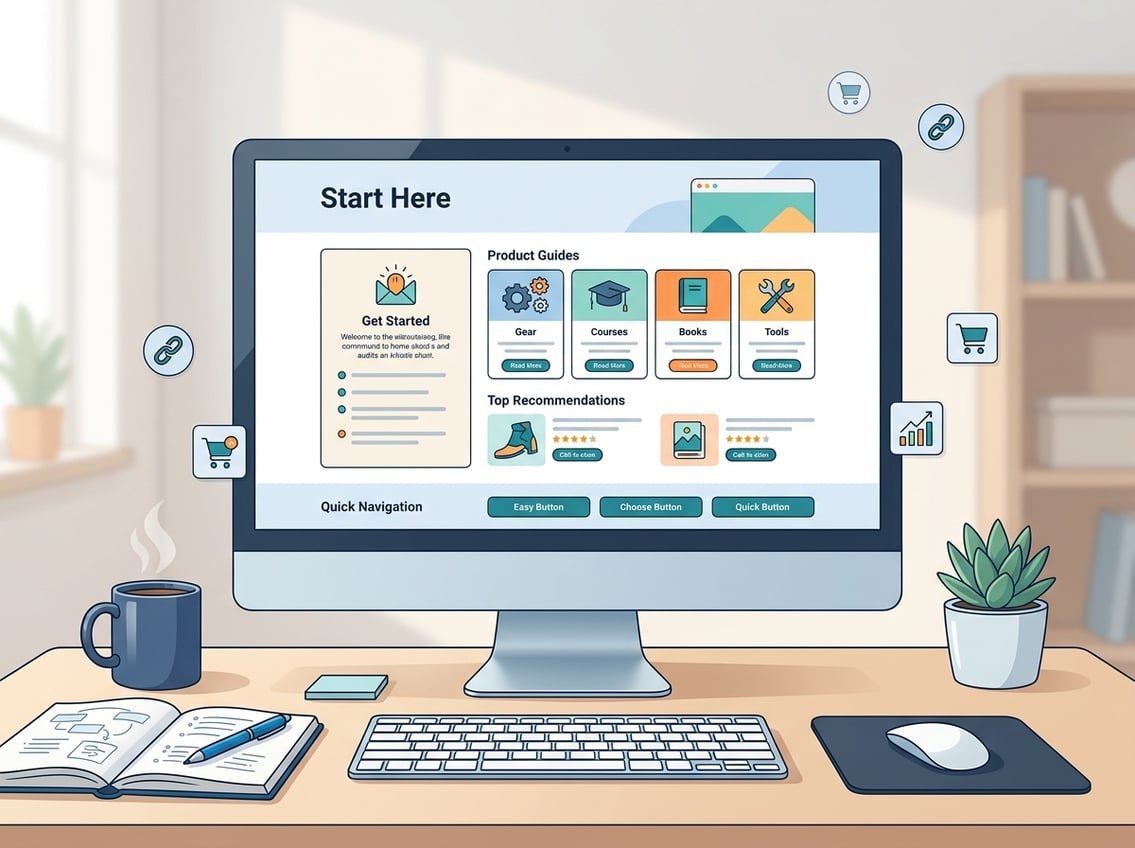
A good Start Here page starts with understanding your audience and where they are in the journey. New readers need quick direction, simple choices, and a reason to trust your affiliate blogging advice.
The page should do three jobs at once. It should explain who the site is for, show the core promise, and move readers toward the right action with clear ctas and educational content.
Clarify Who the Blog Is For
Tell readers exactly who benefits from your affiliate blog. If you help beginners, say that. If your focus is SaaS tools, SEO, or email marketing, name that early.
This keeps the page aligned with your affiliate marketing strategy and helps readers self-select. The more specific your message, the better your conversion tends to be.
Explain the Core Promise and Next Step
Your page should answer, “What do I get here, and what should I do first?” That promise might be learning how to build traffic, choose tools, or create value-driven content that can support recurring income.
A clear next step matters more than clever copy. Point readers to a roadmap, your best tutorials, or a free starter guide.
Separate a Start Here Page From an About Page
An About page tells your story. A Start Here page helps the reader take action.
That difference matters on affiliate websites. An About page builds personal context, while a Start Here page is built for conversion, navigation, and getting readers into the right content fast.
Common Page Patterns From High-Trust Affiliate Sites

High-trust affiliate sites usually make it easy to find the best content, not every piece of content. They use simple paths, strong topic grouping, and visible proof that the advice is useful.
You can see this pattern in sites like Wirecutter, NerdWallet, Dog Food Advisor, and Safewise. Their content style often includes tutorials, how-to guides, product reviews, in-depth reviews, and clear recommendation paths.
Resource-Led Navigation Paths
Many strong affiliate websites guide readers by topic instead of by date. That means a visitor can move from a broad guide to a specific comparison post without extra searching.
This is useful if you run an affiliate marketing blog with multiple content pillars. You can group posts by beginner guides, tool roundups, reviews, and case studies so the page feels organized.
Beginner Roadmaps and Tutorials
A good Start Here page often acts like a beginner roadmap. That is common on creator sites and educational blogs, including well-known names like Smart Passive Income and ShoutMeLoud.
This works well because tutorials reduce confusion. When people can move from “what is this?” to “what do I do next?” they are more likely to stay on the site.
Trust Signals From Reviews, Testing, and Personal Experience
Trust grows when you show how you evaluate products and tools. Sites like Wirecutter, Dog Food Advisor, and Safewise are known for structured reviews, testing notes, and clear recommendation logic.
You do not need huge scale to use the same idea. A short note about personal experience, what you tested, or why a tool made your workflow easier can make your page feel more real and more useful.
Sections to Include on a Beginner-Friendly Page

A beginner-friendly Start Here page should be short, direct, and easy to scan. Focus on the posts, tools, and actions that help a new visitor get results fast.
The best pages usually mix education, recommendation, and signup options. That balance helps with content ideas, monetization, and affiliate links without making the page feel salesy.
Quick Welcome and Reader Orientation
Start with a plain-language welcome that says who the blog helps and what topics you cover. If your site focuses on blogging, SEO, AI tools, and affiliate programs, say that in one or two sentences.
Then give readers a simple path. For example, “Start with this guide, then this tool list, then this email resource.”
Best First Articles, Listicles, and Comparison Posts
Your best first articles should be the ones that answer beginner questions and lead into stronger monetization strategies. That often includes listicles, comparison posts, and affiliate blog post examples that solve a real problem.
You can also highlight one or two content clusters, such as:
- How to start a blog
- Best AI tools for content creation
- Best hosting for affiliate blogs
- Email marketing basics
If you use affiliate products, link only where the recommendation truly fits. A helpful affiliate blog post should feel like a guide, not a sales pitch.
Recommended Tools, Email Signup, and Monetization Paths
A Start Here page should point to tools that support the reader’s next step. For a beginner audience, that may include hosting, keyword research tool options, email marketing platforms like ConvertKit, or AI content tools.
If you use affiliate links, label them clearly and keep them limited. Add an email signup near the middle or near the end, so readers who are not ready to buy can still stay connected.
How to Align the Page With SEO and Content Strategy

Your Start Here page should reflect keyword research and search engine optimization, not just design choices. When the page matches search intent and site structure, it supports organic traffic and helps readers move into your content strategy.
The strongest pages connect high-quality content with clear internal links and a clean conversion path. That makes the page useful for search engines and easier for people to use.
Map Visitor Intent to Topic Clusters
Use keyword research tools like Semrush, Ahrefs, and Moz to group your topics into clusters. A visitor looking for “how to start an affiliate blog” needs different guidance than someone searching for “best SaaS affiliate programs.”
If you map intent well, your page can send each reader to the right content. That improves engagement and keeps your site structure easy to follow.
Use Internal Links to Push Readers to Money Pages
Your Start Here page should link to pages that lead naturally toward affiliate revenue. That might mean tutorials first, then comparisons, then affiliate marketing content that includes product mentions and affiliate links.
A simple flow often works best:
- Beginner guide
- Tool or platform guide
- Comparison post
- Affiliate offer or email signup
That pattern helps conversion rates without forcing a hard sell.
Track Performance and Improve Conversion Over Time
Use Google Analytics to see where readers click, where they stop, and which paths lead to affiliate revenue. If one post gets attention but no clicks, your CTA may need clearer wording or better placement.
I have seen small changes matter a lot, like moving a signup box higher or replacing a vague button with a specific one. If you want a practical, no-hype system for this, the page ideas from iProfitLab work well because they focus on simple execution and trusted tools, not random tactics.
Example Frameworks for Different Affiliate Blog Models

Different affiliate blogs need different Start Here layouts. A page for recurring affiliate income looks different from one built around Amazon Associates or creator education.
The right framework depends on how you earn affiliate commissions, what affiliate networks you use, and how fast readers need to understand your value.
SaaS and Recurring Commission Blogs
If you promote software, your Start Here page should highlight use cases, setup guides, and comparison posts. Readers often need help choosing between tools before they sign up, especially in recurring affiliate income models.
This format works well with affiliate networks and programs tied to email platforms, SEO tools, and automation tools. It also fits blogs inspired by creators like Pat Flynn, Neil Patel, and Matthew Woodward, where educational content leads into tool recommendations.
Niche Review and Amazon-Focused Blogs
If your site depends on Amazon Associates or other affiliate networks like ShareASale, CJ Affiliate, or Rakuten Advertising, your page should point to best-of lists and product review hubs.
That model works well for affiliate marketing blogs in gear, home, fitness, or hobby niches. Sites like DollarSprout, Ruled.me, and affLIFT show how different niches can use structured content to drive affiliate income.
Creator-Education and Personal Brand Blogs
If your blog is built around your own process, the Start Here page should feel like a guided tour. Show your method, your favorite tools, and the content path that helps people get results without wasting time.
This model fits creators who write about blogging, AI tools, faceless content, or email list growth. It also pairs well with recurring income when you use content to teach, then recommend tools that support the same workflow.
Mistakes That Hurt Trust and Conversions

A weak Start Here page can hurt both trust and conversion. The most common problems are too many affiliate links, vague wording, and poor page flow.
If you fix those three things, the page usually becomes easier to use and more effective for content marketing.
Overloading the Page With Affiliate Links
Too many affiliate links make the page feel crowded and hard to trust. Readers should feel guided, not hunted.
Limit links to the most relevant tools and money pages. Keep the page focused on helping people move forward.
Using Vague Messaging and Weak Calls to Action
If your page says things like “check out my stuff” or “read more here,” it leaves too much work for the reader. Strong ctas are specific and simple, such as “Start with the beginner blog setup guide” or “See the tools I use for SEO content.”
Clarity supports conversion. It also makes your site feel more organized.
Ignoring Design, Media, and Reader Flow
A Start Here page should be easy to scan on desktop and mobile. Short paragraphs, clear spacing, and a few useful images or icons can improve the reading flow.
Well-placed images and videos can support storytelling and content creation, especially if you show how a tool works or what a workflow looks like. If you use content creation tools or affiliate marketing tools, show them in a way that helps the reader decide what to do next.
Frequently Asked Questions
What should a strong “Start Here” page include to guide new readers and drive affiliate clicks?
A strong page should explain who the site is for, what you teach, and where a new visitor should start. It should also link to your best tutorials, reviews, and comparison posts, plus one clear email signup option.
How do you structure a “Start Here” page for an Amazon affiliate blog without sounding salesy?
Lead with help, not products. Start with your main categories, then point readers to useful buying guides, comparisons, and product reviews that solve real problems.
What are the best examples of affiliate landing pages, and what makes them convert?
The best examples are pages that make the next step obvious. High-trust sites like Wirecutter and NerdWallet convert because they use clear organization, strong editorial standards, and easy-to-follow paths.
How can you apply the 80/20 rule to decide which posts and resources to feature for new visitors?
Focus on the 20 percent of content that drives most of your clicks, signups, and affiliate revenue. That usually means your best beginner guides, strongest comparison posts, and most trusted tools.
What should you put on a blog homepage versus a “Start Here” page for an affiliate site?
Your homepage can show recent posts, categories, and updates. Your Start Here page should act like a guide that sends new readers to the most useful content and offers a clear next step.
Where can you find free, high-converting templates to build an affiliate-friendly landing page quickly?
You can start with blog and landing page builders, then shape them around your content flow and audience needs. If you want a practical starting point for blog systems, SEO, and recurring affiliate income, the Free AI Income Starter Kit from iProfitLab is a useful guide, along with its Recommended Tools page for trusted options and step-by-step direction.