Starting a faceless YouTube channel for affiliate marketing is one of the most practical ways to build a content-driven income stream without putting yourself on camera. When you do it right, you are not just making videos, you are building a digital asset that can bring in affiliate commissions, search traffic, and email subscribers over time.
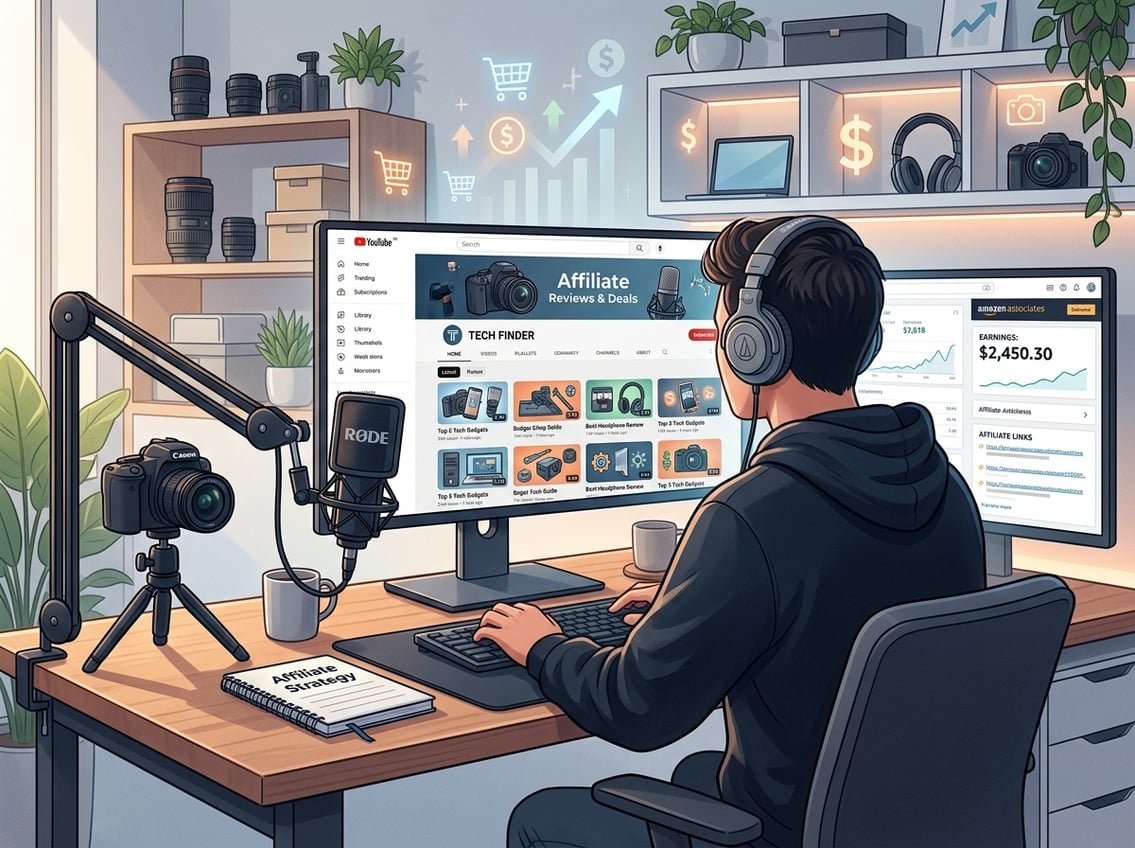
The best part is that you do not need a huge production setup to begin. You need a niche with buyer intent, a simple workflow, and videos that help people solve real problems.
If you focus on search-driven topics, useful recommendations, and trust-building content, your channel can become a steady affiliate sales engine instead of a random upload habit.
Key Takeaways
- Pick topics people already want to buy in.
- Build a repeatable workflow before you publish often.
- Turn every video into traffic for your email list and offers.
Choose a Niche That Can Actually Monetize
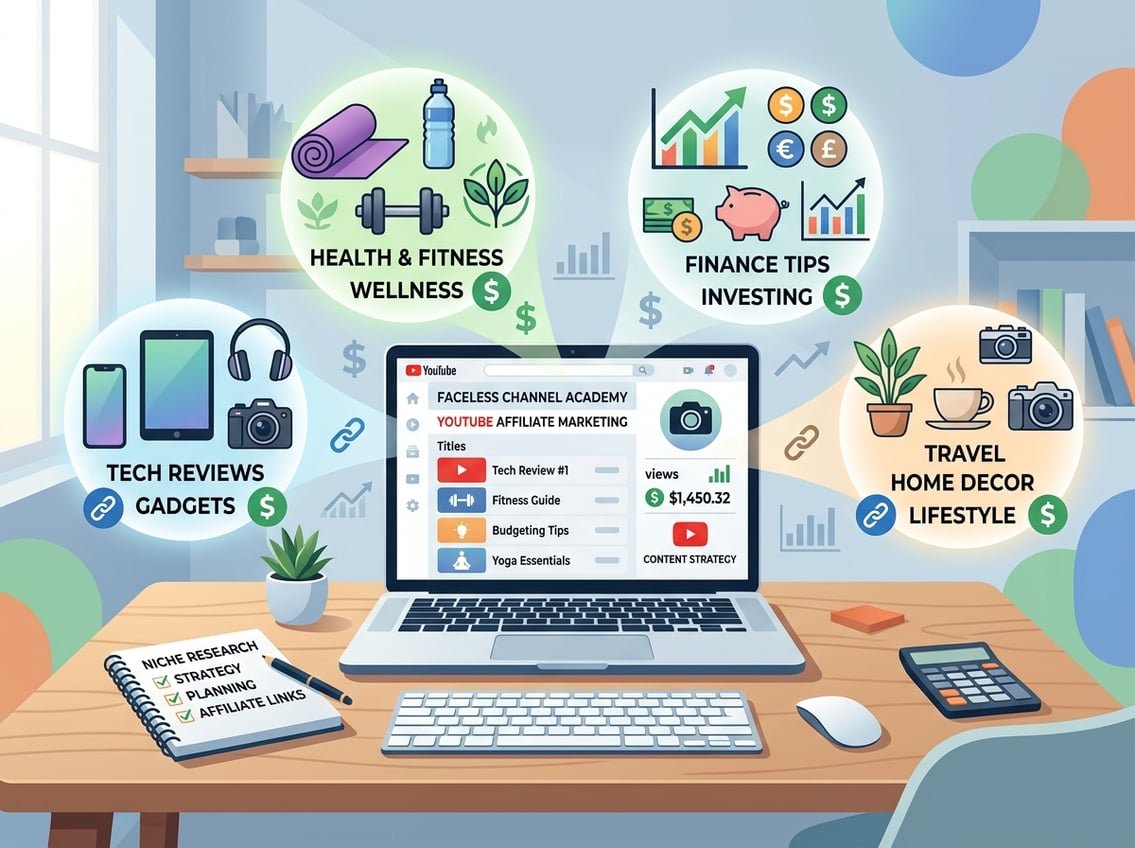
Your niche choice controls how easy it is to grow, rank, and earn. A strong faceless YouTube channel idea usually solves a clear problem and points naturally to products people already buy.
A lot of beginners choose broad entertainment topics, then wonder why affiliate clicks stay low. You want a niche where viewers arrive with intent, not just curiosity.
How to Choose a Niche With Buyer Intent
Start with problems that connect to purchases. Good examples include software tutorials, product reviews, product comparisons, finance channels, and tech reviews.
Use keyword research to look for phrases that show buying intent, such as “best,” “vs,” “review,” “software,” “tool,” or “how to use.” These often lead to affiliate-friendly videos because the viewer is already close to a decision.
You can also use Google Trends and YouTube autocomplete to spot rising topics and common search phrases. When you see repeated questions, that is a sign the niche has demand.
Best Faceless Channel Formats for Affiliate Offers
Some faceless channels fit affiliate marketing better than others. The easiest formats are:
- Product reviews
- Product comparisons
- Software tutorials
- Screen-based walkthroughs
- Explainer videos
- AI tool demos
- ASMR-style product showcases
- List videos with clear recommendations
If you want recurring commissions, focus on tools and subscriptions, not only one-time products. That is why SaaS, hosting, email tools, and creator tools often work better than random physical products.
Validate Demand With Search and Trend Data
Before you build around an idea, check whether people are searching for it now. Look at Google Trends, YouTube autocomplete, and keyword tools to see if the topic is stable or growing.
I like to test a niche by asking one simple question, can this topic support 30 video ideas without forcing weak content? If the answer is no, the niche is probably too narrow or too random.
A niche with consistent search demand gives you a better chance to build a faceless youtube channel that keeps earning long after each upload.
Build a Simple Channel Setup and Content Workflow
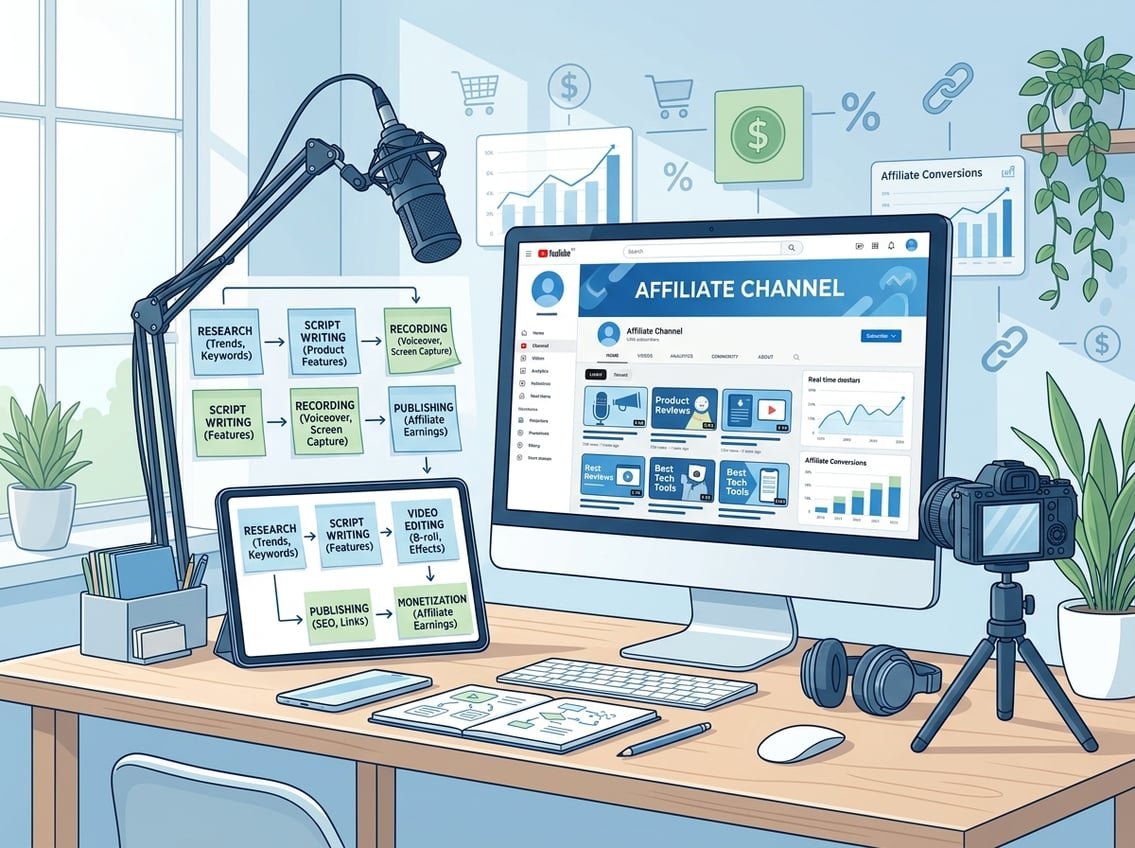
Your setup should be simple enough that you can repeat it every week. Channel branding, production tools, and a content calendar matter less than consistency, so keep the system lean.
The goal is to remove friction. If creating one video feels complicated, you will struggle to stay consistent.
Set Up Channel Branding for Trust and Clarity
Your channel branding should make your topic obvious at a glance. Use a clean logo, a readable banner, and a channel name that fits your niche instead of trying to sound clever.
Make your thumbnails and titles match the same style. When people see your videos in search or suggested feeds, they should know what you cover before they click.
Clear branding also helps trust. A faceless channel can still feel personal if your visuals, topic focus, and recommendations stay consistent.
Pick a Repeatable Production Stack
You do not need every tool at once. A simple stack can include Canva for thumbnails, ChatGPT for script drafts, Descript or CapCut for editing, and OBS Studio for screen recording.
For more advanced edits, some creators use DaVinci Resolve or Adobe Premiere Pro, though that is optional at the start. If you need visuals, stock footage from Storyblocks or Pexels can help fill gaps.
For voice, you can record your own audio or use ElevenLabs and other ai voiceover tools if that fits your workflow. If you use ai-generated voiceovers or voice cloning, keep it natural, clear, and ethically disclosed where needed.
Create a Content Calendar You Can Sustain
A content calendar should fit your real schedule, not your ideal schedule. Two solid videos a week is better than six rushed uploads followed by burnout.
I usually recommend batching the work, one day for research, one day for scripting, one day for recording and editing. That makes content consistency much easier.
Keep your topics grouped by theme. For example, you might post screen recording tutorials, software comparisons, and product reviews in the same niche so each video supports the next one.
Create Videos That Drive Clicks, Watch Time, and Trust
Your videos need to do three things well, get the click, hold attention, and earn trust. That starts with search intent and carries through the script, visuals, and offer placement.
Good faceless videos are not just informative, they are structured so the viewer never feels lost. That is what improves watch time and audience retention.
Structure Videos Around Search Intent and Problems
Make each video answer one main question. If someone searches “best email tool for beginners” or “screen recording tutorial for OBS,” your video should solve that exact need fast.
Put the answer early, then explain the details. That helps viewers stay longer because they feel progress quickly.
Playlists can also help you group related videos and guide people deeper into your channel. YouTube Shorts can bring new viewers in, while longer videos often do better for affiliate products and higher trust.
Write Scripts That Lead Naturally Into Recommendations
A good affiliate script does not feel like a sales pitch. It explains the problem, shows the process, and mentions the tool when it naturally fits the solution.
For example, if you are reviewing a video editor, show where it helps save time and where it might not be the best fit. That kind of honest balance makes your recommendation stronger.
If you use tools like Descript or other ai voiceover tools, script with short sentences and clear transitions. This keeps the video easy to follow and easier to edit.
Improve Titles, Thumbnails, and Retention Signals
Your title should promise a clear result. Your thumbnail should support that promise without too much text or clutter.
Track click-through rate, watch time, and audience retention in YouTube analytics. If viewers click but leave fast, your hook or pacing needs work.
Sometimes a simple change helps a lot, like showing the result earlier, cutting filler, or moving the affiliate mention later. The goal is to make the video useful enough that people trust your link.
Monetize With Affiliate Offers Before and After YPP
You do not need to wait for the YouTube Partner Program to start earning. Affiliate links, digital products, and sponsorships can work before you hit the usual YPP milestones of 1,000 subs and 4,000 watch hours.
That said, affiliate income often makes more sense early on because it rewards intent, not just views. A smaller channel with the right audience can still earn well if the offers are matched to the content.
Place Affiliate Links Without Hurting Viewer Trust
Put your links in the description, pinned comment, and a short mention near the relevant part of the video. Keep the language clear and honest.
Do not stuff the description with random links. Only recommend products that match the video and solve the viewer’s problem.
If you use affiliate programs like ShareASale or sell through Gumroad, make sure the offer feels useful, not forced. Trust is what turns views into clicks and clicks into commissions.
Prioritize Recurring SaaS and Tool-Based Commissions
Recurring commissions are often better than one-time payouts because they can compound over time. SaaS tools, email platforms, hosting, and creator software often fit this model well.
That is why many creators focus on digital products, software, and subscriptions instead of low-ticket items. A few steady signups can outperform a large number of tiny commissions.
This approach lines up well with a digital asset mindset. Your channel can keep sending traffic to offers that renew month after month.
Add Secondary Revenue Streams Over Time
After your channel starts getting steady views, you can layer in other income streams. These may include YouTube monetization through the YouTube Partner Program, sponsorships, and selling digital products or e-books.
According to iProfitLab’s recommended tools approach, the smartest move is to build around tools and systems you can trust, then add income streams slowly. That keeps the channel clean and easier to scale.
Ad revenue can help, though RPM varies a lot by niche and audience. Think of ads as a bonus, not your main plan.
Turn YouTube Traffic Into a Long-Term Income System
You get the best results when your YouTube channel supports other assets too. Email marketing, blogging, and SEO can turn one video into many traffic sources.
This is where the channel becomes more than a content feed. It becomes a system that keeps working after the upload date.
Capture Leads With a Simple Email Funnel
Use a simple lead magnet to collect email subscribers from your videos. A free checklist, starter guide, or template works well for beginners.
Once someone joins your list, you are no longer depending only on YouTube traffic. You can follow up with helpful emails, product links, and new video updates.
That is one reason iProfitLab puts so much focus on email list growth. Owning your audience gives you more control and less platform risk.
Repurpose Videos Into Blog Posts and Search Assets
Each strong video can become a blog post, newsletter, or short article. This gives you more reach from the same research and script.
Blogging also helps you target search terms that may be easier to rank for than YouTube alone. If your topic fits SEO, you can send traffic from both search engines and YouTube to the same offer.
This is a simple way to build a larger digital asset without doubling your work. One idea can become multiple content pieces across channels.
Measure What to Improve Each Month
Review your YouTube analytics each month and look for patterns. Pay attention to click-through rate, watch time, audience retention, and which videos send affiliate clicks.
Keep what works, remove what does not, and double down on the formats that get the best results. Small improvements in title choice, pacing, or offer placement can make a real difference.
A faceless youtube channel grows best when you treat it like a system, not a guess. You are building momentum, then improving the parts that move traffic and revenue.
Frequently Asked Questions
What niches work best for a faceless YouTube channel that promotes affiliate products?
The best niches are the ones with clear buying intent, such as software tutorials, product reviews, tech reviews, finance channels, and product comparisons. These topics make it easier to recommend tools, subscriptions, or digital products that solve a real problem.
What free tools can I use to create faceless YouTube videos from scratch?
You can start with free tools like Canva for thumbnails, OBS Studio for screen recording, Pexels for stock footage, and YouTube’s built-in editor for basic cuts. Free versions of editing tools can work too, as long as you keep your workflow simple.
How can I use AI legally and ethically to generate scripts, voiceovers, and visuals for faceless videos?
Use AI as a helper, not a replacement for truth or originality. You can draft scripts with ChatGPT, generate voiceovers with tools like ElevenLabs, and use AI visuals when they fit your message, while still checking facts, adding your own structure, and avoiding copied or misleading content.
How do faceless YouTube channels typically earn money, and how does affiliate income fit in?
Faceless channels usually earn through affiliate links, ad revenue from the YouTube Partner Program, sponsorships, and digital products. Affiliate income often fits best early because it can start working before you reach YPP thresholds and can pay based on buyer intent instead of view count.
What’s the best way to add affiliate links in descriptions without violating YouTube or FTC rules?
Place the link near the top of the description, label it clearly, and disclose that it is an affiliate link. Keep the recommendation relevant to the video, avoid spammy link lists, and make sure your disclosure is easy to see.
Is it realistic to make $100 a day with affiliate marketing via YouTube, and what factors affect it most?
It is possible, though not guaranteed, and it usually depends on niche quality, traffic volume, offer match, and conversion rate. A channel focused on recurring SaaS tools, search-driven videos, and strong trust-building content has a better chance than one built around random topics.