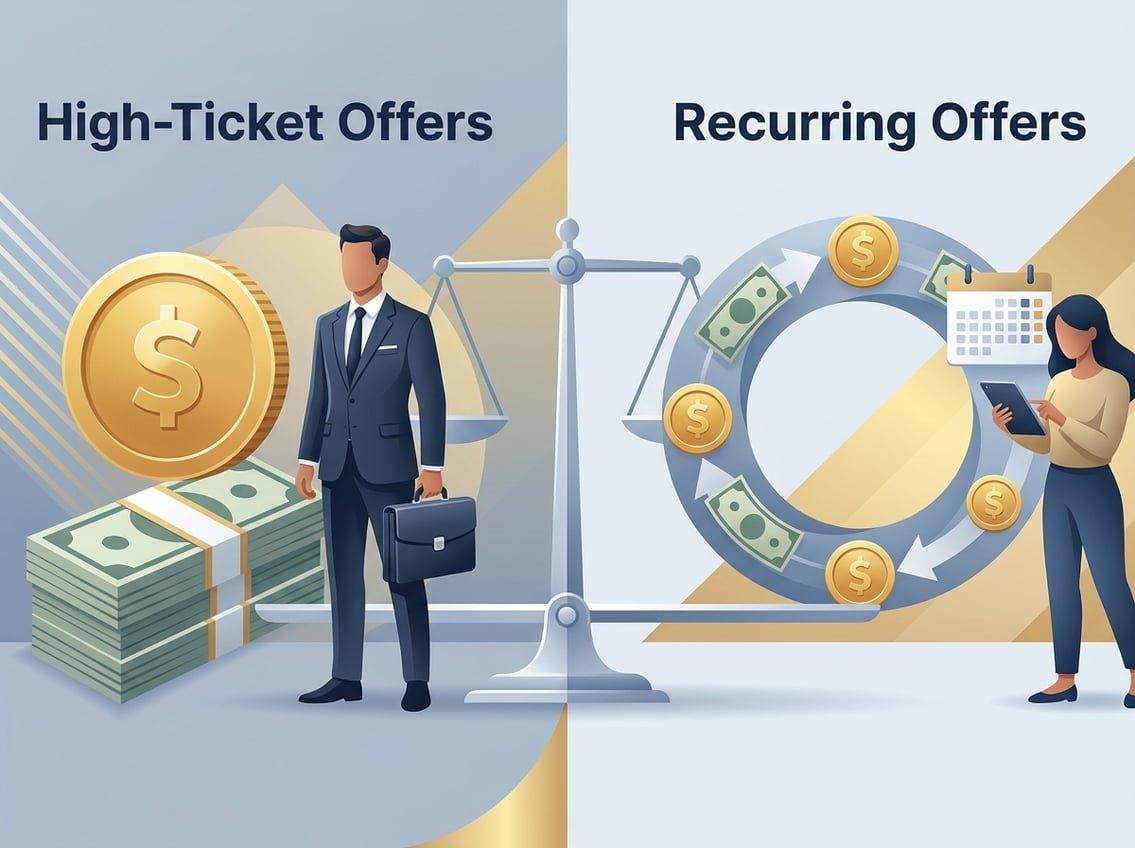
High-Ticket vs Recurring Affiliate Offers is not really a question about which model sounds better. It is a question about which model fits your content, your traffic, and how long you want to wait for revenue to build.
If you want faster cash from fewer sales, high-ticket affiliate programs can work well. If you want income that compounds over time, recurring commissions usually fit beginners better because each new customer can keep paying you month after month.
For most beginners, the better choice is the one you can promote consistently without burning out. That usually means matching the offer to your buyer intent, your content style, and the kind of trust you can build through blog posts, SEO, and email marketing.
Key Takeaways
- High-ticket offers pay more per sale.
- Recurring offers pay less at first, then stack over time.
- Your traffic strategy matters as much as the commission size.
What Each Offer Model Actually Means
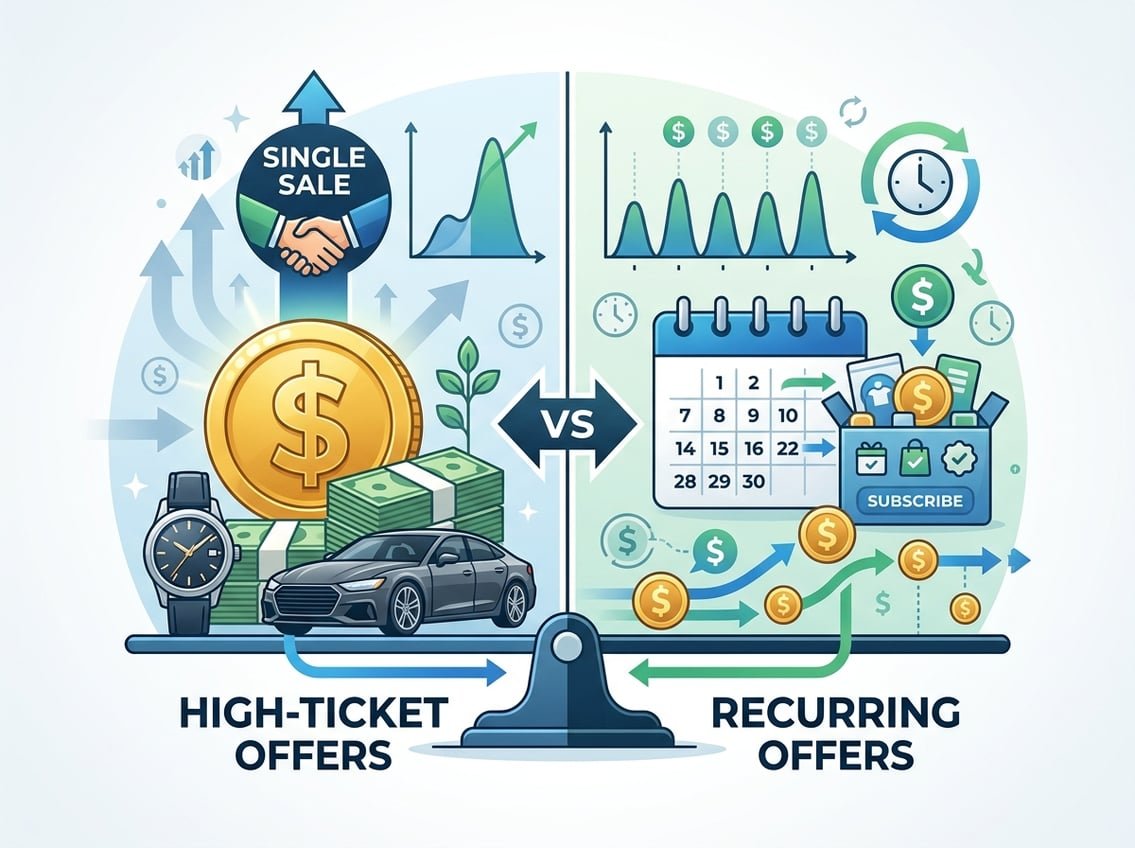
A high-ticket affiliate earns a larger commission when someone buys a premium product, course, or service. A recurring offer pays you monthly or on another schedule as long as the customer stays active.
The real difference is the commission structure. One model gives you larger affiliate payouts upfront, while the other can create recurring revenue and recurring income over time.
How High-Ticket Offers Generate Larger One-Time Payouts
High-ticket affiliate marketing usually centers on premium products with bigger price tags. That can mean one sale worth hundreds or even thousands of dollars in commission, depending on the offer.
A high-ticket affiliate offer often needs more trust and a longer sales cycle. People compare options, read reviews, and want proof before they buy. That is why buyer intent matters so much.
How Recurring Offers Build Ongoing Monthly Revenue
Recurring commissions usually come from software, memberships, or subscriptions. You may earn a recurring monthly commission for every active customer, which can turn into steady monthly commissions if retention stays strong.
This model works well when the product solves an ongoing problem. Email tools, hosting, and membership sites often fit this pattern because people keep paying for them as long as they use them.
Where Hybrid Programs Combine Upfront and Ongoing Earnings
Some offers combine a first-time payout with lifetime commission or monthly commissions. These hybrid programs can be attractive because they give you both immediate affiliate income and long-term recurring revenue.
That mix can be useful if you want a balance of cash flow and stability. It is worth checking the exact commission structure before you promote anything, since terms vary by program.
Which Model Fits Your Goals, Skills, and Traffic Strategy

Your choice should match your audience and your content channel. Content creators, consultants, coaches, and digital marketers all bring different traffic patterns, so the same offer will not perform the same way for everyone.
If you publish content around buyer intent, the payout model matters less than the fit between the offer and the searcher’s goal. If your traffic is colder, trust and clarity matter even more.
When High-Ticket Makes Sense for Smaller Audiences and Premium Buyers
High-ticket affiliate marketing can work even with a smaller audience if that audience is highly targeted. A niche blog, a focused YouTube channel, or a specific email list can all support premium offers when the message is clear.
This is a strong fit when you can speak to serious buyers who already know the problem they want to solve. If your readers are comparing tools, reading reviews, or ready to invest, high-ticket affiliate offers can convert well.
When Recurring Offers Are Better for Stable Long-Term Growth
Recurring commissions are often easier for beginners because the first sale does not have to carry your whole month. Each customer adds to recurring revenue, which makes growth feel steadier.
This is especially useful if you want passive income that keeps building while you publish new content. Many beginners like this model because it rewards patience, not just one-time spikes.
How Sales Cycle, Trust, and Content Style Affect Your Choice
A long sales cycle usually favors high-ticket offers because buyers need more education before they act. That means comparison posts, case studies, and strong email follow-up matter a lot.
Recurring offers fit better with helpful tutorials, setup guides, and use-case content. If your style is simple, practical, and systems-based, recurring affiliate income often feels more natural.
The Numbers Behind Earnings and Risk
Your earnings are not just about payout size. You also need to look at conversion volume, churn, retention, cookie windows, and how long it takes to collect meaningful affiliate income.
A high commission can look great on paper, yet still underperform if few people buy. A smaller recurring monthly commission can beat it if enough customers stay active.
Comparing Conversion Volume vs Payout Size
High-ticket offers need fewer sales to reach a target, which sounds appealing. The catch is that the conversion rate may be lower because the buyer is making a bigger decision.
Recurring offers usually need more customers, but each sale can be easier to get. That tradeoff matters when you compare monthly commissions against one-time affiliate payouts.
Why Churn, Retention, and Lifetime Value Matter
Recurring revenue only works if customers stay. Churn, which means cancellations, can quietly erase your gains if the offer does not hold value over time.
This is why lifetime value matters so much. A small recurring commission can outperform a larger one-time payout when retention is strong and the offer serves the customer well.
How Cookie Windows and Attribution Change the Math
Cookie windows affect how long after a click you still get credit for a sale. A 90-day cookie gives you a longer shot at earning, while shorter windows can reduce your chances if buyers take time to decide.
Attribution rules also matter. If someone clicks your link, waits a week, then buys after comparing options, your commission may depend on the program’s tracking setup, not just your content quality.
Best Offer Types and Niches for Beginners
Beginners often do best with tools people use often and understand quickly. That is why SaaS, email marketing, hosting, and membership sites can be stronger than random one-off products.
Some programs favor recurring commissions, while others are built for larger one-time payouts. You want offers that match your audience’s needs and your content plan.
Why SaaS and Email Marketing Tools Often Favor Recurring Commissions
Software as a service usually fits recurring revenue because users keep paying each month. Email marketing tools are a good example since creators and bloggers rely on them for list growth and monetization.
That is one reason platforms like Beehiiv for newsletters and monetization and similar tools are often discussed in beginner affiliate circles. They solve ongoing business needs, so the recurring model feels natural.
When Premium Software and Services Work as High-Ticket Offers
Premium software, coaching, and done-for-you services often fit high-ticket affiliate marketing. These offers work best when the buyer is already serious and wants a bigger outcome.
If you can explain who the offer is for, what problem it solves, and why it is different, higher-priced programs can make sense. The key is to avoid pushing premium products before your audience is ready.
Examples Like Google Workspace, Membership Tools, and Amazon Associates
A Google Workspace affiliate program style offer is a simple example of a tool people use in real work, which can make promotion easier when you focus on business use cases. Membership sites and email tools often lean recurring, while Amazon Associates is a classic low-ticket model that can still work for product roundups and beginner tutorials.
These examples show why no single model wins every time. The best choice depends on the product type, the audience, and how the offer fits your content.
How to Promote Both Models Without Confusing Your Audience
Clear promotion starts with keyword research and buyer intent. If your content matches what the reader is already trying to do, your offers feel useful instead of forced.
You can also use landing pages, email sequences, and sales funnels to guide people at different stages. That matters a lot when you mix high-ticket affiliate offers with recurring commissions in the same business.
Matching Blog Posts and Keyword Research to Buyer Intent
When someone searches for a comparison, review, or setup guide, they are usually closer to buying. Those posts are a natural place to place affiliate links, because the intent is already there.
For top-of-funnel content, keep the focus on education. For bottom-of-funnel content, write with a clearer recommendation and a more direct call to action.
Using Landing Pages, Email Sequences, and Sales Funnels Effectively
Landing pages help you control the message before you send visitors to an offer. A simple page can explain the problem, the tool, and why it fits a certain user.
Email marketing adds another layer of trust. A short sequence can answer common objections, show use cases, and send readers back to your best content when they are ready.
Where Webinars and Comparison Content Help Higher-Priced Offers Convert
Webinars often help with higher-priced offers because they give you time to explain the value. They also work well when the buying journey is longer and the product needs more context.
Comparison posts are useful too, especially when you are helping readers choose between two tools. They work best when you stay fair, specific, and focused on the actual decision.
A Simple Decision Framework for Choosing Your Starting Point
Your best starting point is the model that fits your current traffic and your patience level. If you want compounding income, recurring revenue is usually easier to build into a system.
If you already have strong buyer intent and a clear message, high-ticket affiliate marketing can work well. The key is to pick one path first, then expand when your content and email list grow.
Start With Recurring Offers if You Want Compounding Income
Recurring income is easier to feel and track when you are starting out. Each new subscriber or user can add monthly commissions, which helps you see progress without needing a big sale every time.
This is why many beginner systems, including the kind iProfitLab teaches around blogging and email list ownership, start with recurring tools. It keeps the business simpler and easier to measure.
Start With High-Ticket if You Can Support a Longer Buying Journey
If your content already attracts serious buyers, high-ticket can be a strong starting point. You need enough trust, enough proof, and enough follow-up to support a longer sales cycle.
That usually means your blog posts, videos, or emails do more education before the pitch. When done well, the smaller number of sales can still create strong affiliate income.
Build a Balanced Portfolio as Your Traffic and Email List Grow
As your audience grows, a mixed portfolio often works best. You can use recurring offers for steady baseline revenue and high-ticket offers for bigger spikes.
That balance gives you flexibility. It also reduces risk if one offer changes terms, lowers payouts, or stops converting as well.
Frequently Asked Questions
Is promoting higher-priced affiliate products actually worth the effort for most marketers?
It can be worth it if your audience has strong buyer intent and you can support a longer sales cycle. If your traffic is mostly cold or early-stage, you may see better results with simpler recurring offers first.
When does a recurring-commission offer outperform a one-time commission offer?
Recurring offers often win when retention is strong and the product solves a lasting problem. A smaller monthly payout can grow into a larger lifetime value than a single commission if customers stay for many months.
How should I compare EPC, conversion rate, and churn when choosing an affiliate offer?
EPC shows average earnings per click, conversion rate shows how often clicks turn into sales, and churn shows how many recurring customers cancel. You want a balance of all three, not just the biggest headline commission.
What are the biggest risks and downsides of relying on high-commission offers?
The biggest risk is depending on fewer sales to hit your income goal. If traffic slows or buyers take longer to decide, your earnings can swing hard from month to month.
How can I apply the 80/20 rule to prioritize the affiliate offers that drive the most revenue?
Track which offers get the most clicks, the best conversion rate, and the strongest retention. Then focus more of your content, email links, and reviews on the offers that produce most of your revenue with the least friction.
Which approach tends to work better for beginners: fewer big commissions or smaller commissions that repeat monthly?
For most beginners, smaller commissions that repeat monthly are easier to understand and easier to build around. High-ticket can pay more per sale, yet recurring offers usually make the learning curve and income path feel more stable.