Affiliate marketing mistakes can drain your time, your budget, and your confidence before your affiliate business ever gets traction. If you want to make money with affiliate marketing, you need to avoid the common pitfalls that slow down traffic, weaken trust, and keep commissions small.
The biggest mistake is not usually one bad post, it is building the wrong system, then expecting it to pay off. When you choose the wrong niche, publish weak content, skip tracking, or rely only on unstable traffic, you make growth much harder than it needs to be.

If you want a simpler path, focus on trust, recurring income, and systems that compound. That is the kind of approach iProfitLab emphasizes, and it is a much better fit for beginners than hype or random side-hustle advice.
Key Takeaways
- Pick a niche that matches demand and buying intent.
- Build helpful content that earns trust and traffic.
- Track what works so you can improve it.
Starting With the Wrong Business Model
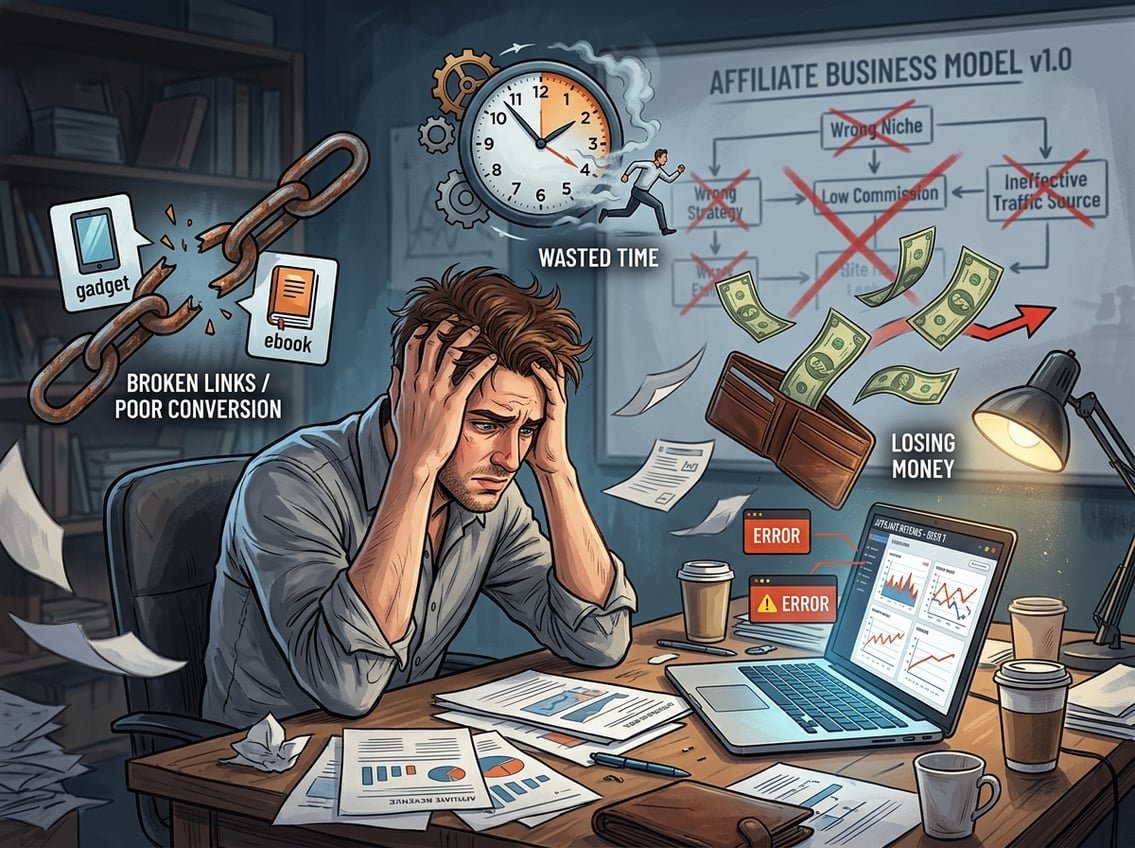
A weak start usually comes from choosing the wrong niche, the wrong offers, or the wrong commission setup. If you do not match your target audience to the right affiliate marketing strategy, you end up working hard for little return.
The best affiliate business models are simple, clear, and built for compounding results. That usually means focusing on one audience, one content direction, and an affiliate program with real earning potential.
Treating Affiliate Marketing Like Fast Money
Many beginners expect quick passive income, then quit when traffic and sales take time. Affiliate marketing is not a fast cash system, it works best when you build trust, publish useful content, and let assets grow.
This mindset matters even more with SEO and email. Those channels reward patience, while rushed tactics usually create low-quality pages and short-lived wins.
Choosing the Wrong Niche Too Early
Choosing the wrong niche often happens before you understand the market. A niche can look exciting, yet still fail if the audience has weak buying intent, limited problems, or little interest in recommended tools.
A better approach is to check whether people already search for solutions and buy related products. That is where keyword research, content topics, and affiliate program research should guide your choice.
Picking Offers With Bad Economics
Some affiliate programs look fine on the surface, then fail in practice because of low commission rates, weak commission structure, or short cookie duration. Even affiliate networks like Amazon Associates or ShareASale can be useful, yet the product and payout model still need to fit your content plan.
For SaaS and recurring affiliate commissions, the economics often work better because one sale can keep paying over time. If you want durable passive income, compare affiliate commissions, cookie duration, and product fit before you promote anything.
Publishing Content That Never Earns Trust or Traffic

Your content has to do two jobs at once, attract search traffic and earn audience trust. If it does neither, your affiliate website turns into busy work instead of a real asset.
Strong content marketing comes from a clear content strategy, helpful content, and original content that matches search intent. Evergreen content and good product reviews are usually stronger than random posts made only to place links.
Ignoring Search Intent and Keyword Research
A lot of beginner content misses the point because it targets the wrong query. You may rank for a term, yet still get no clicks or sales if the page does not match what the searcher actually wants.
I have seen this happen when people write broad posts without keyword research. The fix is simple, choose topics with clear intent, then build around organic traffic, search engine optimization, and the actual question behind the search.
Creating Thin Reviews and Generic Listicles
Thin reviews sound vague, repeat the product page, and fail to help the reader decide. Generic listicles do the same thing when they promote products without real comparisons, clear use cases, or honest tradeoffs.
Better product reviews explain who the product is for, what it does well, and where it falls short. Comparison posts and focused listicles work best when they are based on real use, not copied claims.
Promoting Too Many Products Instead of Building Authority
If you promote too many products too soon, your audience does not know what you stand for. That makes branding weaker and audience trust harder to build.
A better move is to narrow your content around a few related tools and use cases. You can still expand later, but authority grows faster when your affiliate website becomes known for solving one type of problem well.
Losing Clicks and Sales Through Weak Trust Signals
Affiliate links can work only when readers trust you enough to click them. That means transparency, fit, and clear intent matter more than link count.
If you hide your affiliate relationships or push offers that do not fit, you lose long-term relationships before they start. A new affiliate marketer often learns this the hard way after traffic never turns into affiliate sales.
Not Disclosing Affiliate Relationships Clearly
You should disclose affiliate links and disclose affiliate relationships in a clear, simple way. Readers do not expect you to work for free, they expect honesty.
Transparency supports building trust and protects your credibility. It also keeps your recommendation style aligned with trust signals instead of sounding like a hidden sales pitch.
Using Too Many Affiliate Links the Wrong Way
Too many affiliate links can make content feel cluttered and hard to read. It can also confuse affiliate tracking and make it harder to see which links are actually getting clicks.
I have found that fewer, better-placed links usually perform better than stuffing every paragraph. Avoid anything that looks like cookie stuffing or aggressive promoting products without context.
Recommending Products That Do Not Fit the Audience
The fastest way to lose audience trust is to recommend something just because it pays. When the offer does not match the reader’s problem, the sale feels forced.
Pick products that fit the stage your reader is in and the outcome they want. That is how you build long-term relationships and stronger affiliate sales over time.
Ignoring SEO, UX, and Conversion Basics
Even good content can fail if your site design is confusing or your pages are hard to use. Search engine optimization is not just about ranking, it is also about making it easy for people to stay, click, and buy.
Conversion optimization depends on small details like headings, layout, load speed, and mobile responsiveness. If your site feels messy, your click-through rate and conversion rate usually suffer.
Skipping On-Page Optimization and Site Structure
If your pages are not organized, search engines and readers both struggle. Basic on-page optimization, clean headings, internal links, and tools like Yoast can make a big difference.
A simple site structure also helps people move from one article to the next. That matters for an affiliate website because more page depth often means more chances to earn.
Overlooking Mobile Responsiveness and User Experience
A lot of affiliate traffic comes from phones, so mobile responsiveness is not optional. If buttons are tiny or text is hard to read, people leave fast.
Good site design should reduce friction, not add it. When user experience is strong, bounce rate tends to drop and readers stay long enough to click your affiliate offers.
Failing to Improve Click-Through Rate and Conversion Rate
Many beginners publish and never revisit the page. That means weak headlines, weak calls to action, and poor placement stay in place for months.
You can improve CRO by testing better buttons, clearer product explanations, and stronger comparison sections. Small conversion rate optimization changes often create better results than publishing more low-quality posts.
Running Blind Without Tracking and Testing
If you do not use analytics and tracking, you are guessing. That makes it hard to know which pages, traffic sources, and offers are actually earning money.
The best affiliate marketers watch patterns, then adjust quickly. Google Analytics, MonsterInsights, affiliate dashboards, and link tracking all help you see where your time pays off.
Not Using Analytics to Find What Works
Google Analytics can show which pages bring traffic and which pages send people away. That helps you spot weak content before it wastes more time.
I like to check basic traffic sources, bounce rate, and top pages on a regular schedule. You do not need complex reports, you need a clear view of what is helping your business grow.
Failing to Track Affiliate Links and Dashboard Data
Affiliate dashboards tell you more than many beginners realize. You can see which products get clicks, which offers convert, and where your affiliate sales come from.
If you do not track link performance, you cannot tell whether the problem is traffic, content, or the offer itself. That is one of the quickest ways to waste months on the wrong page.
Guessing Instead of Testing Traffic and Content Performance
Testing gives you better answers than opinions. Try different headlines, content formats, and traffic sources, then compare the results.
When you track link performance and content performance together, you make better decisions faster. That is how you stop guessing and start improving conversion rate with real data.
Depending on Unstable Traffic Instead of Owned Audience Systems
Social media can help, and paid traffic can scale a winning offer. If you depend on them too much, you can lose momentum as soon as an algorithm changes or ad costs rise.
A stronger affiliate marketing strategy builds owned traffic systems too. Building an email list, using lead magnets, and focusing on long-term relationships gives you more control.
Relying Too Much on Social Media or Paid Ads
Social media traffic can disappear fast if reach drops. Paid ads can also get expensive before you find a stable return.
That makes paid traffic risky for beginners who do not yet know their numbers. If you use Facebook ads or other paid ads, treat them as a test channel, not your only growth plan.
Neglecting Email List Growth and Lead Magnets
Email marketing gives you a direct way to keep in touch with readers. That matters because your list belongs to you, while platform traffic does not.
Lead magnets help you build that list faster. If you want recurring income, building an email list should start early, not after everything else is “finished.”
Building a More Durable Traffic Mix Over Time
The most stable affiliate business usually blends organic traffic, email, and selective social media. That mix is slower to build, yet it is far less fragile.
A simple content marketing plan can move readers from search to email to offers without feeling pushy. That approach fits the iProfitLab philosophy well, simplicity over complexity, trust over hype, and systems over shortcuts.
Frequently Asked Questions
What are the most common affiliate marketing mistakes beginners make when starting out?
The most common mistakes are choosing the wrong niche, promoting weak offers, ignoring SEO, and expecting fast results. Beginners also skip tracking, which makes it hard to know what is working.
Why do some affiliates get traffic but still fail to generate commissions?
Traffic alone does not guarantee sales. If the content misses search intent, the offer does not fit the audience, or the page lacks trust signals, people may click and still not buy.
How do I choose the right traffic sources for affiliate marketing without wasting money?
Start with one primary free channel, usually SEO or email, then add other channels later. Pick traffic sources that match your strengths and let you test without large ad spend.
What are the biggest mistakes people make when running paid ads for affiliate offers?
The biggest mistakes are sending cold traffic to weak pages, not tracking results, and spending before the funnel is proven. If the page and offer are not converting organically, paid ads usually make the problem more expensive.
How can I tell if an affiliate product or network is low quality before promoting it?
Check commission rates, commission structure, cookie duration, refund risk, and whether the product solves a real problem. If the product feels hard to explain or the network gives you little visibility, that is a warning sign.
What are the most common YouTube affiliate marketing mistakes that stop channels from making sales?
The biggest mistakes are vague videos, weak calls to action, and recommending too many unrelated products. If your videos do not solve one clear problem, viewers may watch without clicking or buying.
If you want a simpler way to start, download the Free AI Income Starter Kit or review the Recommended Tools page for practical tools and step-by-step direction.