Affiliate funnels fail for beginners for a few simple reasons, and most of them have nothing to do with the product itself. You can have a decent offer, a clean page, and steady traffic, then still see weak results if the path is confusing, the audience is cold, or the follow-up is missing.
The main issue is usually not the funnel software, it is the lack of fit between the traffic, the message, and the offer. When you fix that, conversion rates improve without adding more pages or more pressure.
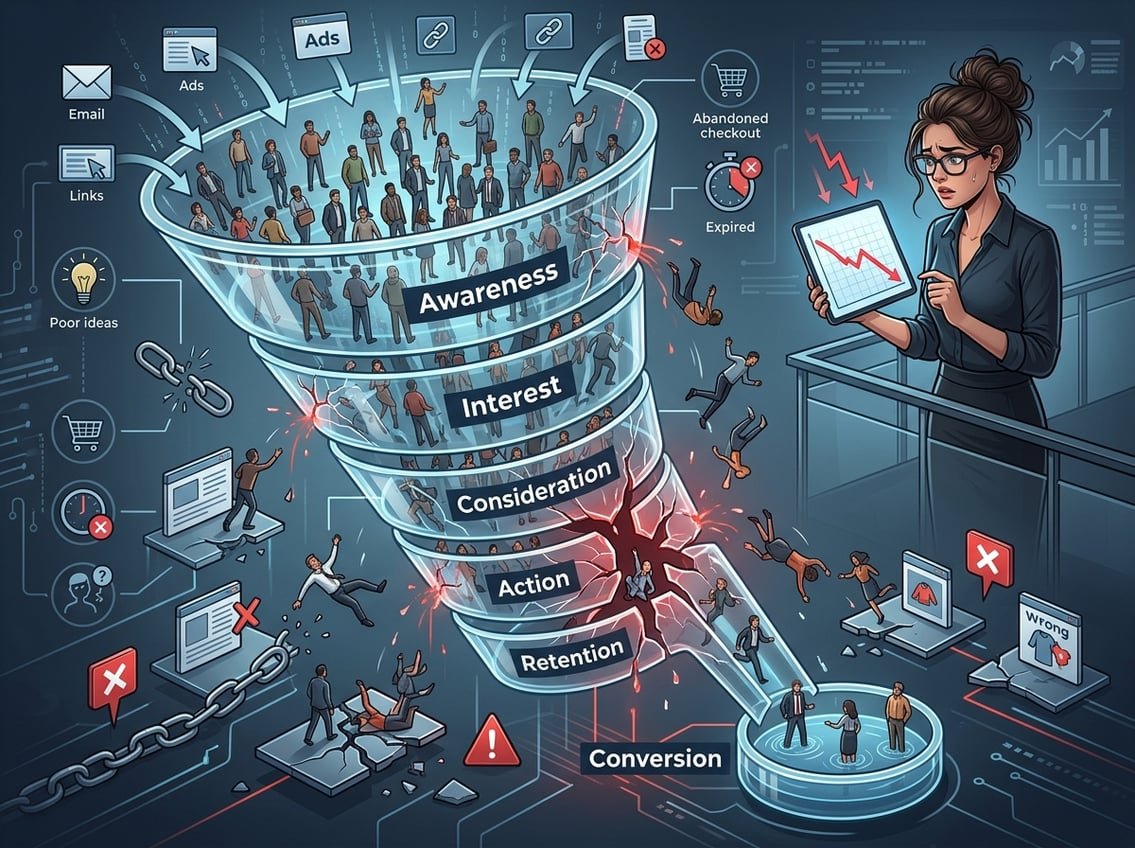
If you have been wondering why most affiliate funnels fail, the answer is usually a mix of weak targeting, poor trust, and too many steps. In affiliate marketing, people do not buy just because they clicked. They buy when the offer matches their need and your content has already built enough confidence.
Key Takeaways
- Most funnel problems start before the offer page.
- Simple paths often convert better than complex ones.
- Trust and follow-up matter as much as traffic.
The Real Reason Clicks Do Not Turn Into Commissions
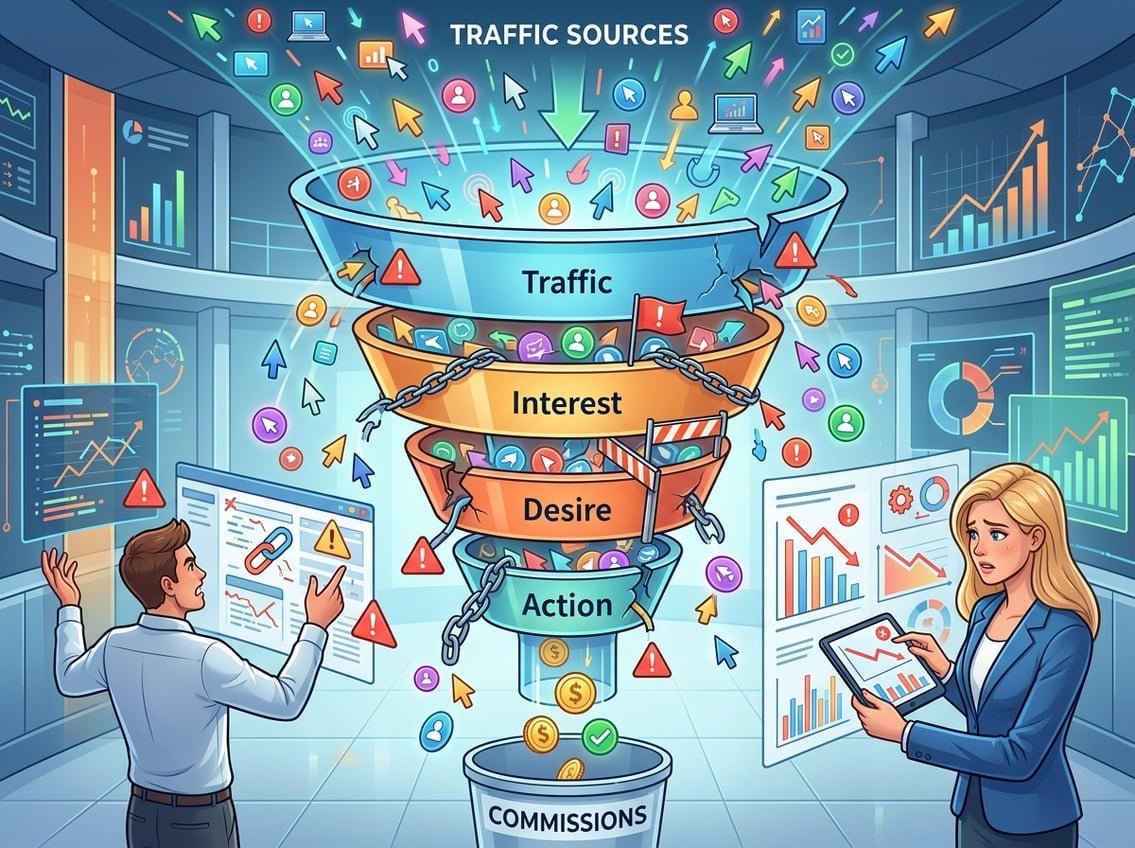
Clicks do not turn into commissions when the traffic source, offer, and message are misaligned. A good conversion rate comes from targeted traffic, clear expectations, and enough trust to get a second look.
Promoting Is Not the Same as Selling
You can promote offers all day and still not sell anything if the reader does not see why the product matters. Affiliate marketers often paste links into content and expect the page to do the rest, which is rarely enough.
Selling starts before the click. It starts when you frame the problem clearly and show why the solution fits.
Why Cold Traffic Rarely Converts on the First Visit
Cold traffic usually needs more context before it buys. A person from social media, display ads, or broad search may be curious, yet not ready to act.
As noted in a discussion on clicks without sales, a click alone does not prove buying intent. That is why targeted traffic usually performs better than random traffic.
How Leaks Happen Before the Offer Gets a Fair Chance
Most leaks happen before the visitor reaches the offer. A vague headline, weak transition, or mismatched promise can lose the reader early.
A funnel also leaks when the page asks for too much too soon. Every extra click adds a chance for hesitation, which lowers conversion rates fast.
Broken Funnel Foundations That Hurt Performance Early
A weak affiliate funnel usually starts with poor audience research and a bad path from content to offer. If the first pages do not match what the reader wants, no amount of design fixes the problem.
Weak Audience Research and Poor Offer Match
If you do not know what your audience wants, you end up promoting the wrong product. That is common when beginners choose offers because the commission looks good instead of checking whether the solution fits the reader’s problem.
Before you promote offers, ask what stage the reader is in. A beginner asking “how do I start?” needs a different message than someone already comparing tools.
Sending Visitors Straight to Vendor Pages
Sending people straight to a vendor page often drops conversion rates because the visitor has not heard from you yet. A bridge page can help by adding context, but it still needs clear intent and a simple message.
A short bridge page or landing page gives you room to explain why the offer matters. That extra step can make the funnel feel more natural and less abrupt.
Overcomplicated Paths That Create Friction
A simple funnel usually works better than a long chain of pages, timers, upsells, and branching paths. Too many steps create friction, and friction lowers action.
In practice, I have seen beginners get stuck tweaking pages instead of fixing the message. A clean path with one clear next step usually beats a crowded setup.
Why Done-for-You Funnels Often Underperform Without Strategy
Done-for-you funnels can save time, yet they still need strategy. If the audience, traffic source, and offer are not aligned, the funnel underperforms no matter how polished it looks.
Conversion rate optimization starts with fit, not with fancy software. A good system is built around what the reader wants, not just what the funnel builder can do.
Trust Gaps That Stop People From Buying
People buy when they trust the recommendation and believe the content is honest. If the page feels pushy, thin, or disconnected from the offer, the funnel stalls.
Missing Trust Signals and Social Proof
Trust signals matter because people want proof that your recommendation is not random. That can include screenshots, examples, clear explanations, or even simple notes about why you chose a tool.
Social proof helps too, yet it should support the message, not replace it. A page with no context often looks like a sales pitch, even when the offer is solid.
Why Helpful Content Outperforms Aggressive Pitching
Helpful content builds trust faster than hard selling. A useful blog post can answer the reader’s question first, then introduce the product as a natural next step.
This is where simple content systems work well. When the reader feels helped, the offer becomes easier to consider.
Message Mismatch Between Content and Offer
Message mismatch is a quiet funnel killer. If your content promises one result and the offer solves a different problem, the reader leaves.
You want your blog post, email, and landing page to tell the same story. That consistency makes the offer feel relevant instead of forced.
Lead Capture and Follow-Up Systems Most Beginners Skip
Many funnels fail because they try to close the sale on the first visit. If you do not capture emails, you lose most of your chance to build trust later.
Why You Need to Capture Emails Before Interest Disappears
Interest fades fast. Capturing emails lets you stay in touch after the first click, which matters when the reader is interested but not ready to buy.
An email list also gives you control. You are not relying only on social media traffic or one search result to make the sale.
Choosing a Lead Magnet That Matches Search Intent
Your lead magnet should match why the person came to your content. If they searched for beginner help, a checklist, template, or short guide often works better than a broad training.
A good lead magnet feels like the next logical step. iProfitLab uses this approach in its Free AI Income Starter Kit, which is meant to help beginners move from confusion to a clear system.
How an Email Sequence Warms Up Hesitant Readers
An email sequence works best when it educates before it promotes. Use a few short email sequences to answer objections, show use cases, and remind readers why the offer matters.
A strong follow-up sequence does not need to be long. It needs to be useful, timely, and easy to scan.
When Retargeting Ads and Webinars Make Sense
Retargeting ads and webinars can help when you already have enough traffic and a clear offer. They make less sense for a brand-new funnel that still needs better message fit.
Use them after the basics are working. If the page, email, and content are not converting, more complexity will not fix it.
Traffic Quality, Content Strategy, and SEO Alignment
Traffic quality matters more than traffic volume. If the people landing on your page are not interested in the solution, your conversion rate will stay low.
Why Targeted Traffic Beats Cheap Clicks
Cheap clicks can look good in a dashboard, yet they often come from people with little buying intent. Targeted traffic may cost more or grow slower, but it usually leads to better action.
This is one reason social traffic often underperforms for buying intent. Random clicks are not the same as ready-to-buy visitors.
Using SEO Blog Content to Pre-Sell the Right Audience
SEO lets you attract people who already want an answer. A strong blog post can pre-sell the reader by explaining the problem, comparing options, and showing why one tool or system fits.
That is why blogging works so well for affiliate marketing. It gives you a long-term asset that keeps bringing in targeted traffic.
Matching Traffic Generation Channels to Funnel Intent
Different traffic sources have different intent. Search traffic is often problem-aware, while social traffic may be more casual and less ready to act.
Match the channel to the goal. If the funnel depends on trust and education, SEO and email usually work better than quick-hit traffic.
A Simpler Model That Works Better Over Time
A simple funnel often outperforms a crowded one because it is easier to maintain and easier for readers to follow. The goal is not to build the biggest system, it is to build the clearest one.
The Basic Path: Helpful Content to Email List to Offer
A reliable path looks like this, helpful content, email capture, follow-up, then the offer. That path works because it respects how people actually make decisions.
You can build this around a blog post, a short lead magnet, and a few helpful emails. It is simple enough to manage and strong enough to repeat.
How to Improve Conversion Rates Without Adding More Steps
If conversion rates are weak, improve the message before adding another page. Check the headline, the offer match, the call to action, and the trust signals.
A smaller funnel with better alignment often beats a bigger funnel with more moving parts. Clarity usually converts better than complexity.
Building a Repeatable System Around Recurring Affiliate Offers
Recurring commissions work well when your funnel is built around long-term trust. SaaS tools, email platforms, and creator tools often fit this model because readers need ongoing solutions.
That is one reason recurring affiliate marketing pairs well with SEO and email marketing. You can keep attracting new visitors while also building a list of readers you can follow up with over time.
Frequently Asked Questions
What are the biggest mistakes people make when building an affiliate funnel from scratch?
The biggest mistakes are picking the wrong offer, sending traffic with weak intent, and skipping email capture. Many beginners also make the funnel too complicated before proving that the core message works.
How do you match the right offer to the right audience so the funnel actually converts?
Start with the reader’s problem, then choose an offer that solves that exact problem at the right stage. If the content is for beginners, the offer should feel beginner-friendly and easy to act on.
Which funnel steps most often cause drop-offs, and how can you fix them?
The biggest drop-offs usually happen on the first page, the transition to the offer, and the follow-up gap. You can fix them by making the message clearer, reducing friction, and using a simple email sequence.
What tracking and attribution setup do you need to know what’s working and what isn’t?
You need basic tracking for clicks, opt-ins, and sales so you can see where people stop. At minimum, track which traffic source brought the visitor, which page they saw, and whether they joined your list or bought.
How much traffic do you need before you can reliably optimize an affiliate funnel?
You need enough traffic to spot a pattern, not just one or two clicks. Small numbers can mislead you, so focus on steady data from the same traffic source before making big changes.
What follow-up emails and retargeting sequences tend to improve affiliate funnel performance?
Follow-up emails that answer objections, show use cases, and restate the benefit usually perform best. Retargeting ads can help too, especially when you already have traffic and want to remind visitors who did not act yet.