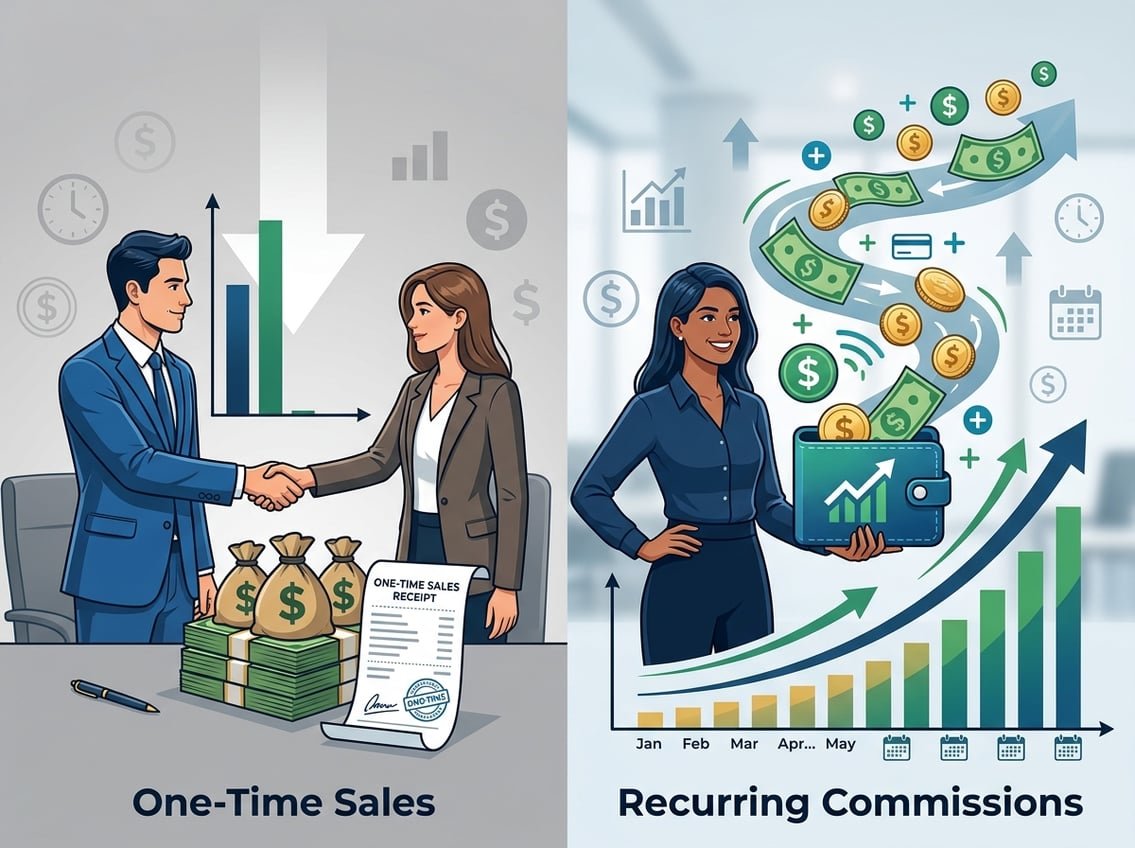
Recurring commissions beat one-time sales for beginners because they give you a better chance to build income that compounds instead of resets. With one-time sales, you get paid once and start over. With recurring commissions, one referral can keep paying for months, which changes how you think about traffic, content, and long-term effort.
That shift matters a lot when you are still learning affiliate marketing, SEO, email, or SaaS promotions. If you want income that becomes more stable as your content library grows, recurring commissions usually give you a better path than one-time payouts.
Key Takeaways
- One sale can pay once, recurring sales can pay many times.
- Retention often matters as much as the first conversion.
- Content that attracts the right users can compound for months.
The Core Difference in How You Get Paid
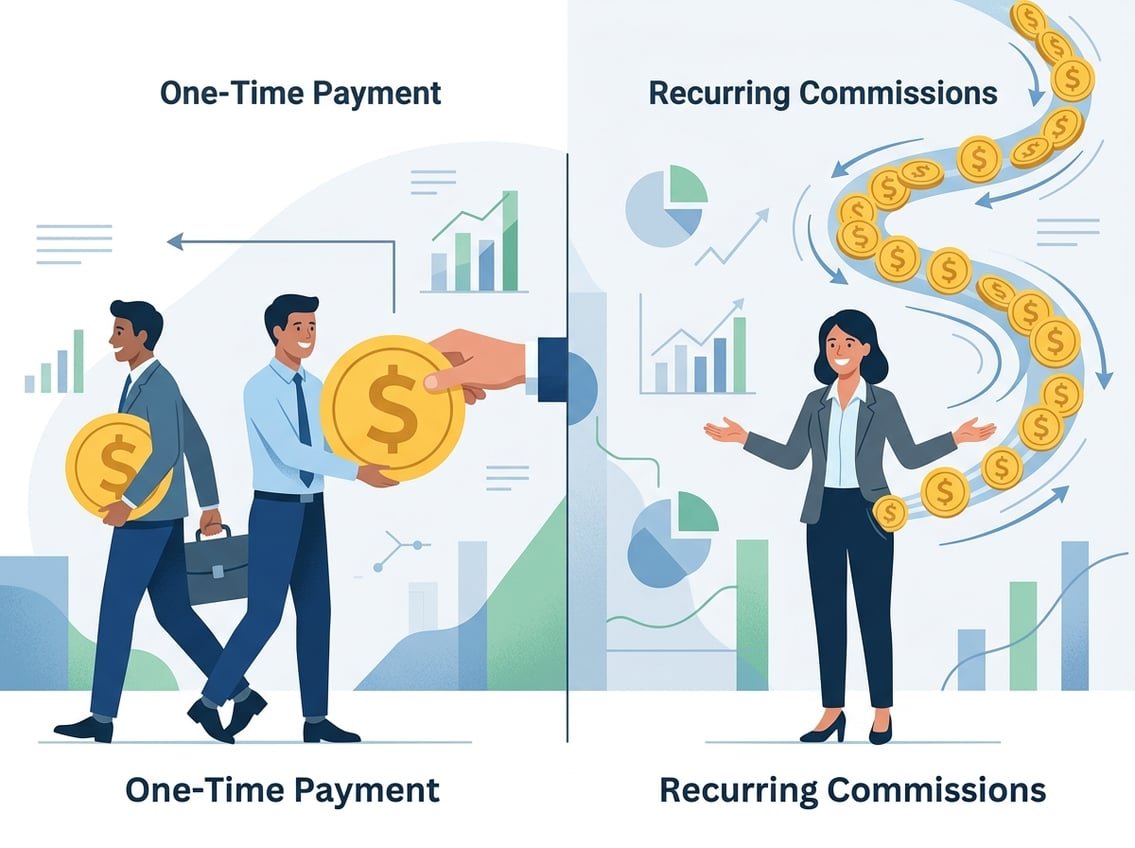
The main difference comes down to payment timing and what keeps your income alive. In most commission models, your income either stops at the first sale or continues as long as the customer stays active.
That changes your entire strategy. One model pushes you toward constant new sales, while the other rewards you for sending people to offers with strong retention.
How One-Time Commissions Work
With a one-time commission, you earn a single one-time payout after a sale or referral. After that, the earning cycle ends for that customer.
This is common in many commission structures, including some percentage-based commissions, flat-rate commissions, and tiered commissions. The payout is simple, easy to track, and useful when a product is sold once and done.
How Recurring Commissions Work
With a recurring commission, you keep earning recurring commissions while the customer stays subscribed. That can mean monthly, annual, or other repeat billing cycles.
This model is common in affiliate marketing for software, memberships, and subscription-based services. A recurring commission often starts smaller than a one-time commission, yet it can keep paying far longer.
Why Payment Timing Changes Your Income Strategy
Payment timing changes what you should focus on. One-time commissions reward volume, while recurring commissions reward retention and customer fit.
If you are new, this matters because you need fewer “perfect” launches and more durable systems. A blog post, email sequence, or video that brings in the right buyer can keep producing income without needing a new sale every time.
Why the Math Usually Favors Ongoing Payouts
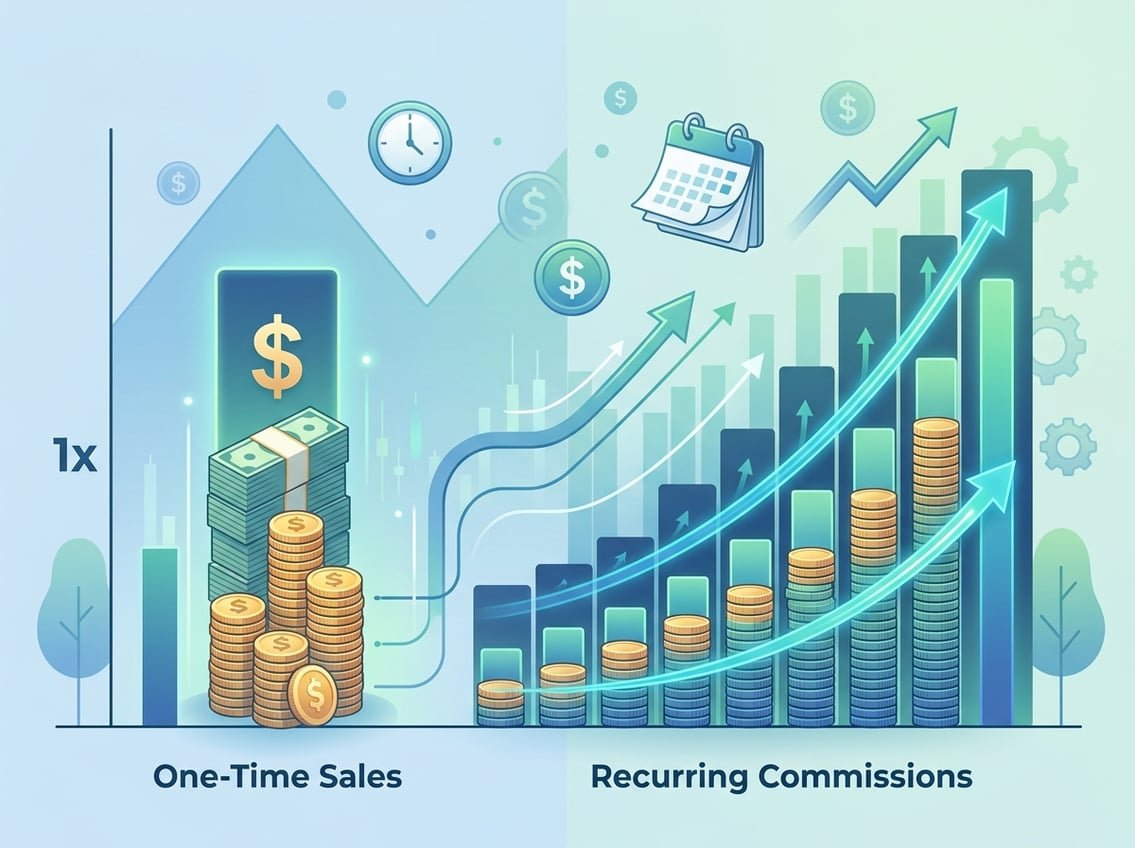
Recurring revenue models usually win on math because they stretch one sale over a longer timeline. That is where customer lifetime value, retention, renewals, and cash flow start to matter more than the first payout.
If you have ever felt like you were working hard just to keep your income flat, this is the reason recurring models can feel better in practice.
Break-Even Timelines Over 6, 12, and 24 Months
A one-time commission wins on day one because you get paid right away. A recurring commission may start behind, then catch up once the customer stays long enough.
Over 6 months, the gap can be small. Over 12 months, the recurring offer often pulls ahead if retention is decent. Over 24 months, the difference can become very large, especially when you keep sending new buyers into the same offer.
How Customer Lifetime Value Changes the Equation
Customer lifetime value, or LTV and CLV, tells you how much a customer is worth over time. In recurring revenue models, that number often grows because each customer pays more than once.
That changes how you judge an affiliate offer. A lower first payout can still be a strong choice if the customer stays active, renews, or upgrades. As noted in recurring vs one-time commission models explained, the real difference shows up when you think in timelines instead of single transactions.
What Retention and Renewals Do to Long-Term Earnings
Retention metrics matter because recurring income depends on renewals. If customers stay subscribed, your income base keeps building.
That is why a recurring offer with good customer success can outperform a higher one-time payout. When churn stays low, cash flow becomes easier to forecast, and each new referral adds to a growing base instead of replacing old income.
Where Recurring Models Work Best Online
Recurring models fit best when the product keeps delivering value month after month. That is why they show up so often in SaaS, subscription-based services, memberships, and newsletter businesses.
You will also see them in affiliate programs that support ongoing use, not just a one-time purchase. A strong fit usually has clear retention, clear value, and a reason for the customer to stay active.
Why SaaS and Subscription-Based Services Are a Natural Fit
SaaS works well because the customer already expects repeated billing. The business model is built around subscriptions, which makes recurring revenue and recurring commissions a natural match.
You can see this pattern across many tools in the market, from email platforms to video apps. Even consumer brands like Spotify rely on subscriptions, which is part of why recurring logic works so well in digital business.
Membership and Newsletter Offers With Strong Retention
Memberships and paid newsletters can be a strong fit when the audience gets fresh value every month. That can include private content, templates, community access, or expert updates.
For creators, this is where affiliate and content strategy often overlap. If you are building around email list growth, systems like Beehiiv can align with long-term monetization because the audience is already used to ongoing value.
When a Hybrid Model Makes More Sense
A hybrid model makes sense when you want both immediate cash flow and long-term upside. Some programs use a one-time payout for the first sale, then smaller recurring commissions after that.
That can be a good fit if you need faster income while you build. It is also common when a product has strong onboarding needs, since the first sale rewards acquisition and the recurring layer rewards retention.
When One-Time Payouts Still Make Sense
One-time sales are not bad. They just solve a different problem, and in some cases they are the better choice.
You may prefer one-time payouts when the product is high ticket, the customer does not stay long, or you need faster cash flow to fund your next move.
High-Ticket and Low-Retention Offers
A one-time commission can be very effective when the payout is large and the buyer rarely renews. Some digital products, courses, and services fit this pattern.
The key is to compare the full commission models, not just the first payout. A big one-time commission can beat a recurring offer in the short term if the recurring customer base is weak or churn is high.
Short Cash Flow Needs Versus Long-Term Stability
If you need quick cash flow, one-time commissions can help bridge the gap. That can matter when you are new and still building traffic from blogging, SEO, or email.
If your goal is long-term stability, recurring revenue usually gives you more room to breathe. That is one reason iProfitLab puts so much emphasis on assets that compound, like blogs and email lists, instead of one-off traffic plays.
Common Trade-Offs Beginners Miss
Beginners often miss the trade-off between easy proof and lasting value. A one-time sale may feel more satisfying because the payout is immediate, yet it can force you into a constant hunt for new buyers.
Recurring offers can feel slower at first, so many people quit too early. That mistake is common when you judge the offer by week one instead of month six or month twelve.
How to Build a Reliable Recurring Income System
Recurring income is not just about picking the right offer. You also need traffic, trust, retention, and a content system that keeps feeding the same revenue path.
The good news is that you do not need a huge audience. You need the right audience, the right offer, and a process that keeps compounding.
Choose Offers With Strong Customer Success and Retention
Start by checking whether the product actually keeps users happy. If customer success is weak, retention falls, and recurring commissions shrink.
Look for signs like active support, clear onboarding, and regular product updates. You want affiliate programs that pay you for sending customers who stay, not customers who leave after one month.
Use Blogging, SEO, and Email to Compound Traffic
Blogging and SEO work well because they keep sending new visitors to the same offer. One strong article can earn recurring revenue for a long time if the search intent is stable.
Email helps even more because you own the audience relationship. A simple list can support repeat clicks, product education, and trust, which is why recurring models fit so well with the systems iProfitLab teaches.
Create Content That Supports Upsells and Cross-Sells
Content should not stop at the first click. It should help readers move from awareness to action, then from first use to deeper adoption.
That is where upsell and cross-sell content can matter. If you explain use cases, onboarding, and comparisons clearly, you help the customer stay longer, which supports recurring revenue and your commissions.
Track the Metrics That Actually Matter
Do not track clicks alone. Track customer lifetime value, churn, retention metrics, and monthly cash flow from each offer.
A program can look great on the surface and still underperform if renewals are weak. Good affiliates watch what happens after the first sale, because that is where recurring commissions either compound or fade.
Frequently Asked Questions
What makes recurring commissions more predictable than one-time payouts?
Recurring commissions are tied to active customers, so you can often estimate future income more easily. When renewals are steady, your cash flow becomes more stable than a model that resets after every sale.
How do recurring commissions impact long-term income stability for affiliates?
They make income less dependent on constant new conversions. Each referral can create repeated payouts, which gives you a stronger base as your content and email list grow.
What types of products or services are most likely to offer recurring commissions?
SaaS tools, subscription-based services, memberships, and paid newsletters are the most common. These offers already depend on repeat billing, so they fit recurring revenue models naturally.
How can you evaluate whether a recurring commission program is actually worth promoting?
Check the product’s retention, customer support, pricing, and how long users tend to stay active. A lower recurring payout can still be better than a bigger one-time commission if the customer stays longer.
How does the 80/20 rule apply when building an affiliate strategy around recurring revenue?
In practice, a small number of offers and content pieces usually drive most of the results. Your job is to find the few recurring programs and traffic assets that keep paying, then keep improving those instead of chasing every new trend.
Is it realistic to reach $100 a day with affiliate marketing using recurring commissions?
Yes, but it usually takes time and consistent traffic. The path is easier when you build content around a useful offer, grow an email list, and keep adding visitors through SEO or other long-term channels.
If you want a simple place to start, the Free AI Income Starter Kit can help you map the next steps, and the Recommended Tools page can help you choose a cleaner stack for blogging, email, and content systems.