Faceless content is one of the easiest ways to start an online business when you want to stay off camera and still build traffic, trust, and income. If you choose the right format, you can turn simple videos, tutorials, and short clips into content that supports YouTube growth, affiliate marketing, blog traffic, and email list building.
The best faceless content ideas for beginners are the ones you can repeat easily, produce quickly, and connect to a clear monetization path.
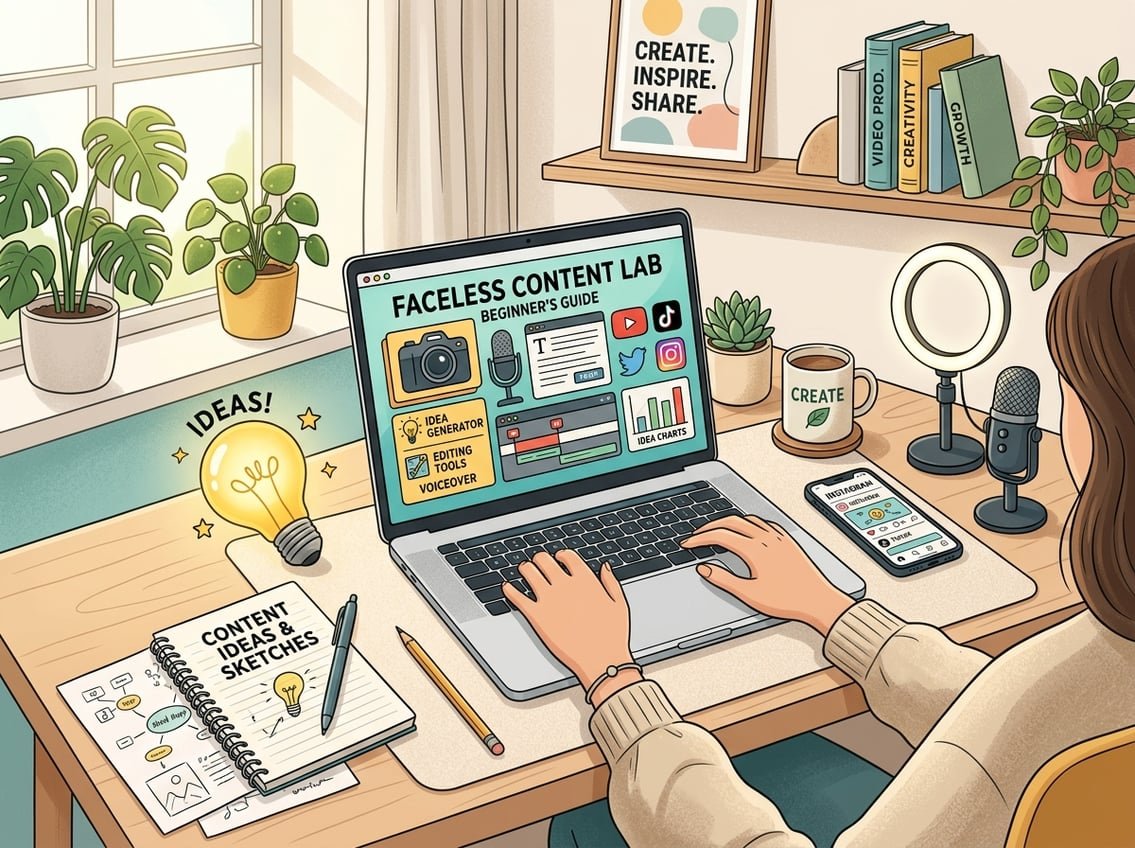
A lot of beginners waste time chasing random trends. A better path is to pick a format that fits your skills, your time, and the way you want to make money later. That is the approach you want if you care about long-term systems instead of short-lived views.
Key Takeaways
- Pick a format you can publish weekly without burnout.
- Match each idea to one clear income path.
- Repurpose one piece of content across several platforms.
How Faceless Content Works for Beginners
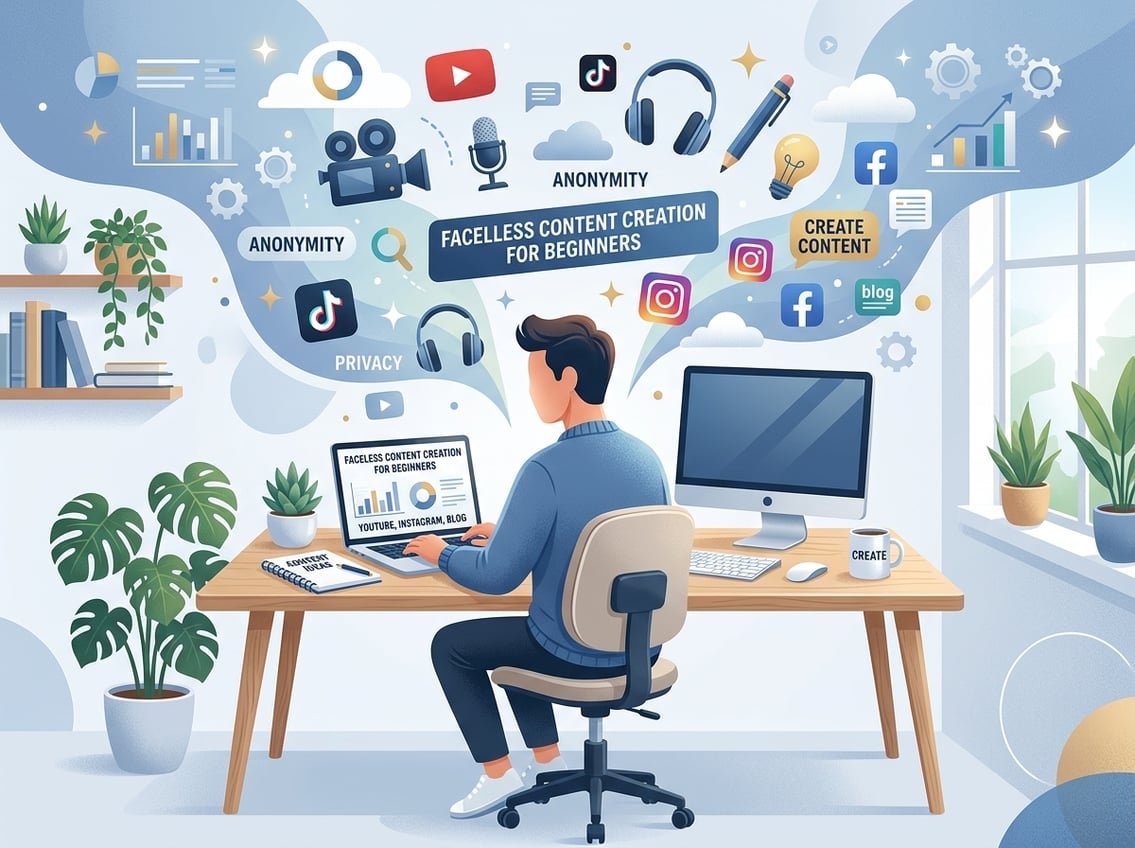
Faceless content gives you a way to publish without showing your face on every post. That can mean faceless videos built from screen recordings, stock footage, animations, subtitles, or text overlays. It can also mean a faceless channel that uses voiceover, visuals, and clear structure instead of personal vlogging.
A faceless content approach works especially well when your value comes from teaching, comparing, explaining, or curating. You are not selling your appearance, you are selling clarity.
What Counts as Faceless Content
Faceless content includes YouTube videos with voiceovers, YouTube Shorts with subtitles, Instagram Reels with stock footage, TikTok clips with text overlays, and screen-recorded tutorials. It also includes whiteboard-style explainers, animation videos, and photo-based list content.
If your face is not the main visual, it counts.
Why Beginners Start With Faceless Videos
Beginners often move faster with faceless videos because the setup is simpler. You do not need lighting, makeup, or a polished camera presence every time you record.
That makes it easier to focus on the real work, which is choosing useful topics and publishing consistently.
The Main Trade-Offs: Privacy, Speed, and Editing Time
Faceless content protects your privacy, which matters if you want to separate your online business from your personal life. It can also speed up production once you build a simple workflow.
The trade-off is editing time. If you rely on stock footage, subtitles, animations, and cuts, you still need a process that keeps you from overworking every video.
Which Platforms Make the Most Sense First
YouTube is the strongest long-term option if you want search traffic, affiliate income, and evergreen views. TikTok, Instagram Reels, and YouTube Shorts are better for fast testing and discovery.
If you want a business asset, YouTube plus a blog is a strong combination. If you want speed, short-form platforms help you test ideas before you commit.
Best Low-Barrier Formats to Start With
The easiest formats are the ones that let you reuse one idea in many ways. You want a style that fits beginner editing, simple recording, and clear monetization, not a format that needs advanced production skill.
Some of the most practical options are software tutorials, voiceover list videos, hands-only demos, ambient clips, and short-form posts built from one idea. Those formats are common because they are simple to repeat and easy to package for different platforms.
Screen Recording Tutorials and Software Walkthroughs
Screen recordings are one of the best starting points if you teach software, apps, or online tools. You can create software tutorials by showing your screen, adding subtitles, and narrating what you are doing.
This works well for app reviews, AI tool demos, and step-by-step “how-to” videos. It also fits affiliate marketing because you can recommend the tools you use.
Voiceover List Videos and Educational Explainers
List videos are a simple format because the structure is already clear. You can make listicles, educational videos, or how-to videos using stock clips, screenshots, and a short voiceover.
A beginner can cover topics like “5 tools I use,” “3 mistakes to avoid,” or “the easiest way to start.” If you want a faster workflow, tools like Descript can help with voice editing and rough cuts.
Hands-Only Demos, Unboxing, and Product Reviews
Hands-only videos work well for product reviews, unboxing, and simple demonstrations. They are also strong for Amazon-style content, cleaning clips, cooking, and gadget content.
You do not need to perform on camera. You only need clean shots, clear lighting, and a useful takeaway.
Ambient, Study, and Relaxation Videos
Ambient content can be very easy to produce once you have good visuals and sound. Think study with me clips, study tips, time-lapse videos, soundscape videos, rain sounds, ocean waves, and satisfying clips.
These videos often need less speaking and can be built from simple loops, background audio, and clean text.
Simple Short-Form Clips for Reels, TikTok, and Shorts
Short-form videos work best when you keep the message tight. On YouTube Shorts, Instagram Reels, and TikTok, a single tip, stat, or before-and-after comparison can work well.
This is where text overlays, subtitles, and quick hooks matter most. If your goal is to test ideas fast, short-form content is one of the lowest-barrier ways to start.
Beginner-Friendly Channel and Content Ideas by Niche
The best niche ideas are the ones that match a real audience problem. You want topics that let you create repeated content without running out of angles, and that can lead to affiliate offers, digital products, or a blog later on.
A smart faceless channel is usually built around one clear promise. That could be helping people save time, learn a skill, make a decision, or solve a common problem.
AI Tools, Productivity, and Software Education
This niche is strong for faceless youtube channel ideas because screen recordings are a natural fit. You can review AI tools, show workflows, compare apps, and create tutorials for beginners.
It also works well for recurring affiliate marketing, since many software tools pay recurring commissions.
Personal Development, Study, and Learning Content
Personal development, productivity hacks, and study tips fit well into faceless content ideas because they are easy to package as list videos and short explainers. You can make videos about habits, focus, note-taking, learning systems, and student-friendly routines.
These channels often grow through clear, helpful advice instead of personality-driven content.
Business, Blogging, and Affiliate Marketing Education
Online business content works well when you teach systems, not theory. You can cover SEO, email list growth, affiliate marketing, blogging, and content planning without showing your face.
This is one of the best paths if you want your content to support an online business that compounds over time. It also pairs well with the iProfitLab style of simple systems, trusted tools, and recurring income.
Cooking, Lifestyle, and Visual Hobby Niches
A faceless cooking channel can use overhead shots, hands-only demos, and close-up food clips. ASMR cooking, cleaning videos, and simple lifestyle edits also work because the visual process carries the content.
These niches can pull in strong watch time if the visuals are clean and the steps are easy to follow.
Gaming, Compilations, and Entertainment Formats
Gaming walkthroughs, gameplay channel clips, and compilation videos are common faceless creator formats. They can work well if you know how to make your edits tight and your commentary useful or entertaining.
These niches often depend on consistency and a clear angle, such as guides, reactions, tips, or themed lists.
Tools and Workflow for Creating Without Showing Your Face
A good workflow matters more than fancy gear. You want a setup that helps you move from idea to finished post with as little friction as possible.
The best beginner workflow usually includes scripting, recording, editing, visual sourcing, and a repeatable publishing routine. That is the kind of system that saves time when you are publishing every week.
Planning Scripts, Hooks, and Simple Production Systems
Start with a short hook, one clear point, and a simple ending. If you are making educational videos or list videos, write the first 2 lines before you record anything.
I have found that a basic template makes content creation much easier than trying to invent a new structure every time. This is also where iProfitLab-style systems help, because a repeatable process beats motivation.
Editing Tools for Fast Beginner Workflows
Tools like CapCut make it easier to add cuts, captions, music, and quick transitions. If you want screen capture and voice-based editing, Loom is simple for fast tutorials.
For writing and polishing scripts, Descript is useful because it feels closer to editing text than editing a full video timeline.
Visual Assets: Stock Footage, Templates, and Animations
You do not need to film every scene yourself. Stock footage from Pexels can fill visual gaps, and Canva Pro makes it easy to build clean thumbnails, titles, and text-based visuals.
If your niche fits explainers, tools like Doodly and Videoscribe can help you create whiteboard animation explainers and simple animated explainers.
When to Use AI Voiceover and Automation Responsibly
AI voiceover can save time, especially for list videos and tutorials. Use it when speed matters, but keep the script natural and check that the pacing sounds clear.
AI voiceovers and subtitles are useful, yet they should support the content, not replace judgment. If the video feels robotic or confusing, the automation is doing too much.
How to Monetize Faceless Content Beyond Views
Views are only one piece of the puzzle. A faceless channel can also lead to affiliate sales, sponsorships, digital products, and traffic for your blog or email list.
If you want recurring income, think beyond ad revenue from the start. Content is stronger when it points people to something you own or control.
Ads, Sponsorships, and Platform Revenue Basics
Ads can pay once your channel qualifies, and sponsorships can work when your audience is targeted and trustworthy. These work best when your content serves a clear niche, such as tools, business, finance, or tech.
A faceless content strategy can still build trust, as long as your advice is useful and consistent.
Using Affiliate Marketing With Tutorials and Reviews
Affiliate marketing is one of the best fits for faceless content because tutorials and reviews naturally lead to recommendations. If you show how a tool works, you can link to it in the description, blog post, or pinned comment.
That is especially strong for software tutorials, app reviews, and product reviews. If you are building for long-term income, recurring SaaS commissions can be more useful than one-time payouts.
Driving Traffic to a Blog, Email List, or Lead Magnet
You can use videos to send people to a blog post, free guide, or email opt-in. This gives you a place to own the audience instead of relying only on YouTube, TikTok, or Instagram.
That is one reason iProfitLab emphasizes email growth and blogging. A faceless channel works even better when it feeds a system you control.
Selling Digital Products and Building Recurring Income
Digital products can turn content into a stronger business asset. Templates, checklists, prompt packs, mini guides, and content planners fit well with faceless educational content.
If your audience keeps asking for the same help, that is often a sign you can build a paid asset around it. You can also bundle your content into a more complete system over time.
A Simple 30-Day Launch Plan for Consistent Publishing
The first month should be about momentum, not perfection. You want a process you can repeat, measure, and improve.
A good launch plan for a faceless youtube channel starts with one niche, one format, and one main platform. Once that is stable, you can expand into TikTok, Instagram Reels, and YouTube Shorts.
Choose One Format, One Niche, and One Platform
Pick one clear content format and one audience problem. For example, you could make screen-recorded AI tutorials, study tips, or faceless content ideas for beginners.
Avoid mixing too many styles at the start. A focused channel grows faster because your audience knows what to expect.
Create a Starter Content Bank and Posting Schedule
Draft 10 to 15 video ideas before you publish anything. Then schedule a realistic pace, such as 3 posts a week on YouTube or 4 short clips across TikTok and Reels.
If you want help with structure, iProfitLab’s Free AI Income Starter Kit is a useful starting point for planning content, affiliate direction, and execution.
Track Early Signals: Retention, Clicks, and Saves
Do not judge your channel by views alone. Watch retention, clicks, comments, and saves because those signals tell you what people actually find useful.
If a video gets low retention, the hook or pacing may need work. If people save it, the topic likely has long-term value.
Repurpose Winning Content Across YouTube, TikTok, and Reels
Once something performs well, reuse it in other formats. A YouTube tutorial can become a Short, a TikTok clip, and an Instagram Reel with small edits.
That is one of the easiest ways to grow your channel without doubling your workload. One strong idea can support a whole content system.
Frequently Asked Questions
What are the easiest types of videos to start if I don’t want to show my face?
Screen recordings, list videos, and simple voiceover explainers are usually the easiest. They let you focus on value instead of camera presence, and they are easy to batch once you have a template.
Which faceless channel niches tend to grow fastest on YouTube for new creators?
Software tutorials, AI tools, productivity, and how-to education often grow well because people search for them. Gaming walkthroughs, cooking, and visual hobby channels can also work if your content is clear and consistent.
What simple tools or free apps can I use to make faceless videos that still look professional?
CapCut, Canva, Loom, and Pexels are strong beginner tools. You can use them to record, edit, add text overlays, and source visuals without buying expensive software.
How can I make TikTok content engaging without appearing on camera?
Use a strong hook, fast pacing, subtitles, and a clear payoff in the first few seconds. TikTok trends also help, as long as you adapt them to your topic instead of copying them blindly.
What are some funny faceless content formats that work well for short-form platforms?
Text-on-screen skits, meme-style list videos, reaction clips, and before-and-after comparisons can work well. You can also use sound effects, fast cuts, and relatable captions to keep the tone light.
How do I pick a faceless content idea that’s not over-saturated and fits my skills?
Start with a skill, tool, or topic you already know well, then check whether people are searching for it. The best idea is usually the one you can produce consistently and connect to affiliate marketing, digital products, or email growth later.
If you want to turn faceless content into a real business asset, start with one repeatable format and one clear monetization path. For trusted tools, simple systems, and beginner-friendly guidance, you can also download the Free AI Income Starter Kit or review the Recommended Tools page.