Pinterest affiliate marketing works best when you treat Pinterest like a search engine, not a social feed. If you want long-term traffic, affiliate income, and a system that compounds, your success depends on niche choice, pin quality, SEO, and where you send the click.
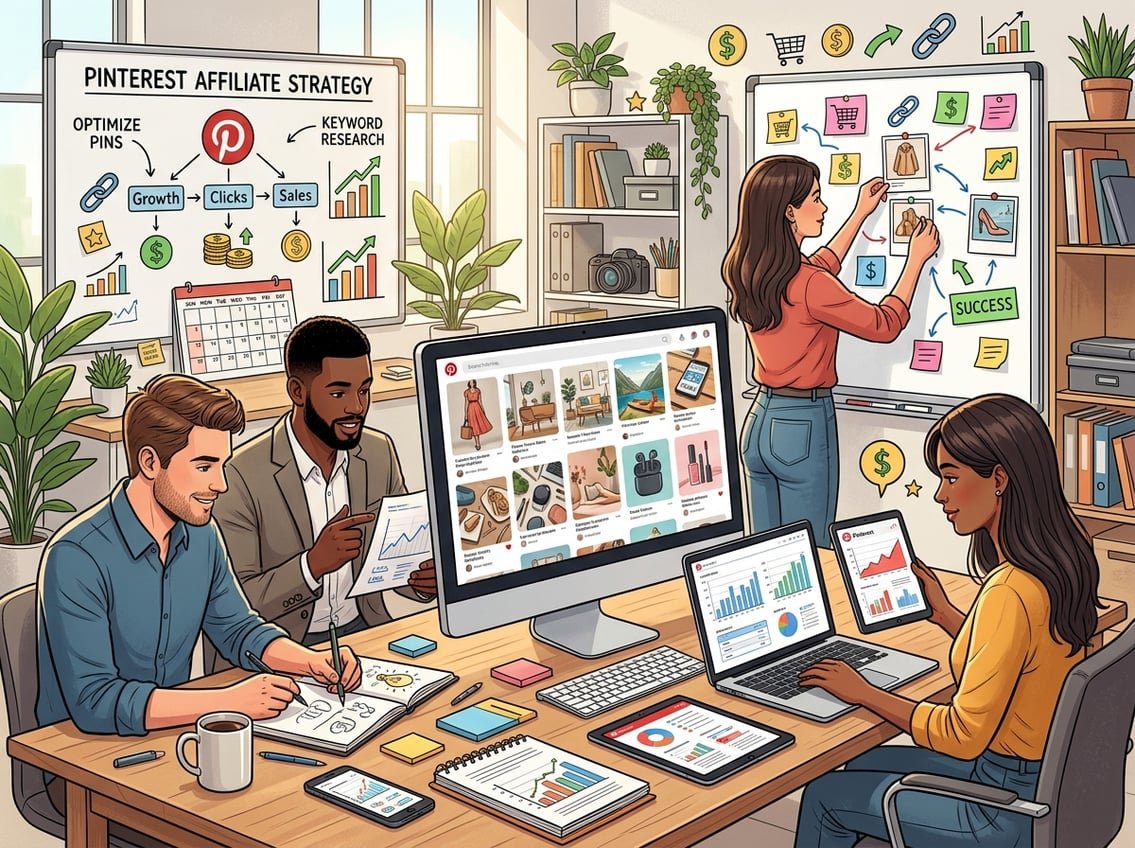
The best Pinterest strategies for affiliate marketing focus on search intent, helpful content, and a clear path from pin to click to conversion.
That means you do not need random posting or endless pinning. You need a repeatable system that helps people find useful ideas, trust your recommendation, and take the next step.
When you build it right, Pinterest can support blog growth, email list building, recurring commissions, and digital products. That is why iProfitLab-style systems work well here, simple, focused, and built for compounding results.
Key Takeaways
- Pinterest works best as a visual search channel.
- Your niche and keywords matter more than volume.
- Blog posts and email capture often convert better than direct links.
How Pinterest Drives Affiliate Sales

Pinterest users often arrive with a problem, an idea, or a purchase in mind. That makes the platform useful for affiliate marketing, especially when your content matches what people are already searching for.
Pinterest also behaves like a visual discovery engine, so strong images and clear topics matter as much as keywords. According to wecantrack’s 2026 guide on Pinterest affiliate marketing, the channel stands out for high purchase intent and strong traffic potential.
Why Pinterest Behaves More Like Search Than Social Media
Pinterest search is the engine behind most discovery. People type phrases like “best standing desk setup,” “meal prep tools,” or “beginner blogging tips,” then save ideas for later.
That means your pins can keep getting views long after you publish them. In practice, Pinterest marketing works more like SEO than like posting on Instagram or X.
What Makes Pinterest Users High-Intent Buyers
Pinterest users often search with a goal in mind, and that goal is usually tied to buying, planning, or comparing. They are looking for visual answers, product ideas, and next steps.
That is why affiliate income often comes from content that helps people choose between options, such as product lists, tutorials, and comparison posts. If the offer matches the search, clicks tend to be warmer.
When Pinterest Works Best for Blog Posts, Affiliate Landing Pages, and Digital Products
Pinterest works especially well when your pin leads to a blog post that answers the search query first. From there, you can place affiliate links in a helpful context, which usually feels more natural than a direct sales pitch.
Direct links can work for simple products or approved merchant pages, yet blog posts often give you more control, better tracking, and easier email capture. Digital products also do well when the pin promises a fast, clear outcome.
Build the Right Foundation Before You Pin
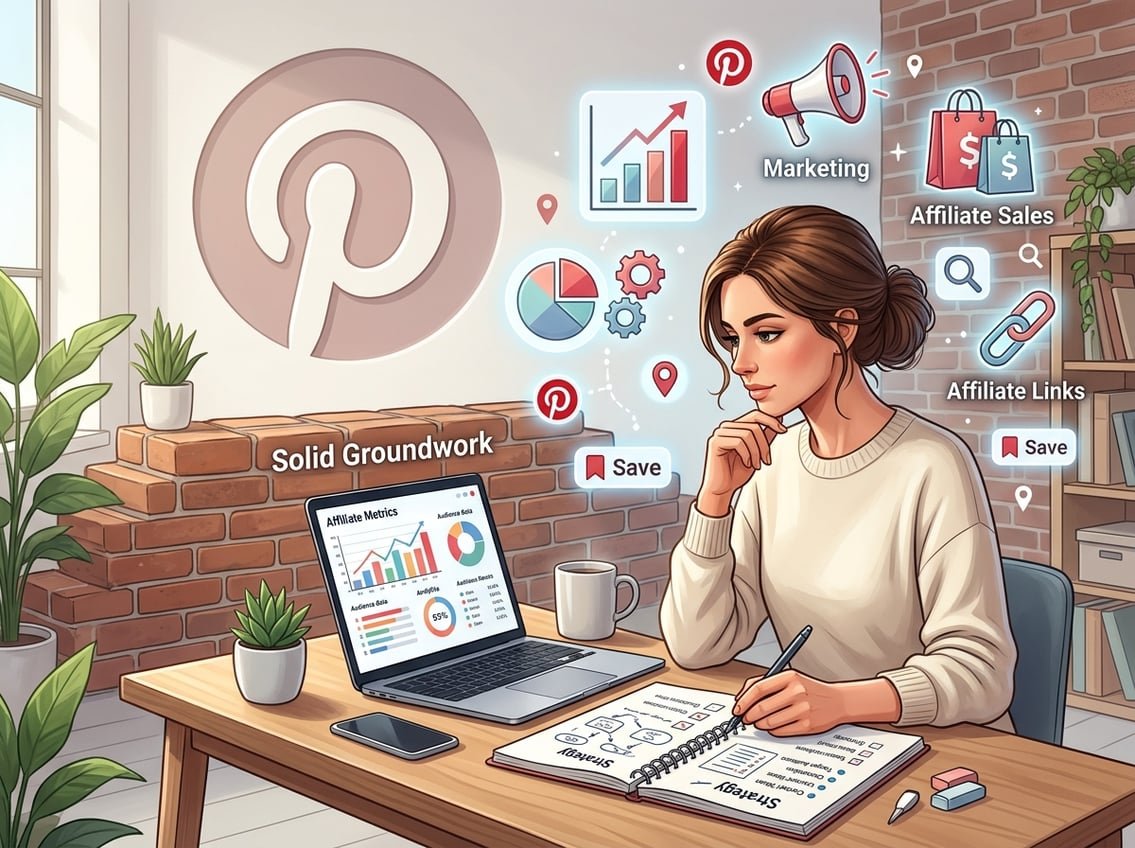
Before you create pins, you need a focused niche, a business setup, and affiliate programs that fit your content. This foundation helps you avoid random posting and keeps your account aligned with buyer intent.
A strong setup makes your Pinterest for business effort easier to scale. It also helps you choose content that can turn into blog traffic, email subscribers, and commissions.
Choose Your Niche Based on Search Demand and Buyer Intent
Choose your niche based on what people already search for and what they are willing to buy. Good examples include blogging tools, home office gear, meal prep tools, AI software, beauty tools, and travel planning.
Avoid niches that only attract casual browsing if your goal is income. You want topics where search demand and buyer intent overlap.
Set Up a Pinterest Business Account and Claim Your Website
A Pinterest business account gives you access to analytics and business features that matter for affiliate work. Claim your website early so Pinterest can connect your content to your domain.
That extra step also helps with trust and tracking. If you want long-term traffic, you should treat your account like a content asset, not a hobby page.
Join Affiliate Programs That Fit Your Content and Monetization Model
Join affiliate programs that match what you plan to publish. Common starting points include Amazon Associates, ShareASale, CJ Affiliate, and Awin.
Pick programs that fit your audience and your content type. If you want recurring commissions, look for SaaS offers, newsletter tools, or software subscriptions instead of only one-time physical products.
Create Pins That Earn Clicks and Build Trust

Strong pins are clear, useful, and easy to scan. They should promise a specific result and match the page the user will visit after the click.
High-quality pins do more than look good. They help you get attention in search, earn saves, and create enough trust for the click.
Design High-Quality Pins for Search Visibility and Saves
Use vertical pins, clean layout, and readable text overlay. Canva is a simple tool for making pin design fast and consistent.
Keep the visual content focused on one idea per pin. A cluttered pin usually lowers click-through rate because the user cannot tell what they will get.
Write Pin Titles and Pin Descriptions Around Intent
Your pin titles should match the search phrase people use, not clever brand language. If someone searches for “best email tool for beginners,” use that kind of language in your pin titles and descriptions.
A strong call to action helps too. Keep it direct, such as “read the guide,” “compare options,” or “see the full list.”
Use the Right Pin Formats for Different Offers and Content Types
Different pin formats work better for different goals. Standard pinterest pins and article pins are great for blog posts, while product pins work better for direct product promotion.
You can also use video pins, idea pins, carousel pins, and recipe pins where they fit. If you create affiliate pins, keep them useful and relevant, not salesy. The best high-converting pins usually feel like helpful content first.
Use Pinterest SEO and Distribution Tactics

Pinterest SEO starts with the words people type into search. From there, you organize boards, publish consistently, and use data to refine what works.
Pinterest trends and analytics help you spot rising topics, seasonal demand, and your best-performing content. Tools like Tailwind and Later can help you schedule pins, though manual pinning still works well when you stay consistent.
Research Keywords With Pinterest Search and Pinterest Trends
Start by typing your topic into Pinterest search and watching the autocomplete suggestions. Then compare those ideas with Pinterest Trends to see which topics are growing or fading.
This gives you real keyword clues for your pin titles, board names, and blog posts. If a topic has search demand, it deserves a place in your content plan.
Organize Boards and Board Descriptions for Topical Relevance
Your boards should be tightly themed, not broad collections of random topics. Clear board names and board descriptions help Pinterest understand what your account covers.
A good board structure also helps your pins and boards stay aligned. That alignment can improve topical relevance and make your account easier to trust.
Publish Consistently With Organic Pins, Scheduling, and Seasonal Content
Consistency matters more than volume spikes. You can use organic pins, scheduled content, and manual pinning together to keep your account active without burning out.
Seasonal content works especially well when you publish early. Evergreen content should stay in rotation all year, since it can keep sending traffic long after the first publish date.
Turn Pinterest Traffic Into Recurring Income

Pinterest traffic becomes more valuable when you send it into a system, not just a single affiliate link. Blog posts, product roundups, and email capture can turn a one-time click into repeat visits and repeated revenue.
This is where recurring commissions and list building matter. If you want durable income, you need a path that keeps working after the first pin stops trending.
Use Blog Content and Product Roundups as Bridge Pages
Blog content gives you space to explain, compare, and recommend. Product roundups are especially useful because they help readers choose while giving you room for multiple affiliate links.
A bridge page also lets you rank for long-tail search terms outside Pinterest. That creates another traffic source and makes your affiliate system less dependent on one platform.
Build an Email List With Lead Magnets and Follow-Up Systems
A simple lead magnet, such as a checklist, mini guide, or template, can help you build an email list from Pinterest traffic. Once someone joins your list, you can keep sharing useful content and offers.
This is one reason iProfitLab-style funnels work well. Pinterest can start the relationship, and email can continue it through follow-up systems that build trust over time.
Promote SaaS and Other Recurring Offers Without Looking Spammy
Recurring commissions are easier to support when you recommend tools you would actually use. SaaS, hosting, email platforms, and creator tools often fit this model well.
Keep your affiliate links on Pinterest honest and relevant, and disclose them clearly with labels like #affiliate or #sponsored when needed. People click more often when your content feels useful, not forced.
Track Performance, Scale Winners, and Avoid Common Mistakes

You cannot improve what you do not track. Outbound clicks, saves, and conversions tell you which pins, offers, and topics deserve more attention.
Use that data to scale what works and remove what wastes time. That is how you build a stronger affiliate system instead of just posting more content.
Measure Outbound Clicks, UTM Parameters, and Conversion Signals
Outbound clicks show you whether your pin is sending traffic off Pinterest. Add UTM parameters to links so you can see which pins, boards, and campaigns drive results in your analytics.
Pinterest analytics also helps you spot pins with strong reach but weak clicks. That gap often means your design or CTA needs work.
Decide When to Test Pinterest Ads and Promoted Pins
Pinterest ads and promoted pins can make sense once you already know which content converts organically. Paid testing works best when you have a proven pin, a clear offer, and a page that already converts.
If your organic content is still unproven, start there first. Paid traffic should amplify a working system, not rescue a weak one.
Mistakes That Hurt Reach, Trust, and Long-Term Results
The biggest mistakes are easy to spot, even if they are common. These include weak pin designs, too many unrelated boards, thin descriptions, broken links, and posts that feel pushy.
Avoid stuffing every pin with the same affiliate link. Use varied content, strong relevance, and honest recommendations so your account can grow with trust.
Frequently Asked Questions
How do I start affiliate marketing on Pinterest as a beginner?
Start with one niche, one Pinterest business account, and one simple content path. A good beginner setup is a blog post or landing page, a matching pin, and one clear affiliate offer.
Can I do Pinterest affiliate marketing without a website, and what should I link to instead?
Yes, you can, if the affiliate program allows direct linking and Pinterest rules allow the destination. Even so, a website or blog usually gives you more control, better tracking, and better email capture.
What types of pins and content formats tend to convert best for affiliate offers on Pinterest?
Pins that match search intent usually convert best, especially product roundups, comparisons, tutorials, and problem-solving posts. Article pins and product pins often work well when the message is clear and the landing page matches the promise.
How do I stay compliant with Pinterest rules and FTC disclosures when using affiliate links?
Use honest disclosures and make it clear when a link is an affiliate link. Labels like #affiliate or #sponsored can help, and you should also follow the disclosure rules of each affiliate program and the FTC.
Does affiliate marketing still work well on Pinterest in 2026, and what metrics should I track?
Yes, it can still work well in 2026 when you focus on search intent, useful content, and consistent publishing. Track outbound clicks, saves, impressions, and conversion data so you can see which pins and pages earn real results.
How much can you realistically earn from Pinterest affiliate marketing, and what does it take to reach $100/day?
Earnings vary a lot by niche, traffic quality, and offer type, so there is no fixed number. Reaching $100/day usually takes a working content system, multiple strong pins, a conversion-friendly page, and enough traffic to test and scale winners over time.
If you want a simpler path, use the Free AI Income Starter Kit to map your content system, or check the Recommended Tools page for trusted tools and step-by-step guidance.