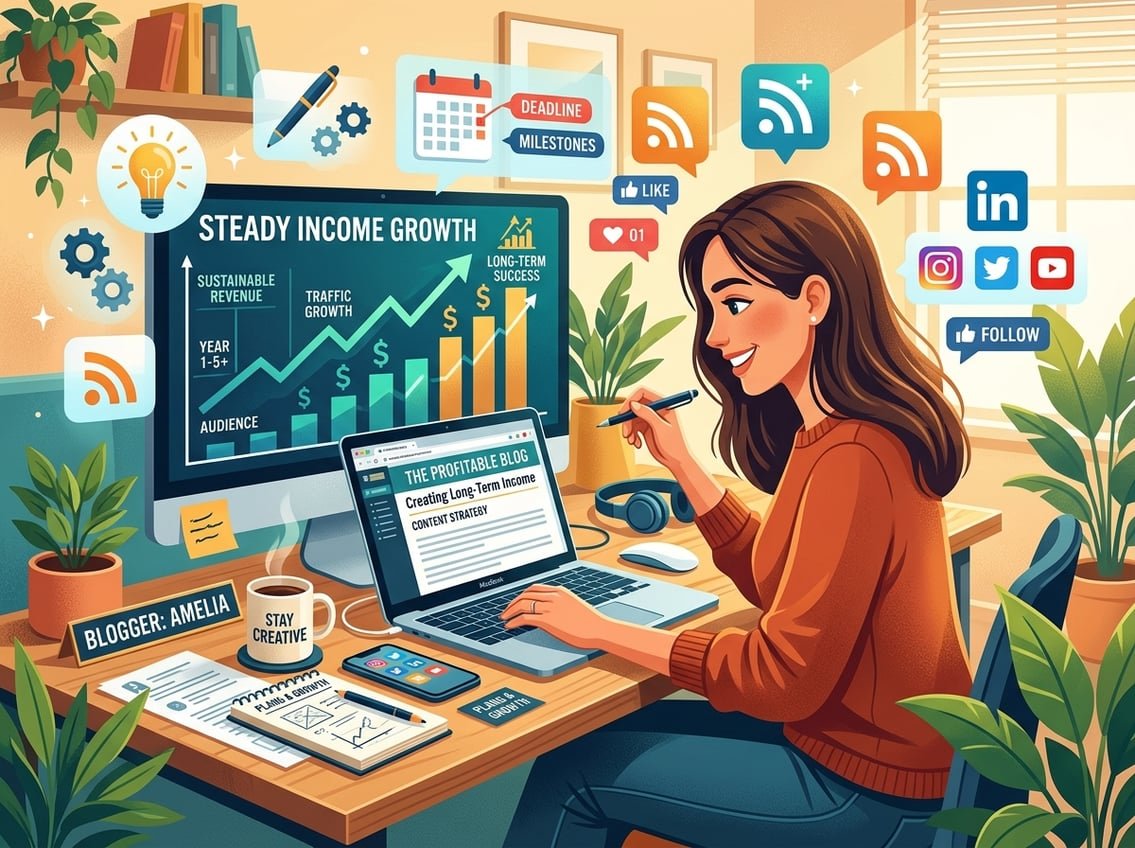
You can learn how to start a blog that builds long-term income by treating it like a business asset from day one, not a quick side project. That means you choose a topic with buying intent, set up a simple platform, publish content that can rank in search, and add monetization that can grow over time.
The blogs that make money for years are usually built on systems, not constant hustle. Your job is to create a site that attracts search traffic, earns trust, captures email subscribers, and turns readers into repeat buyers.
Key Takeaways
- Pick a niche with clear search demand and buyer intent.
- Build on WordPress, strong hosting, and simple site structure.
- Focus on SEO, email, and recurring revenue, not random tactics.
Choose a Niche With Income Potential

A good blog niche gives you room to publish evergreen content and room to monetize in more than one way. When you choose a niche, you are not just picking a topic you enjoy, you are choosing a market you can serve for a long time.
The best niche choices usually sit at the overlap of interest, search demand, and profit potential. That is where keyword research and buyer intent matter most.
How to Validate a Profitable Blog Niche
Start with search volume and search intent. Use tools like Google Keyword Planner, Semrush, or Ahrefs to check whether people are actively searching for your topic and whether those searches lead to product or service decisions.
Look for phrases like “best,” “review,” “vs,” “how to,” and “for beginners.” Those often point to content that can support affiliate marketing, product reviews, or service offers.
Balancing Passion, Search Demand, and Buyer Intent
You do not need a perfect passion project. You need a blog niche you can write about often, that has clear search demand, and that connects to monetization.
A personal finance blog often has strong buyer intent, because readers need tools, courses, and services. A travel blog can work too, as long as you focus on a clear angle like budget travel, family travel, or travel gear.
Examples of Evergreen Niches and Unique Angles
Evergreen niches often include money, health, software, productivity, home, and parenting. The angle matters as much as the topic.
You could build a personal brand around “AI tools for solo creators,” or a travel blog focused on “weekend trips for busy parents.” That kind of focus gives you better content ideas and easier monetization later.
Set Up the Right Foundation From Day One

The platform you choose affects your flexibility, SEO control, and income options. If you want to start a blog that can grow into a business, the setup should be simple, stable, and easy to scale.
A clean foundation saves you from rebuilding later. That matters when your traffic starts growing and you want to focus on content, not technical repairs.
Choosing Between WordPress and Other Blogging Platforms
For most beginners, WordPress is the safest choice because it gives you ownership and room to grow. It is stronger than many hosted blogging platforms when you want SEO, affiliate links, email capture, and custom design.
Platforms like Wix, Shopify, and Substack can work in some cases, depending on your goals. Shopify makes sense for e-commerce, and Substack works for a newsletter-first model, while WordPress gives you the most control for a content site.
Domain, Hosting, and Security Essentials
Buy a domain name that is short, clear, and easy to spell. Then choose reliable WordPress hosting and set up security from the start.
You should enable SSL, and many hosts now include a free SSL certificate. That gives your site the HTTPS lock in browsers and helps readers trust your blog.
Picking a Theme and Core Plugins Without Overcomplicating It
Choose a simple theme that loads fast and looks clean on mobile. Do not spend weeks hunting for the “perfect” design.
Install only the plugins you need. A basic SEO plugin like Yoast SEO can help with titles and descriptions, and a writing tool like Grammarly can help you catch simple errors before publishing. Keep your stack lean so your site stays fast.
Build Content That Attracts Search Traffic and Trust
Your content strategy should do two jobs at once. It should help you rank in search, and it should make readers trust your advice enough to click, subscribe, and come back.
The easiest way to grow is to build around useful topics that stay relevant for months or years. That is where evergreen content works best.
How to Find Blog Post Ideas With SEO Potential
Start with your niche and list the problems people ask about most often. Then turn those into blog post ideas using keyword research, Google autocomplete, and your own notes from forums, comments, and social groups.
A simple content calendar helps you stay consistent. If you use AI tools, keep them focused on speed and outlines, not lazy publishing. iProfitLab often recommends using systems like this for faster execution without losing quality.
Content Formats That Match Search Intent
Different search intents call for different content formats. A beginner guide works well for “how to” searches, while a listicle can work for “best” searches.
Use case studies when you want to show results or compare methods. Use infographics when a topic has steps, stats, or a process that is easier to scan visually.
On-Page SEO Basics That Improve Rankings and Readability
Strong on-page SEO helps search engines and readers at the same time. Use a clear title, one main topic, short paragraphs, and a useful meta description.
Internal linking is important because it connects related posts and keeps visitors on your site longer. Add links to related articles, use descriptive headings, and check performance in Google Search Console and Google Analytics so you can see what brings organic traffic and what needs work.
Monetize With Recurring and Scalable Revenue Streams
You do not need to wait for huge traffic before you monetize your blog. The smarter move is to match your monetization methods to your niche and audience intent, then stack them over time.
The best blogs usually combine affiliate income, products, ads, and services in a simple order. That gives you more stable revenue than relying on one stream.
Starting With Affiliate Marketing and SaaS Offers
Affiliate marketing is often the easiest first monetization step because you can recommend tools you already use. Programs like Amazon Associates, ShareASale, and ClickBank can work, depending on your niche.
For long-term income, recurring commissions matter more than one-time payouts. SaaS offers, email tools, and blog tools can create repeat revenue when readers stay subscribed. A good example is recommending services tied to blogging systems, such as Beehiiv, which iProfitLab often highlights for email growth and monetization.
Adding Ads, Sponsored Opportunities, and Services Carefully
Display ads make more sense once you have steady traffic. Many bloggers start with Google AdSense and later move to networks like Mediavine or Raptive when their pageviews grow.
Sponsored posts and sponsored content can pay well, though you should protect trust by only accepting offers that fit your audience. Services like consulting, freelance writing, or a media kit can also add income if your blog builds authority.
Creating Digital Assets That Increase Revenue per Reader
Digital products often raise your income per visitor more than ads alone. Think ebooks, printables, templates, online courses, membership site offers, or even a simple Gumroad product.
These assets work well because they can be sold repeatedly. If you sell digital product sales through a blog post, your traffic can keep earning long after the article is published.
Turn Traffic Into an Email-Driven Business
Your email list is one of the most valuable parts of your blog. Search traffic can change, social reach can drop, and algorithms can shift, while an email list gives you direct access to your audience.
If you want long-term income, do not treat email as an afterthought. Treat it as a core part of your monetization system.
Why an Email List Matters More Than Social Reach
Social traffic can spike fast and disappear just as fast. Blog traffic from search can grow more steadily, and email helps you keep those readers in your world.
When you build an email list, you create a direct path to repeat visits, product launches, and affiliate sales. That is why many smart bloggers focus on email early instead of waiting for a later stage.
Lead Magnets, Opt-Ins, and Welcome Sequences
A lead magnet gives readers a reason to subscribe. Templates, checklists, and short guides usually work well because they solve a small problem fast.
Use a simple opt-in form on your site and connect it to a tool like ConvertKit or Mailchimp. Then set up a welcome sequence that introduces your best content, your main topic, and your top recommendations.
Using Email to Increase Affiliate Revenue and Repeat Visits
Email makes affiliate marketing stronger because you can send helpful follow-up content instead of waiting for search traffic alone. That can include tutorials, product comparisons, and practical use cases.
You can also use email to bring readers back to new posts, which helps pageviews and monetization. A small list of engaged subscribers often outperforms a much larger group that never opens your messages.
Promote, Measure, and Improve What Compounds
Promotion matters early, especially before search traffic kicks in. The goal is not to be everywhere, it is to repeat a few useful actions that bring visitors and improve what already works.
Growth becomes easier when you track the right numbers and keep your publishing system simple.
Simple Promotion Channels for Early Blog Growth
Use a few channels that fit your niche. Facebook groups, Pinterest, email, and direct outreach can all work, depending on your audience.
If you want practical blogging tips, share your posts where your readers already spend time, then bring them back to your blog. A focused promotion plan is better than posting randomly across every platform.
What Metrics to Track in the First Year
Track pageviews, organic traffic, email signups, and revenue by post. Those numbers tell you what content brings attention and what content makes money.
Check Google Analytics for traffic trends and Google Search Console for search queries and rankings. Those two tools show which posts deserve updates, internal links, or better monetization.
Using AI and Systems to Publish More Consistently
AI can help you move faster if you use it as support, not as a replacement for judgment. It can help with outlines, title ideas, content briefs, and repurposing, while you handle the strategy and final editing.
That is also where systems matter. A simple content calendar, repeatable blog post templates, and a basic workflow can help you publish more often without burning out. If you want a shortcut to the right setup, a free guide like iProfitLab’s Free AI Income Starter Kit can help you organize your first steps.
Frequently Asked Questions
Is blogging still profitable in 2026, and what makes a blog sustainable long-term?
Yes, blogging can still be profitable in 2026 when you treat it like a business and not a hobby. A sustainable blog usually has evergreen content, search traffic, an email list, and multiple revenue streams, especially recurring commissions.
What are the essential steps to start a blog for free if I’m a complete beginner?
You can begin with a free platform, a simple topic, and a few helpful posts. Even so, if your goal is long-term income, you will usually want to move to WordPress and your own hosting once you are ready to grow and monetize more freely.
How do I choose a niche and content strategy that can generate consistent income over time?
Choose a niche with search demand, buyer intent, and enough topics for at least dozens of posts. Then build a content strategy around evergreen search terms, helpful comparisons, and articles that lead naturally into affiliate or product offers.
How long does it typically take to reach $1,000 per month from blogging?
It depends on your niche, publishing speed, and monetization setup. Many bloggers take months of consistent work before seeing real income, and a year or more is common for reaching steady monthly earnings.
What are the best monetization methods for new blogs, and when should I add each one?
Affiliate marketing is often the first method because it works well with helpful content and product reviews. Ads usually make more sense after you have consistent traffic, while digital products, services, and sponsorships become stronger once you have authority and a clear audience.
What blogging platform should I use (WordPress vs Blogger), and what are the monetization requirements?
WordPress is usually the better choice if you want flexibility, SEO control, and more monetization options. Blogger is easier to start, yet it gives you less control, which can limit how you grow, brand, and monetize over time.