Personal Brand vs Faceless Brand for Long-Term Income is one of the first real strategy choices you face when you start building online. If you are choosing between showing your face and building a faceless brand, the right answer depends less on ego and more on how you want to earn, scale, and own your business.
The best choice is the one that fits your income model, your privacy needs, and your long-term plan for building assets you can keep growing.

If you want faster trust, stronger audience connection, and easier sales for yourself as the product, a personal brand often makes sense. If you want more privacy, easier outsourcing, and a business that can grow without depending on your face, a faceless brand can be a better fit.
The real answer is not one model winning every time. It is about choosing the structure that supports your content strategy, your monetization plan, and your ability to stay consistent for years.
Key Takeaways
- Your income model should drive the brand choice.
- Visibility helps trust, privacy helps scale.
- The strongest setup is often a smart hybrid.
What Each Model Actually Means
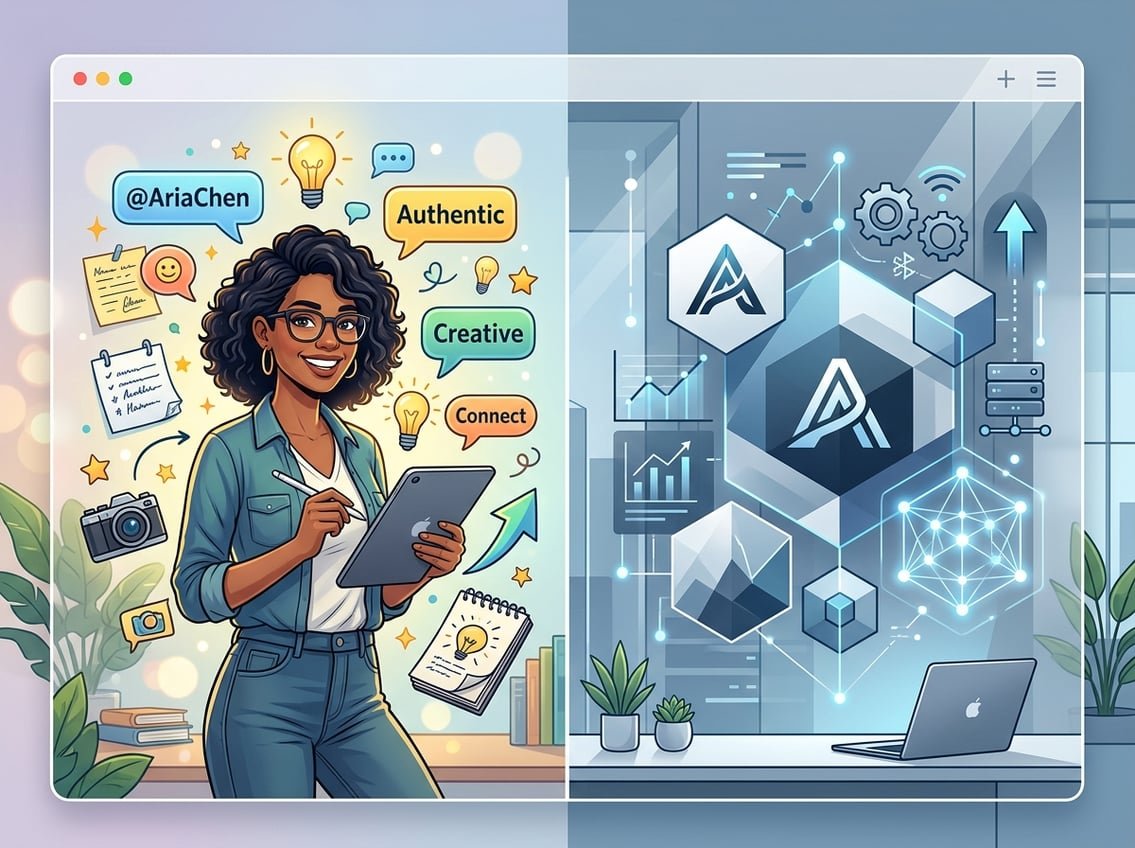
Personal branding and faceless branding are not just visual styles. They shape how you make content, how people trust you, and how easy it is to grow without burning out.
A lot of beginners mix up the two and focus only on whether they want to show their face. That misses the bigger question, which is how your brand makes money and what kind of business you want to own.
What Defines a Personal Brand
A personal brand centers on your name, your story, and your point of view. Your face, voice, and opinions become part of the product, especially in content creation, coaching, and creator-led offers.
This model works well when your credibility comes from your experience, personality, or daily presence. It is common on a youtube channel, in newsletters, and in social media accounts built around authority and trust.
What Defines a Faceless Brand
A faceless brand focuses on the business, the content, or the result, not on you as the public face. You may use faceless content, a logo, a voiceover, or a team-based identity instead of showing your face.
This approach is common in SEO blogs, affiliate sites, niche websites, and faceless channel setups. It often works well when the content itself can carry the value without your personal story.
The Hybrid Option for Creators Who Want Flexibility
A hybrid approach gives you room to start privately and add more personality later. You can build faceless content first, then layer in your voice, your face, or your story once you have traction.
That path is useful if you want to test niche targeting before going public. It also gives you more room to protect privacy while still building trust through consistent content and clear brand storytelling.
How the Choice Affects Trust, Attention, and Growth

Trust and attention do not work the same way in both models. A personal brand usually builds faster emotional connection, while a faceless brand usually has to earn belief through repetition, clarity, and proof.
Your growth speed can change too. Personal visibility often gets attention faster, while faceless systems can be slower at first and steadier later.
How Personal Visibility Builds Emotional Connection
When people can see you, they often feel like they know you sooner. That can improve audience engagement, especially when your content includes your story, opinions, or behind-the-scenes decisions.
In practice, this is one reason founder-led brands can move faster in crowded markets. People trust people, and that can help with affiliate marketing, coaching, and product sales.
How Faceless Brands Earn Trust Without a Public Persona
A faceless brand earns trust by being useful, clear, and consistent. Strong content quality, proof, and useful brand storytelling matter more because the audience cannot rely on a visible personality.
This is where systems matter. If your content keeps solving problems, your readers begin to trust the brand itself, not just the person behind it. That works well for blogs, email lists, and recurring commission offers.
Audience Engagement, Authenticity, and Content Quality
Authenticity matters in both models, but it shows up in different ways. With a personal brand, authenticity may come from your voice and your experience. With a faceless brand, it comes from honest advice, useful content, and staying consistent.
That is why a faceless brand cannot be lazy. If the content feels thin, the trust drops fast. In my experience, a clean content system beats flashy branding every time.
Monetization, Scalability, and Asset Value
Your brand choice changes how you earn, how easy it is to automate, and what kind of business you are actually building. If you want a long-term income asset, think beyond views and likes.
The main question is simple, can you build something that earns even when you are not online every day?
Best Fit for Affiliate Marketing and Recurring Commissions
If you want affiliate marketing, both models can work. A personal brand can convert very well for high-trust offers, while a faceless brand often fits SEO-driven affiliate systems and evergreen content better.
For recurring commissions, the faceless route can be strong because you are building around useful content and repeatable traffic. That is one reason iProfitLab focuses so much on blogs, email lists, and trusted tools instead of chase-the-algorithm tactics.
Which Model Is Easier to Outsource and Automate
A faceless brand is usually easier to outsource. You can hand off research, drafting, design, editing, and publishing without depending on your face or voice being part of every asset.
That makes it easier to scale a youtube channel, blog, or newsletter with automation. Personal brands can still be systemized, though the voice and approvals often stay tied to the founder.
Sellable Digital Assets Versus Personality-Driven Businesses
A faceless brand often has stronger asset value because it is less tied to one person. That can make the business easier to sell, transfer, or hand off later.
Personal brands can still be valuable, especially if the audience and revenue are strong. Even so, the business is often harder to separate from you, which can limit resale value and long-term flexibility.
Best Use Cases by Business Model
Your best choice changes with the platform you use. Blogging, YouTube, email, and coaching each reward a different kind of visibility.
If you match the model to the channel, you reduce friction and make content creation much easier to sustain.
Blogging, SEO, and Email List Building
Blogging and SEO often favor faceless branding because the site can rank and earn without your face at the center. That makes it a strong fit for evergreen traffic, affiliate links, and email list growth.
If you want a simple system, a faceless blog with useful posts, lead magnets, and recurring offers can work very well. That is also why many beginners use platforms like Hostinger for WordPress affiliate blogs and Beehiiv for newsletters and monetization when they want to own their audience.
YouTube, Faceless Content, and AI-Assisted Production
YouTube can work both ways. A personal youtube channel often builds faster loyalty, while a faceless channel can be easier to batch, outsource, and produce with AI-assisted workflows.
Faceless video can be a smart choice if your content is mainly tutorials, comparisons, or list-based explanations. Tools like Invideo AI for faceless video creation can help when you want to move faster without filming yourself.
Coaching, Consulting, and Authority-Led Offers
If you sell your expertise directly, personal branding usually has the edge. People often want to know who is teaching them before they buy coaching, consulting, or premium services.
That said, a faceless brand can still work if the offer is supported by strong proof, case studies, and clear outcomes. It just takes more trust-building before the sale.
How to Decide Based on Your Goals and Constraints
The right answer depends on your privacy, your confidence, and how much time you want to spend on content. Your niche also matters because some markets reward personal visibility more than others.
You want the model that fits your energy and your business plan, not the one that looks best on social media.
Choose Based on Privacy, Confidence, and Time
Choose a faceless brand if privacy matters to you, or if being on camera slows you down. It also helps if you want to batch content without worrying about appearance, location, or constant self-presentation.
Choose a personal brand if you are comfortable being visible and you want faster relationship building. If speaking, filming, and sharing your story feel natural, your content creation process may be easier.
Choose Based on Monetization and Long-Term Vision
If you want a business that can grow into a sellable asset, faceless branding often fits better. If you want to sell yourself as the expert and create higher trust offers, personal branding can be the smarter path.
Think about what you want in three years. Do you want a media asset, a content brand, or a founder-led authority business? Your answer should guide your content strategy.
Decision Framework for Beginners Who Feel Stuck
If you feel stuck, start with these three questions:
- Do you want to show your face?
- Do you want the business to rely on your name?
- Do you want to scale through systems or through personal attention?
If most of your answers point toward privacy, automation, and long-term ownership, faceless branding may fit better. If they point toward trust, authority, and direct connection, personal branding may be the better start.
How to Start Without Locking Yourself In
You do not need to make a forever decision on day one. The smartest path is to launch with a simple system that gives you room to change later.
That means creating content you can reuse, keeping proof, and making your brand flexible enough to evolve.
Launching With Simple Content Systems
Start with one content engine, not three. A blog, a newsletter, or a youtube channel is enough if you stay consistent and publish useful content.
Keep your brand structure light. Use a clear niche, a simple visual identity, and a repeatable publishing process so you can test what works before you invest heavily in design or camera work.
Building Proof Through Testimonials, Case Studies, and Whitepapers
Proof can replace a lot of personal visibility. Testimonials, case studies, and whitepapers help a faceless brand feel credible because they show results instead of personality.
If you are building a service, course, or product, collect proof from the start. Even a few clear wins can strengthen trust more than a polished logo ever will.
When to Evolve From Faceless to Personal or Stay Hybrid
You may decide to add your face once the brand has momentum. That is common when you want stronger brand storytelling, better conversion, or more direct connection with your audience.
You may also stay hybrid forever. Many creators start faceless, then slowly add personal elements only where they help. If you want a practical roadmap for that kind of setup, the Free AI Income Starter Kit from iProfitLab is a useful place to organize your strategy without adding noise.
Frequently Asked Questions
What are the main pros and cons of building a brand around a founder versus a company identity?
A founder-led brand usually builds trust faster and makes content feel more personal. A company identity is easier to scale, outsource, and sell later because it depends less on one person.
Which approach tends to work better for scaling a business long-term: founder-led branding or a faceless brand?
If your main goal is scale, a faceless brand often has the advantage because it can turn into a content asset instead of a personality asset. Founder-led branding can still scale well, especially when the founder becomes a strong authority in a niche.
Can you build trust and credibility online without showing your face or sharing personal details?
Yes, you can, if your content is consistent, specific, and backed by proof. Useful tutorials, strong case studies, and clear recommendations can build trust even when you stay private.
In what situations does a personal brand create more risk for the business, and how can you reduce it?
A personal brand creates more risk when your reputation, opinions, or public behavior affect sales. You can reduce that risk by setting boundaries, avoiding reactive posting, and building offers that do not depend only on your personal presence.
What are the four main types of branding, and how do they influence your strategy?
A simple way to think about branding is personal branding, faceless branding, company branding, and hybrid branding. Each one changes how you create content, build trust, and choose monetization paths.
What do frameworks like the 3 C’s of personal branding and the 3-7-27 rule mean in practice?
The 3 C’s often point to clarity, consistency, and credibility, which are the basics of strong positioning. The 3-7-27 rule is usually used to describe how people need repeated exposure before trust forms, so your content strategy should focus on repeated useful touchpoints, not one viral post.