You can plan How to Plan 50 Blog Posts Without Running Out Ideas by treating your blog like a content system, not a blank page problem. When you build around search intent, topic clusters, and monetization paths, 50 posts become a structured project instead of a daily guessing game.
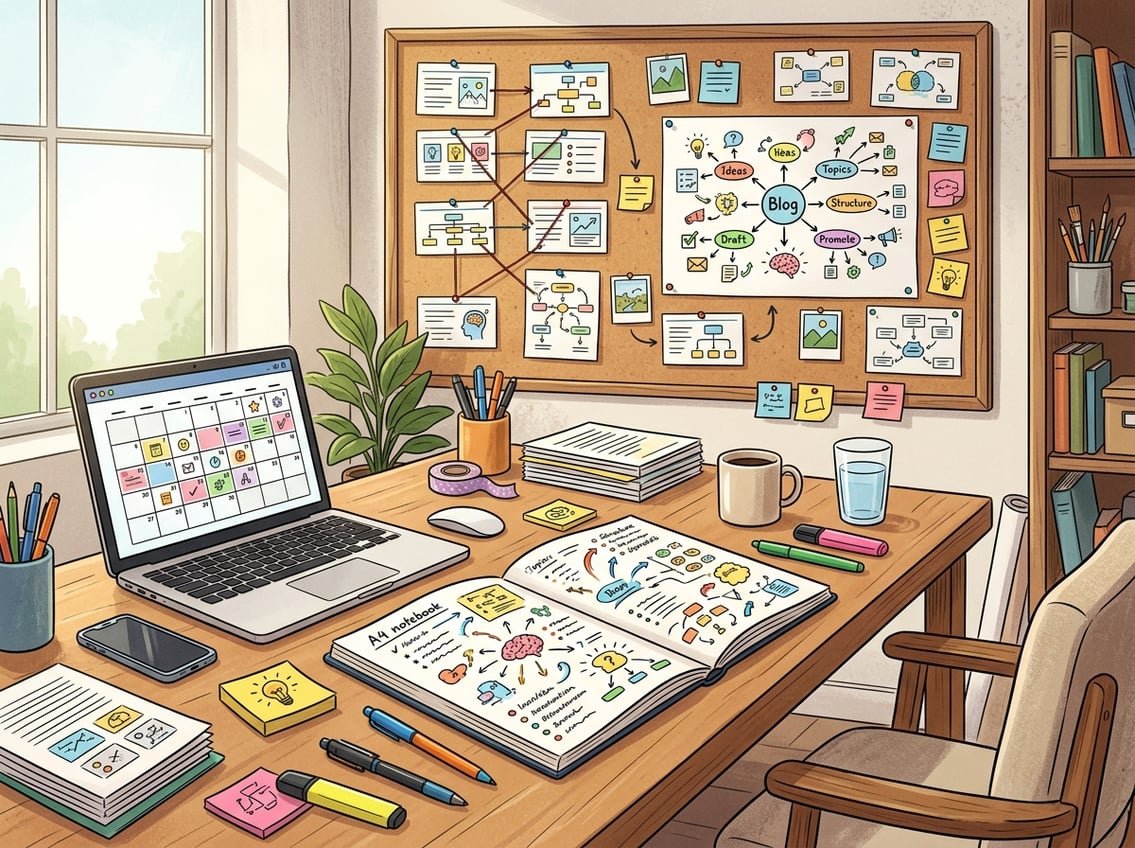
The goal is not to force 50 random topics. The goal is to create a content plan that supports traffic, trust, and recurring income over time.
Key Takeaways
- Build your posts around one niche map.
- Keep one idea bank that grows every week.
- Publish in a system, not from scratch each time.
Start With a Niche Map and Content Goals
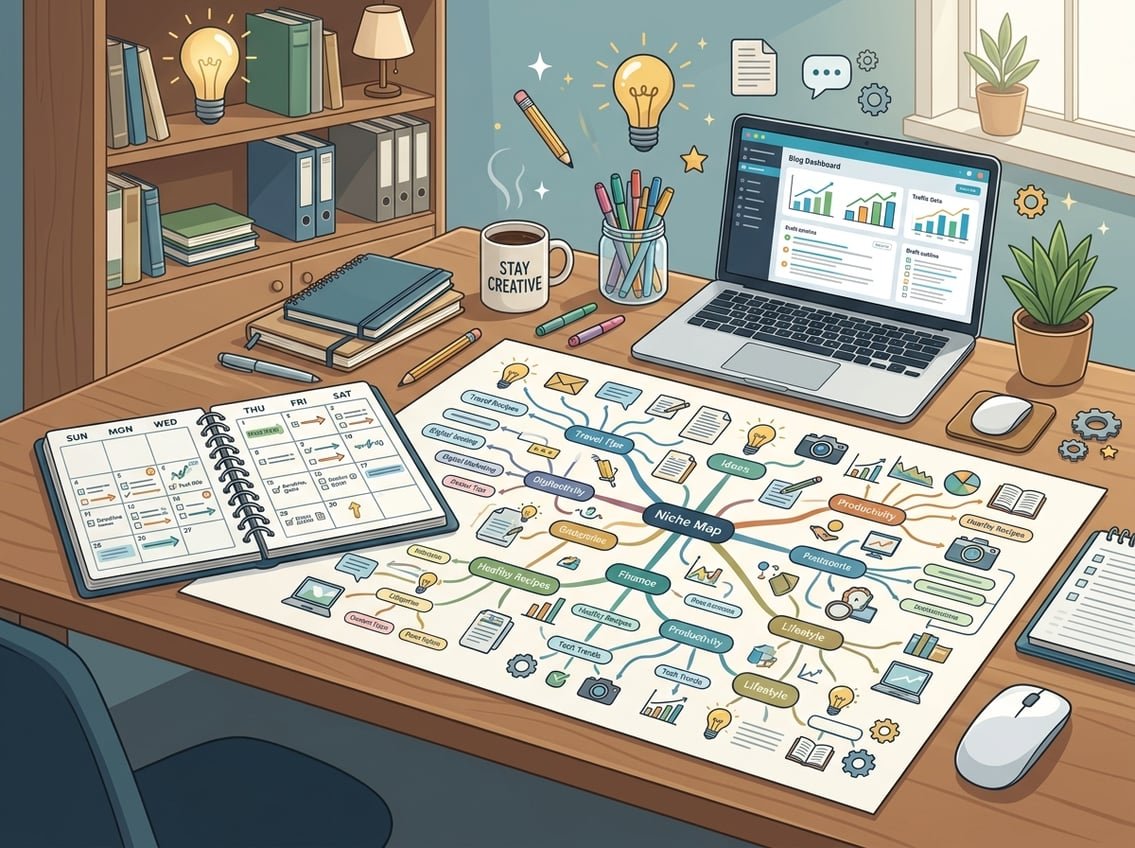
A strong content plan starts with clear direction. If you know who you are writing for and what each post should do, you can build 50 posts with far less wasted effort.
Define the Audience, Problems, and Search Intent
Write for one clear reader, not everyone. A beginner blogger wants different help than an affiliate marketer, and both need different search phrases, examples, and next steps.
List the main problems your reader wants solved, then match each problem to search intent. Some searches want a fast answer, some want a comparison, and some want a full step-by-step guide.
Choose Core Topics That Support Traffic and Monetization
Pick 3 to 5 core themes that fit your niche and business model. For example, if you write about blogging, your themes may include SEO, AI tools, email growth, affiliate marketing, and content systems.
This is where traffic and monetization should meet. A useful content strategy connects educational posts to product pages, lead magnets, email signups, and recurring affiliate offers.
Turn Broad Themes Into Topic Clusters and Pillar Pages
A pillar page should cover one broad topic in depth, then link to related supporting posts. Topic clusters help you avoid random ideas because each new post supports a larger content plan.
For example, one pillar page could cover how to start a profitable blog, while supporting posts cover keyword research, hosting, internal links, and content planning. This structure also helps with SEO and thought leadership because your site starts to look organized and complete.
Build a 50-Post Idea Bank That Does Not Dry Up
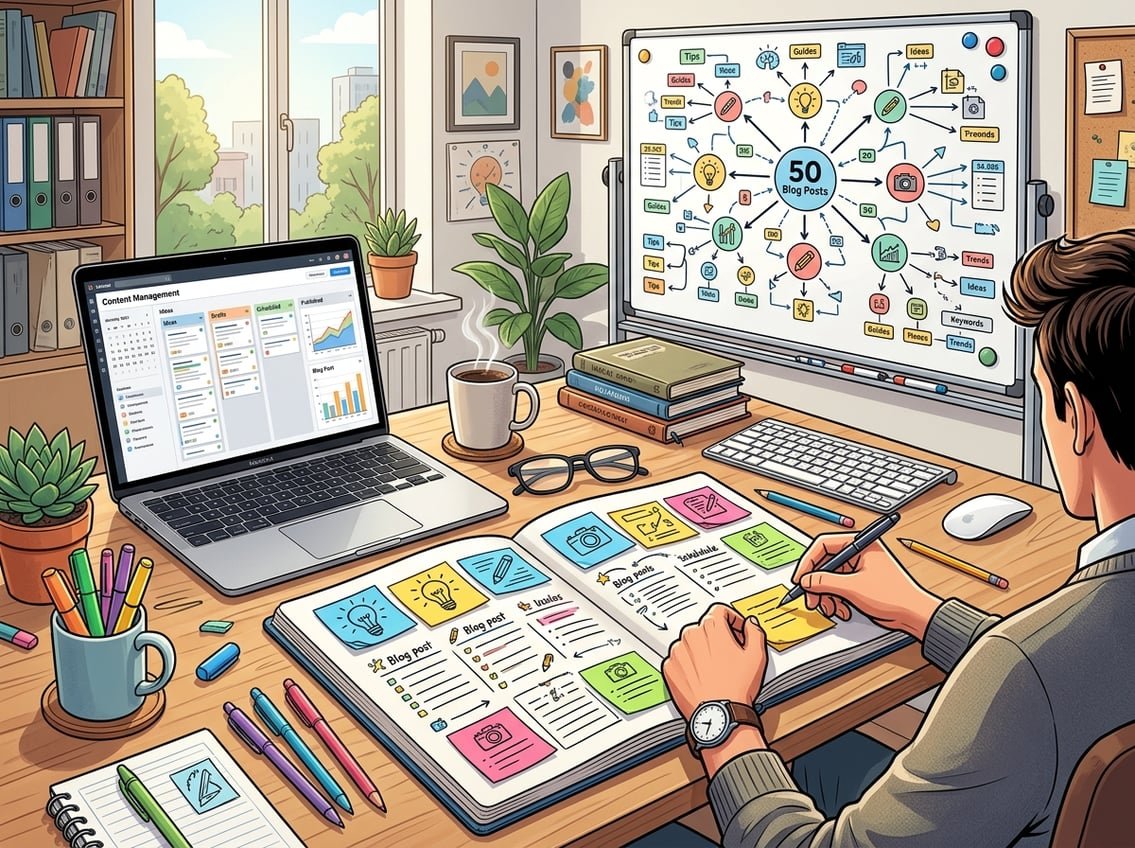
Your idea bank should keep growing even when you are not actively writing. The best way to avoid writer’s block is to collect ideas from search data, audience questions, and real conversations in your niche.
Use Keyword Research to Find Low-Competition Opportunities
Start with long-tail keywords and low-competition keywords. These are easier to rank for and often bring in readers who are closer to taking action.
Look for phrases that answer a narrow problem, such as “best email marketing tool for beginners” or “how to start a faceless blog with AI.” If you use keyword research tools well, you can build dozens of blog post ideas from one topic without repeating yourself.
Pull Content Ideas From Reddit, Social Media, Podcasts, and Interviews
Reddit threads, social media comments, podcasts, and interviews show you what people actually care about. They often reveal the exact words your audience uses when describing a problem.
I also like to keep a simple swipe file of questions, objections, and repeated complaints. Those small observations often turn into the best blog post ideas because they come from real behavior, not guesses.
Mix Formats Like How-To Posts, Case Studies, Roundup Post, and Expert Roundup
Do not make every post the same. A healthy mix of how-to posts, case studies, success stories, roundup post formats, expert roundup pieces, and controversial post angles keeps your calendar from getting stale.
You can also use expert quotes, product launch reactions, and emerging trends to create timely content. If you need a fast way to expand one idea, search How to Go from 5 to 50 Blog Posts per Month: A Production System for a good example of building a repeatable production flow.
Organize Ideas Into a Realistic Publishing System
A list of ideas is not enough. You need a system that turns those ideas into drafts, then finished posts, without letting the process break down halfway through.
Create a Simple Content Calendar and Editorial Calendar
Your content calendar should show what you publish and when. Your editorial calendar should show what stage each post is in, from idea to outline to draft to published.
Keep it simple. A title, target keyword, publish date, and status is enough for most bloggers at the start.
Use Notion or a Spreadsheet to Manage the Content Pipeline
Notion or a spreadsheet works well because you can track blog post ideas, content briefs, and internal links in one place. A clean system beats a fancy system every time.
I like to separate columns for topic, keyword, format, funnel stage, and monetization goal. That makes it much easier to see whether your content plan supports SEO, email growth, and affiliate offers.
Batch Research, Drafting, Editing, and Publishing
Treat content creation as a step-by-step process. When you batch similar tasks, you stop wasting time switching between research, writing, and editing.
A simple workflow looks like this:
- Research 10 ideas at once.
- Outline 5 posts at once.
- Draft 2 to 3 posts in one session.
- Edit, format, and schedule in a separate session.
That approach keeps your content pipeline moving and reduces burnout.
Prioritize the Right Posts First
The order of your posts matters. If you publish the right pages first, your later posts have a stronger base to rank, link, and convert.
Publish Foundational Guides Before Supporting Articles
Start with your most important how-to guides and pillar pages. These posts set the tone for your site and give you a place to send traffic from future articles.
If you use WordPress, tools like Yoast and RankMath can help you handle basic SEO setup while you focus on the content itself. That keeps the early stage simple and practical.
Balance Quick-Win Long-Tail Keywords With Cornerstone Content
Quick-win long-tail keywords can bring early traffic, while cornerstone content builds long-term authority. You need both.
A few fast-ranking support posts can give you momentum, while your bigger guides work in the background. This balance is especially useful if you want steady traffic without waiting months for every post to perform.
Plan Internal Links From Day One
Internal links should not be an afterthought. Every post should point to a related pillar page, a supporting article, and a relevant offer or signup page when it makes sense.
This helps readers move through your site in a logical way. It also helps search engines understand how your content fits together.
Use AI and SEO Tools Without Losing Quality
AI can help you move faster, as long as you stay in control of the final idea, voice, and structure. The best results come from using tools to support your thinking, not replace it.
Brainstorm Faster With ChatGPT, Claude, and AI Writing Tools
ChatGPT, Claude, and other AI writing tools can help you brainstorm angles, outlines, and title variations. I use them most when I already know the audience and want to speed up the first draft stage.
A simple prompt can turn one topic into 15 to 20 post ideas in minutes. That is useful, as long as you review every idea and keep only the ones that fit your niche map.
Validate Topics With Semrush, Ahrefs, and Search Data
Before you commit to a topic, check whether people are actually searching for it. Semrush, Ahrefs, Google Search Console, and similar tools can help you spot real demand and avoid weak ideas.
Ahrefs even offers a free blog post ideas generator, which is useful when you want quick topic angles from a keyword or theme. Use tools like that as a starting point, not as your final content plan.
Keep Human Insight, Original Examples, and Helpful Structure
AI can help you move faster, but your content still needs judgment and real examples. Readers can tell when a post sounds generic or stitched together.
Your edge comes from lived experience, clear structure, and practical advice. That is one reason iProfitLab leans toward simple systems and useful execution, not hype or empty volume.
Measure What Is Working and Refresh the Plan
Your first content plan should not stay fixed. Once real traffic starts coming in, your plan should adjust based on what people read, click, and share.
Track Time on Page, Rankings, and SEO Performance
Watch time on page, rankings, clicks, and other basic SEO metrics. These signals show which topics hold attention and which ones need improvement.
If one post keeps readers engaged, that topic probably deserves more coverage. If another post gets impressions but few clicks, the title or search angle may need work.
Spot Winning Topics and Expand Them Into Numerous New Angles
When one post performs well, turn it into numerous related posts. A strong case study can become a checklist, a beginner guide, a comparison post, and a troubleshooting post.
This is one of the easiest ways to keep your content calendar full. You are not forcing new ideas, you are building from proof.
Update the Calendar Based on Results and Reader Feedback
Check comments, email replies, and search data on a regular basis. Reader feedback often shows you what to write next better than a blank brainstorm session does.
Keep your content plan flexible enough to shift. If a topic cluster starts outperforming the rest, give it more room in the calendar and reduce the weaker areas.
Frequently Asked Questions
What’s the best step-by-step process to brainstorm and organize dozens of blog post ideas at once?
Start with one niche map, then pull ideas from search data, audience questions, and topic clusters. Put everything into one list, sort it by search intent and business value, then turn the strongest ideas into a content calendar.
How can I build a repeatable content system so I never run out of blog topics?
Use a content pipeline with a simple idea bank, a clear editorial calendar, and repeatable content briefs. When you review keyword data, reader questions, and performance every month, you keep adding to the system instead of starting over.
How do I use keyword research and audience questions to create a long-term editorial calendar?
Use keyword research to find topics people already search for, then use audience questions to fill in gaps that tools may miss. The best editorial calendar mixes low-competition keywords, supporting posts, and pillar pages so your blog grows in a steady pattern.
What does the 80/20 rule look like in blogging, and how can it guide my content planning?
In blogging, the 80/20 rule usually means a small set of posts brings most of your traffic or leads. You can use that idea by spending more time on the formats and topics that already work, then expanding them into related posts.
How far in advance should I plan blog content, and how often should I refresh the plan?
Planning 30 to 60 days ahead is a solid starting point for most bloggers. Refresh the plan every month or quarter so you can adjust based on rankings, reader feedback, and new keyword opportunities.
How can I repurpose one core idea into multiple posts across channels like LinkedIn without sounding repetitive?
Break one core idea into different angles, levels of detail, and formats. A pillar post can become a LinkedIn post, a short email, a checklist, a case study, and a comparison article if each version serves a different purpose.
If you want a simpler way to build your content system, download the Free AI Income Starter Kit or check the Recommended Tools page for practical platforms that support blogging, SEO, and email growth.