Pillar Posts vs Money Posts for Long-Term Affiliate Growth often comes down to one simple question, which page is doing the job your site needs right now? If you choose the wrong page type first, you can waste time writing content that gets attention but does not convert, or content that tries to sell before your site has enough trust to rank.

If your site is new, you usually need pages that build topical authority first, then pages that push conversions once search intent and trust are clearer. That is the simplest way to turn SEO into a real content strategy instead of a random list of blog post ideas.
The best results usually come from treating pillar posts and money posts as parts of the same system. Pillar pages earn visibility and topic depth, while money pages capture buyers who are closer to action. When you connect them with strong internal links and smart email capture, your blog starts working like a long-term asset.
Key Takeaways
- Pillar content builds trust and search reach.
- Money pages work best when buyer intent is clear.
- A strong internal linking system ties both together.
What Each Page Type Is Meant to Do
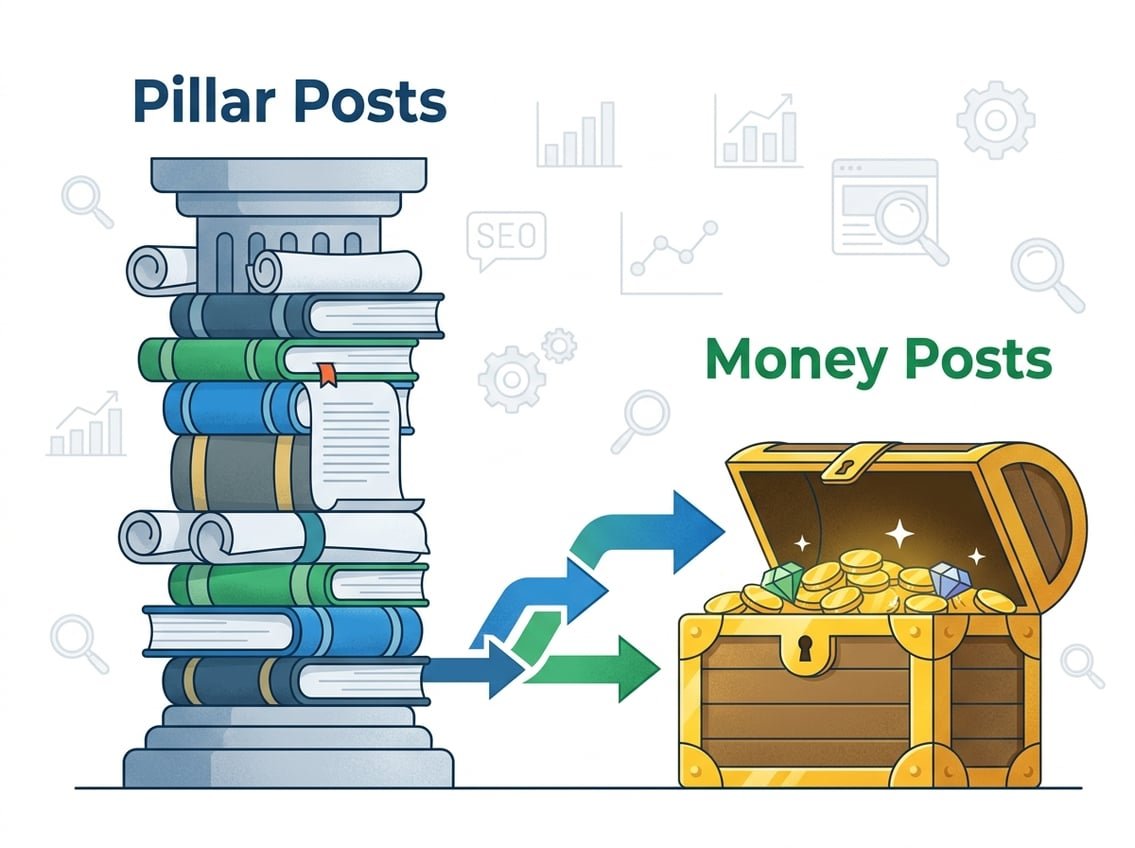
A pillar page and a money post are not the same kind of blog post, even if both target SEO traffic. One is built for breadth and authority, the other is built for action and conversions. When you mix the goals too hard, both usually weaken.
A pillar page is often your hub page or cornerstone content. It gives a complete guide to a broad topic, then points readers to more specific blog posts that answer related questions.
What Makes a Pillar Post a Traffic and Authority Asset
A pillar post is meant to cover a topic at a high level and match broad search intent. It helps you rank for a main keyword, then supports many related long-tail searches through internal links and topic depth.
Good pillar pages work well when you want a clear content structure, stronger search visibility, and a page that acts like a central reference. As noted in Semrush’s overview of pillar pages, the page gives an overview and links to more specific cluster posts.
What Makes a Money Post a Conversion-Focused Asset
A money post is built around a stronger commercial angle. That may be a review, comparison, best-of list, or tutorial tied to an affiliate offer, SaaS tool, or product decision.
These posts focus on conversions, not just clicks. You write them for search intent that already suggests buying, comparing, or choosing.
Why Mixing Both Goals on One Page Often Hurts Results
If one page tries to be a full guide and a sales page at the same time, the message gets muddy. Readers who want education may bounce when the page feels too promotional, while buyers may leave if the page spends too long on broad background.
I see this mistake often in new affiliate sites. A page titled like a guide ends up stuffed with calls to action, or a review page spends half its space teaching the basics. That usually weakens both rankings and conversions.
What to Focus On First Based on Your Site Stage

Your site stage matters more than most people think. The right seo strategy changes depending on whether you need topical authority, early organic traffic, or faster revenue signals. Keyword research should guide the choice, not hype or guesswork.
Broad head terms, high-volume keywords, and competitive keywords usually need more support. Long-tail keywords often bring quicker wins, especially when your target audience is already searching with intent.
Start With Pillar Content if You Need Topical Authority and Organic Traffic
If your site is brand new, pillar content is often the better first move. It gives search engines a clearer view of your topic coverage and makes your content planning easier.
This is especially useful when you are building around one niche, like AI tools, blogging, SEO, or email marketing. A strong pillar page can support many future cluster posts and help you avoid random content.
Start With Money Content if You Already Have Demand and Clear Buyer Intent
If your site already has traffic, or your keyword research shows clear buyer intent, money posts can come first. This works well when you know which tool, course, or service your readers are already comparing.
For example, a search for a product comparison or a best-of keyword can signal stronger purchase intent than a general guide. If you want a practical workflow for this kind of site setup, iProfitLab’s systems-first approach and Free AI Income Starter Kit are built around simple execution, not noisy tactics.
A Simple Publishing Order for New Affiliate and Content Sites
A clean order is often easier to stick with:
- Publish 1 to 3 pillar pages around your main topics.
- Add supporting long-tail posts that answer specific questions.
- Create money posts for the highest-intent keywords in each topic.
- Link everything with a clear internal linking plan.
This order gives you a base of search visibility before you ask readers to click, buy, or subscribe.
How to Build a System Where Both Pages Support Each Other
Pillar content and money pages work best inside a topic cluster, not as isolated posts. The goal is to create content clusters where broad education leads into more specific buyer content. That is where your linking strategy starts to matter.
Internal links move readers, but they also help spread link equity through your site. A smart site structure makes it easier for search engines to understand which pages are central and which pages support them.
Use Topic Clusters to Connect Broad Education With Commercial Intent
A topic cluster starts with one core pillar topic, then adds supporting blog posts that explore subtopics. The main pillar covers the broad idea, and the cluster pages cover the details.
This works well for pillar topics like blogging, AI content creation, hosting, or email list growth. As WordPress.com explains in its pillar content guide, the pillar page touches the major parts of the topic and sends readers into the smaller posts.
Map Internal Links From Pillars to Reviews, Comparisons, and Tutorials
Your pillar page should link to your best money posts when the reader is ready for a next step. A review, comparison, or tutorial can then link back to the pillar page for context and depth.
That two-way pattern helps both user intent and SEO. It is also a simple way to build trust, because readers can move from learning to deciding without feeling lost.
Guide Readers From Discovery to Email Signup to Offer Click
The cleanest path is usually discovery, email signup, then offer click. Your pillar page can capture early readers with a useful lead magnet, while your money post can place a more direct call to action.
This is where email marketing becomes useful. You own the audience, and recurring affiliate offers often perform better when readers see your recommendations more than once. That is the kind of system iProfitLab pushes in its beginner resources, because it keeps the model simple and repeatable.
How to Structure Pillar Posts and Money Posts for Better Results
Strong structure makes both page types easier to read and easier to rank. Your table of contents, meta description, and on-page seo choices should match the job of the page. Good structure also improves site structure and navigation, which helps search engine optimization.
A pillar page should feel complete, while a money post should feel decisive. The writing style can change, too, since readers are in different stages of search intent.
Essential Elements of a High-Performing Pillar Page
A strong pillar page usually includes:
- A clear table of contents
- A logical pillar page outline
- Short sections with scannable headings
- Links to supporting cluster content
- A clear next step for readers
It should read like a comprehensive guide, not a messy dump of notes. If your page feels too broad, split it and keep the central page focused.
Essential Elements of a High-Intent Money Post
A money post works best when it answers a commercial question fast. Use clear comparisons, direct recommendations, and proof-based detail where possible.
If the post is a review or best-of piece, make the buying path obvious. If it is a tutorial, place the offer where it fits the workflow instead of forcing it into every paragraph.
On-Page SEO Details That Improve Readability and Rankings
Basic on-page seo still matters. Keep your meta description clear, use schema markup when it fits, and make sure canonical urls are clean.
Add alt text to important images, keep paragraphs short, and use readable formatting. Tools like Yoast SEO can help you catch simple issues, but the real goal is clarity for readers first.
How to Measure Performance and Improve Over Time
You should track pillar pages and money posts in different ways. A pillar page may earn more impressions and internal clicks, while a money page may show stronger conversion rates and more direct revenue. Both matter, and both tell different stories.
Google Search Console, Google Analytics, and content audits help you see where each page type is helping. Search results pages also matter, since people also ask boxes can reveal content gaps and new cluster ideas.
Track Rankings, Impressions, and Click Paths Separately
In Google Search Console, look at impressions, keyword ranking trends, and the search terms each page is pulling in. Pillar content often attracts broader queries, while money pages may rank for narrower, higher-intent terms.
In Google Analytics, watch time on page and click paths. You want to know whether readers move from a pillar page into a review, comparison, or newsletter signup.
Use Google Analytics and Google Search Console to Spot Content Gaps
A content audit can show where your site is thin. If a pillar page gets impressions but weak engagement, the content may need more specific support posts.
If a money page gets traffic but few clicks, the offer or CTA may need work. Backlinks and domain authority can help, yet content gaps often matter more than people expect.
Refresh, Expand, or Split Pages Based on Performance Data
If a pillar page is too broad, split off sections into their own posts. If a money page is too thin, expand it with better comparisons, examples, or buyer questions.
Refresh pages that rank but have low clicks, and update older posts when search intent shifts. A small content audit every few months keeps your site cleaner and helps you focus on the pages that already show promise.
Frequently Asked Questions
What’s the difference between a pillar post and a money post in a content strategy?
A pillar post is built to teach, cover a broad topic, and support topical authority. A money post is built to capture buyers who are closer to a decision, so it focuses more on conversions.
How do I decide which type of post to publish first when launching a new site?
If your site is new, start with pillar content when you need topical authority and organic traffic. If you already know your target audience has clear buyer intent, start with money content around the strongest keywords.
Are pillar pages still worth creating in 2026, or has SEO moved on?
Yes, pillar pages still matter because search engines still reward clear structure, depth, and topic coverage. The format works best when it is connected to useful cluster content instead of treated like a standalone mega post.
How many supporting articles should I build around a pillar post for it to be effective?
There is no fixed number, but you want enough supporting posts to cover the main subtopics your reader would expect. In practice, a small cluster can work well if each post covers one clear angle and links back to the pillar page.
What are the best internal linking practices between pillar content and revenue-focused pages?
Link from the pillar page to your best reviews, comparisons, and tutorials where the reader is ready for a next step. Then link those pages back to the pillar so the site feels connected and easy to navigate.
How do I measure whether my pillar posts are actually contributing to conversions and revenue?
Look at assisted paths in Google Analytics, clicks from pillar pages into money posts, and email signups that start on informational content. If a pillar page keeps users on site and moves them toward offers, it is doing part of the conversion job even if it does not sell directly.