Email List vs Social Media: Which Builds More Income? If you want recurring income, the channel you own usually beats the channel you rent.
Email marketing and social media both matter in digital marketing, but they do not play the same role in your marketing strategy. Social media can help you get attention fast, while email gives you a direct line to people who already said they want to hear from you.
If your goal is stronger return on investment, better conversion rates, and more control over future sales, your email list usually does the heavier lifting.
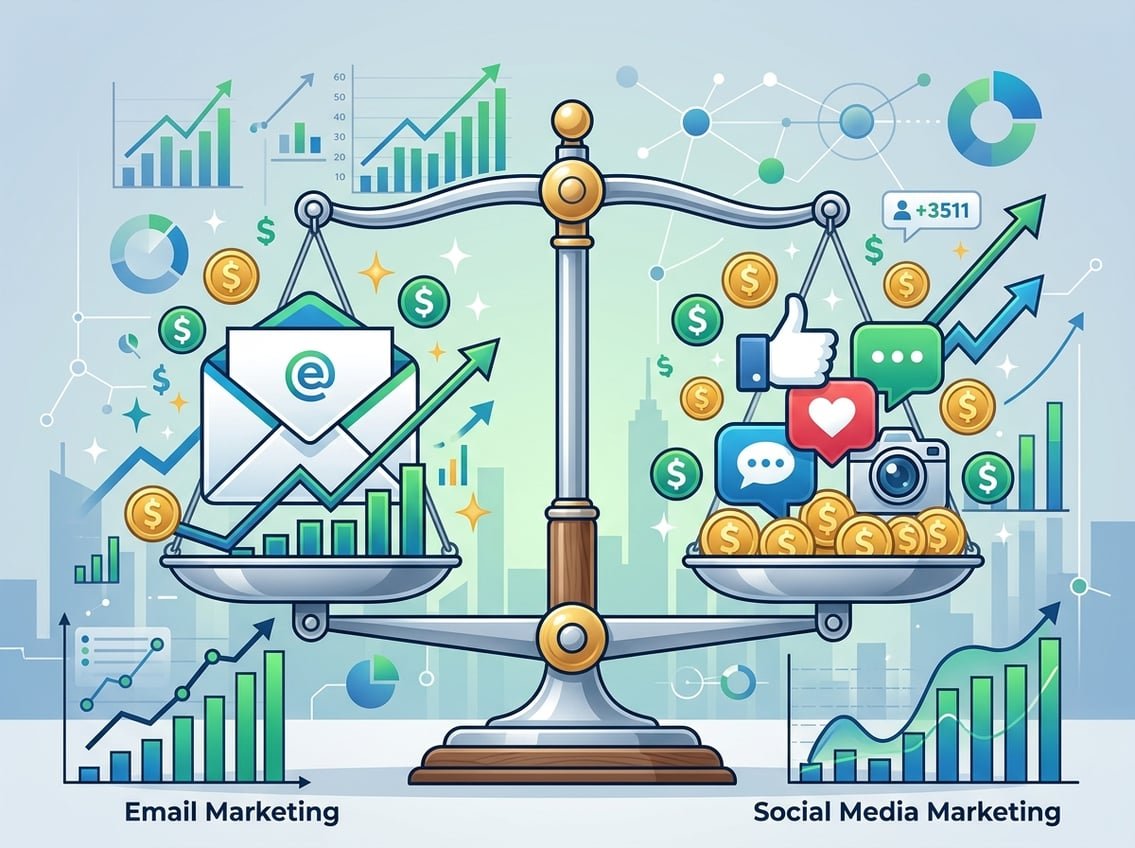
That does not mean social media is weak. It means social media works best as a discovery engine, while email works best as a monetization engine.
Key Takeaways
- Email usually converts better than social traffic.
- Social media is stronger for reach and discovery.
- The best income systems use both together.
The Short Answer: Which Channel Usually Makes More Money?
For most creators and affiliate marketers, email marketing has the edge when you compare email marketing ROI, social media ROI, and actual campaign performance. Email usually delivers a higher conversion rate because your message goes to people who opted in, which lowers cost per acquisition and improves return on investment.
A recent Omnisend comparison says email can produce very strong ROI, and it also points out that automated emails drive a large share of orders from a small share of sends. That is why many businesses treat email as the channel that turns interest into revenue, while social media starts the conversation. You can read their breakdown in this email marketing vs. social media ROI analysis.
Why Email Often Wins on ROI and Conversion Rate
Email works well because it reaches a smaller but warmer audience. When someone joins your list, they are already showing intent, so your offers do not need to fight a crowded feed.
You can also send follow-up sequences, product recommendations, and time-based offers without depending on a platform’s feed rules. That makes your conversion rates more stable over time.
Where Social Media Still Contributes to Revenue
Social media still matters when you need awareness, trust, and traffic. A post, reel, or short video can bring in new people who would never have found you through search alone.
It also helps when you sell low-ticket offers, visual products, or services that benefit from quick attention. In some businesses, social can directly support sales through comments, DMs, and paid ads.
What Changes Based on Your Business Model
Your result depends on what you sell. Affiliate marketing, SaaS, and email-based offers often do better with a list because follow-up matters.
A local brand, creator brand, or visual product may see more immediate action from social media. The smartest move is to match the channel to the buying pattern, not the trend.
Ownership, Reach, and Platform Risk
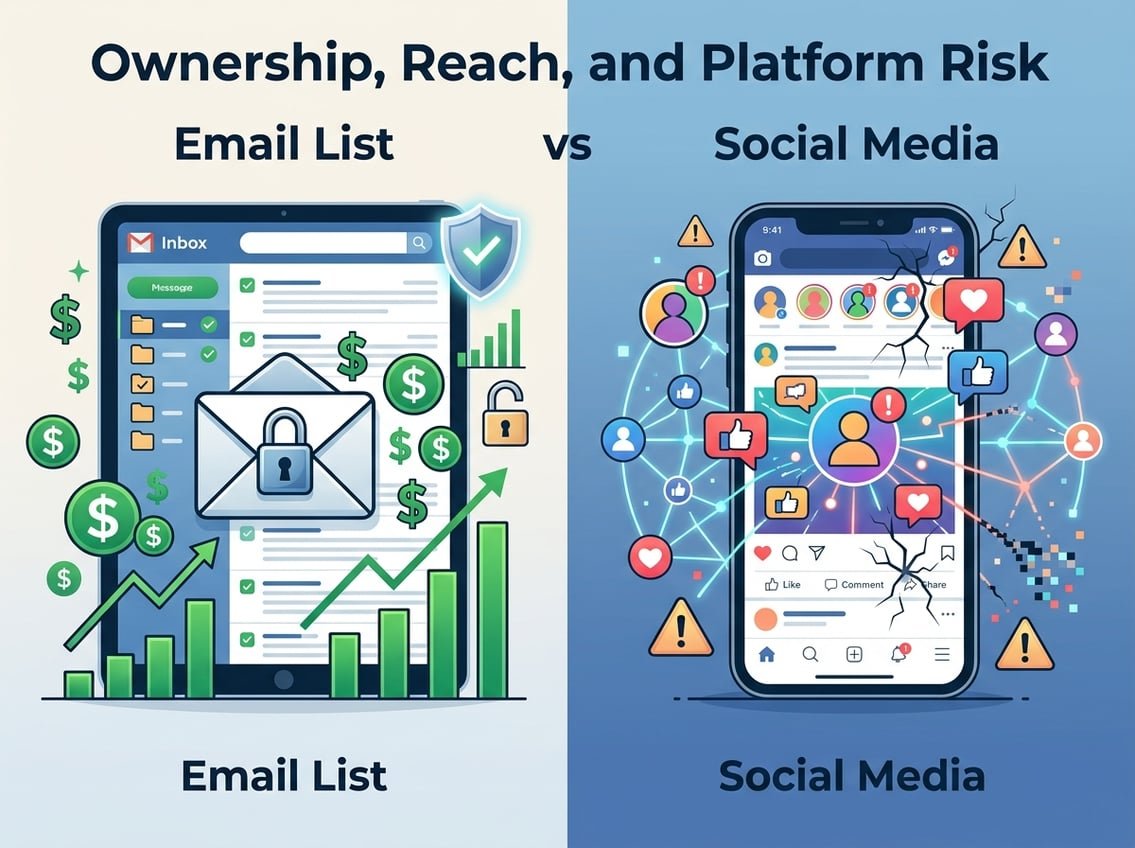
Your email list is an owned asset. Your social following lives on a platform you do not control, which makes audience reach less predictable when organic reach decline shows up.
That difference matters more as you build a business. You are not just chasing audience reach, you are building a system that can still work if one platform changes.
Why an Email List Is an Owned Asset
When people subscribe, they become email subscribers in your system, not followers inside a feed you do not manage. You can send newsletter signups into a welcome sequence, product education, or a launch campaign whenever you need to.
That gives you more control over timing, message order, and monetization. It also makes email list growth more valuable than a bigger social following with weak engagement.
How Algorithm Changes Affect Organic Reach
Social media platforms can limit organic reach without warning. A post that performed well last month may get less attention this month, even if your content quality stays the same.
That makes social useful for audience reach and brand visibility, but less reliable for long-term income. A strong post can still help, yet your results are tied to platform behavior, not just your effort.
The Difference Between Audience Reach and Audience Control
Audience reach means how many people may see your content. Audience control means whether you can contact them again without asking a platform for permission.
Email gives you stronger global reach in a practical sense, because you can reach your list directly anytime. Social media may reach more people fast, but your control over that audience is much weaker.
How Each Channel Performs Across the Customer Journey
Social media is often the first touchpoint, while email usually does the work after interest starts. If you map both channels to the customer journey, each one becomes easier to use and easier to monetize.
That is why social media marketing and email marketing work best when you stop comparing them as rivals and start using them in sequence.
Social Media for Discovery, Brand Awareness, and Community Building
Social platforms are strong for community engagement, audience engagement, and quick trust building. People can see your face, your style, your process, and your proof in a few seconds.
That makes social media a good place for brand awareness and community building. It is also useful for testing ideas before you turn them into a blog post, lead magnet, or offer.
Email for Nurturing Leads and Driving Conversions
Email is better for lead generation follow-up, customer retention, and customer loyalty. Once someone joins your list, you can teach, recommend, and sell without competing against endless distractions.
This is where many beginners see the real shift in income. A blog post may attract traffic, but email turns that traffic into repeat readers and buyers.
Where Retargeting and Follow-Up Improve Results
Retargeting works because most people do not buy on the first visit. Social ads, email campaigns, and follow-up sequences help you stay in front of interested readers until they are ready.
For creators and affiliate marketers, this usually means a simple path: discover on social, subscribe through email, then convert through a useful sequence. That is also why many iProfitLab-style systems focus on blogging, SEO, and email together instead of chasing random traffic.
Revenue Mechanics: Why Email Converts Better for Affiliate and SaaS Offers
Email tends to outperform for affiliate and SaaS offers because it supports segmentation, personalization, and repeated product recommendations. It also gives you clearer numbers, so you can see what is working instead of guessing.
If you sell trust-based offers, email campaigns usually give you a more direct path from click to sale.
Segmentation, Personalization, and Product Recommendations
With segmentation, you can send different messages to different groups. A beginner who asked for a checklist does not need the same email as someone who clicked on a high-intent offer.
Personalized emails usually feel more relevant, which can lift open rates and click-through rates. In practice, a short, targeted recommendation often beats a broad post that tries to speak to everyone.
Email Automation and Timed Email Campaigns
Email automation lets you send the right message at the right time. Welcome series, nurture sequences, and launch emails can run without daily manual effort.
That matters because recurring income depends on consistency. A good automated sequence keeps working while you focus on content, SEO, and list growth.
Key Metrics That Actually Matter
Do not chase open rates alone. Track email open rates, email open rate trends, click-through rate, ctr, unsubscribes, and deliverability together.
HubSpot has long emphasized that email performance should be measured by revenue-linked actions, not vanity numbers alone, and that is the right mindset for income building. If your list opens well but never clicks, the message is weak. If clicks happen but sales do not, your offer or follow-up needs work.
Where Social Media Helps Most in an Income System
Social media has real social media advantages when you use it for discovery, trust, and traffic. It is especially useful when your content is visual, when you want faster feedback, or when you need to warm up a cold audience.
The key is to use it as a support channel, not your only business asset.
Using Instagram, Reels, and Short-Form Video for Top-of-Funnel Attention
Instagram, Instagram Stories, Reels, and short-form video are strong for top-of-funnel reach. Visual content and visual storytelling can explain ideas fast and make your brand feel more human.
That matters when you want follower growth and early engagement. A short clip can introduce your topic, then send people to a lead magnet or blog post.
Community Management, Visual Content, and Trust Signals
Social media is also useful for community management and user-generated content. Comments, replies, and reposts can show that real people interact with your brand.
That kind of engagement can help you build trust faster than text alone. Tools like Hootsuite can help you stay organized if you manage several accounts, but the strategy still matters more than the tool.
When Paid Advertising and Influencer Partnerships Make Sense
Paid advertising can work when you already know your offer converts. Ad targeting helps you put your message in front of the right people, but it costs money and gets expensive if your funnel is weak.
Influencer partnerships can also help if the audience match is strong. They work best when the creator’s followers already care about your topic and the offer fits naturally.
A Smarter Hybrid Strategy for Long-Term Income
The best long-term setup is usually a hybrid one. You use social content to create brand awareness, then move people into email subscribers through lead magnets and gated content.
That gives you a content lifespan that is much longer than a single post. It also gives you a clearer path from attention to revenue.
Use Social Content to Attract Leads With a Lead Magnet
A strong lead magnet turns casual visitors into newsletter signups. It can be a checklist, template, short guide, or free starter kit that solves one small problem well.
If you want a simple system, iProfitLab’s Free AI Income Starter Kit is a good example of how a practical lead magnet can guide beginners without adding confusion. The goal is not just lead generation, it is building a list that you can serve again.
Turn Subscribers Into Newsletter Readers and Buyers
Once people join your email list, you can move them from curiosity to trust. Good newsletters do not just promote, they teach, filter, and recommend.
That is where email marketing best practices matter. Clear subject lines, useful content, and consistent sending can turn cold signups into buyers over time.
Build a Simple System With Blogging, SEO, and Email
Blogging and SEO give you durable traffic. Email turns that traffic into recurring income by letting you follow up after the first visit.
If you want a simple path, start with one blog topic, one lead magnet, and one email sequence. This approach compounds better than trying to stay active on every platform at once.
Frequently Asked Questions
Which marketing channel tends to generate more consistent revenue over time: email marketing or social platforms?
Email marketing usually generates more consistent revenue over time because you own the list and can contact subscribers directly. Social platforms can drive bursts of attention, yet algorithm shifts can change your results fast.
How do you estimate the revenue value of an email list with around 1,000 subscribers?
A 1,000-subscriber list is not worth a fixed dollar amount, because value depends on niche, open rates, click-through rates, and offer fit. A list with strong engagement and clear buyer intent can outperform a larger list that never clicks.
What are the typical conversion rate differences between email campaigns and social media posts?
Email campaigns usually convert better because the audience has already opted in and is easier to follow up with. Social posts are better for awareness and engagement, while email is better for moving readers to a purchase.
How do deliverability and algorithm changes impact long-term income from each channel?
Deliverability affects whether your emails reach inboxes, so it matters a lot for revenue. Social algorithm changes can reduce your visibility even if your content is good, which makes income less stable if you rely on one platform.
What does the 60/40 rule in email marketing mean, and how does it affect profitability?
The 60/40 rule is usually used as a simple split between value and promotion, where most of your emails educate or help, and a smaller share sells. That balance can improve trust and keep unsubscribes lower, which supports long-term profit.
Why are some businesses switching away from Mailchimp, and what should they look for in an alternative?
Some businesses want lower costs, better monetization tools, or easier automation as they grow. When you compare alternatives, look for deliverability, segmentation, automation, and pricing that fits your list size and income goals.