The phrase how many blog posts needed before affiliate sales start gets asked a lot because you want a real number, not vague advice. The practical answer is that many new affiliate blogs see their first sale after about 20 to 50 high-quality posts, yet your niche, search intent, and offer choice can move that number up or down.

If you publish helpful content that matches what people are already searching for, you can earn a first affiliate commission sooner than you expect. If you publish random posts without a clear plan, you may write far more than 50 and still see weak results.
Key Takeaways
- Most beginners see a first affiliate commission after 20 to 50 strong posts.
- Search intent and content quality matter more than raw volume.
- A clear niche, better offers, and email capture can speed up sales.
The Realistic Range for First Affiliate Sales
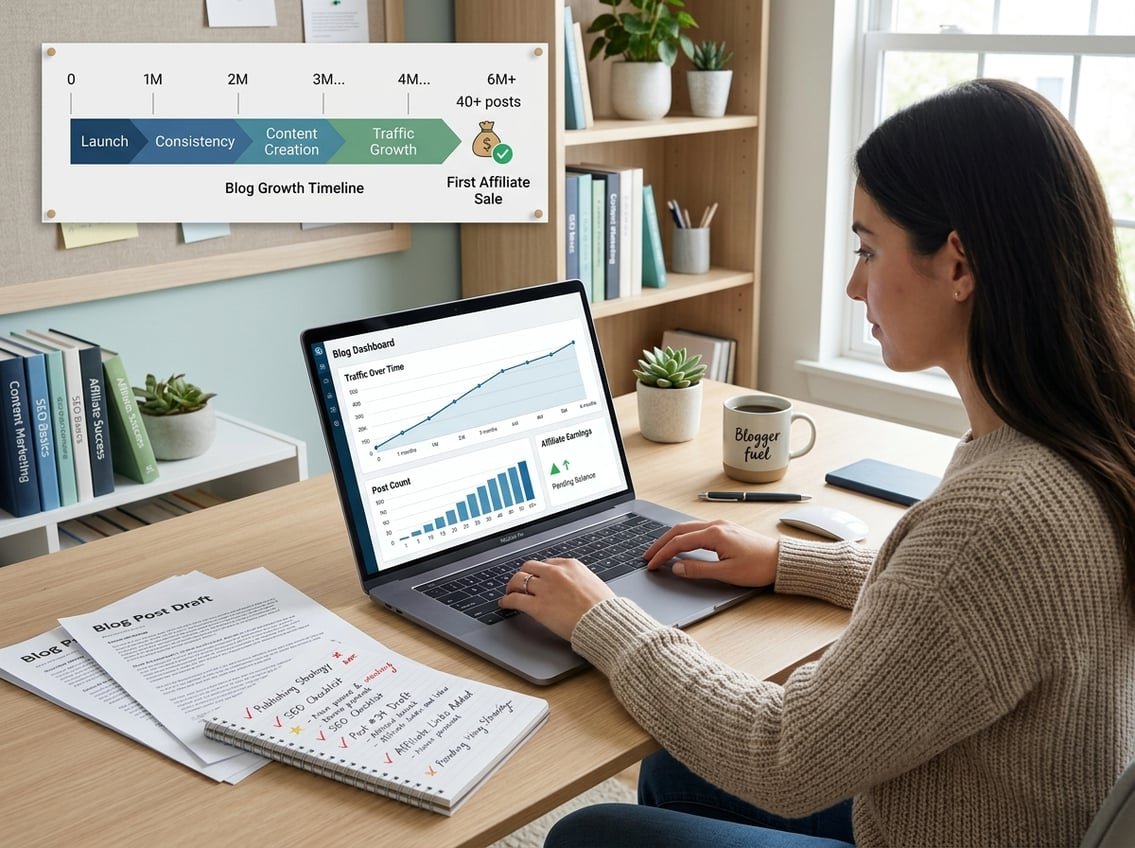
Most beginners want to know how many blog posts to make money, yet the better question is how many posts can earn enough organic traffic to trigger a first affiliate commission. In practice, the answer depends on how focused your content is and how well it matches buyer intent.
A recent affiliate commission guide says many beginners earn their first affiliate commissions after 20 to 50 high-quality posts, with some seeing results sooner in low-competition niches. That matches what many bloggers see in real life.
What Most Beginners Can Expect From 10, 20, 30, and 50 Posts
With 10 posts, you may still be in the setup phase. A few low-competition articles can rank, but traffic is usually thin.
By 20 to 30 posts, you often have enough high-quality content for Google to start testing your site more seriously. At 50 posts, a focused blogger in a narrow niche often has a better shot at steady organic traffic and a first affiliate commission.
| Blog Post Count | Typical Early Result |
|---|---|
| 10 posts | Very limited traffic, rare sales |
| 20 posts | First signs of search traffic |
| 30 posts | Better odds of clicks and first sale |
| 50 posts | More realistic for consistent early sales |
Why Some Bloggers Get a First Affiliate Commission Faster Than Others
Some bloggers get their first affiliate commission in under 10 posts because they pick low-competition keywords, write for clear buyer intent, and promote a product people already want. Others take 50 posts or more because they target broad topics, weak offers, or crowded niches.
I have seen the fastest early sales come from bloggers who publish fewer posts, yet each post is tightly aligned with a problem and a product. That beats publishing a lot of content with no clear path to conversion.
How Many Blog Posts to Make Money Is the Wrong Question by Itself
Post count matters, yet it never works alone. A blog with 25 excellent posts in a focused niche can outperform a blog with 100 scattered posts.
If you want affiliate income, think in systems. You need content, traffic, offers, and trust working together.
What Actually Determines When Sales Begin
Affiliate sales start when your content answers the right search queries and points readers to the right products. That means you need strong seo, a clear blog niche, and content that fits your targeted audience.
The main factors are search intent, keyword competition, and the kind of post you publish. A single high-intent review can outperform several broad informational posts.
Search Intent, Buyer Intent, and Search Engine Optimization
Search engine optimization works best when your article matches what the reader wants right now. A post about “best tools for X” usually converts better than a post about “what is X” because the first query has stronger buyer intent.
When you write product reviews, tutorials, and comparison posts, your click-through rate and ctas usually improve. That is where affiliate products get promoted more naturally.
Blog Niche Competition and Targeted Audience Fit
Your blog niche changes everything. In a crowded niche, you may need more posts, stronger internal linking, and better authority before sales begin.
If your audience is specific, your content converts faster. A blog for freelance designers, email newsletter creators, or WordPress beginners often has a clearer path to affiliate products than a broad lifestyle blog.
Content Types That Convert Better Than Generic Informational Posts
Generic informational posts bring traffic, yet they often convert slowly. Posts that compare affiliate products, explain setup steps, or show a use case tend to do better.
These formats usually perform well:
- Product reviews
- Listicles
- Tutorials
- Guides with product recommendations
Posts that help readers solve a problem and then promote products usually create the best early affiliate revenue.
A Smarter Publishing Plan for New Affiliate Blogs
A new affiliate marketing blog grows faster when you publish with purpose. Your content ideas should support a content calendar, not appear at random.
When you learn how affiliate marketing works, you see that content stacking matters. Each post should support a larger affiliate marketing guide and build toward topical authority.
How Many Posts per Week Makes Sense for Consistent Growth
For most beginners, 2 posts per week is a strong pace. It gives you enough volume to grow while still leaving time for editing, linking, and keyword research.
If you can only manage 1 post per week, stay consistent. A slow but steady publishing rhythm often beats a burst of weak content followed by silence.
The Best Mix of Reviews, Comparisons, Tutorials, and Supporting Content
A balanced blog usually converts better than a blog filled with one content type. Reviews and comparisons tend to promote affiliate links, while tutorials and supporting posts build trust and search visibility.
A simple mix looks like this:
- 30% reviews
- 20% comparisons
- 30% tutorials and how-tos
- 20% supporting informational posts
This mix helps you start affiliate marketing with a better path to sales.
How to Use a Content Calendar to Build Topical Authority
A content calendar keeps your affiliate blog marketing strategies focused. Instead of jumping between topics, you publish related posts that connect to one main subject.
That structure helps readers and search engines. It also makes it easier to know how to add affiliate links in the right places and how to promote affiliate content without sounding forced.
Monetization Setup That Improves Early Results
Your monetization setup matters as much as your writing. The best affiliate programs for bloggers are the ones that match your audience, your content, and your traffic level.
You should join affiliate programs early, even if your traffic is still small. Many programs are easy to apply to, and your site can be ready before your audience grows.
How to Join Affiliate Programs and Pick Better Offers
Start by learning how to join affiliate programs that fit your niche. Look for clear approval rules, useful products, and decent commission rates.
Common affiliate networks include ShareASale, Impact, CJ Affiliate, Awin, AvantLink, and Amazon Associates. Each one has different strengths, and not every offer will fit your audience.
Pick products you would actually recommend. That makes your affiliate blog much easier to trust.
Recurring SaaS Offers vs Amazon-Style One-Time Commissions
Recurring SaaS offers often pay better over time than one-time retail commissions. A single sale can keep paying you each month, which supports a smarter affiliate revenue model.
Amazon Associates can convert well because people trust Amazon, yet the commission rates are usually lower and the cookie duration is short compared with many SaaS programs. For long-term passive income, recurring affiliate partnerships often make more sense.
Link Placement, Affiliate Disclosure, and Tracking Basics
Place affiliate links where they fit the reader’s next step. That usually means inside reviews, comparison tables, tutorial steps, and strong ctas.
You also need an affiliate disclosure and affiliate link disclosure near the top of the post. If you use tools like Pretty Links, ThirstyAffiliates, or Lasso, keep your tracking organized and avoid messy link management.
Traffic, SEO, and Email Systems That Compound Over Time
Affiliate blogs grow faster when they are built on strong traffic systems. Self-hosted WordPress still gives you the control you need for SEO, internal linking, and long-term monetization.
Search traffic is slower at first, so your email marketing setup should begin early. That way you build an audience even before Google traffic peaks.
Why Self-Hosted WordPress Still Matters for Affiliate Blogging
With WordPress, you control your site structure, plugins, design, and tracking. That matters when you want to scale affiliate content and test different monetization strategies.
A self-hosted WordPress site also makes it easier to add SEO tools, build content hubs, and place affiliate links where they convert best. Many bloggers who want stable income prefer that setup for a reason.
Using SEO Tools and Internal Linking to Grow Organic Traffic
Tools like Ahrefs and Semrush help you find keywords and spot weak competitors. That can save you from wasting time on topics that are too hard to rank for.
Internal linking matters too. It connects related posts, helps search engines understand your site, and moves readers from general guides into posts with affiliate products.
How to Build an Email List Before Traffic Peaks
Start building an email list as soon as you have a simple lead magnet. A small email newsletter can turn into a steady traffic source, even before your blog gets large.
Tools like Beehiiv or ConvertKit make it easier to collect email subscribers and send useful follow-ups. iProfitLab leans hard on this kind of system because email gives you more control than social media alone.
Common Mistakes That Delay Affiliate Conversions
A lot of new affiliate marketing bloggers slow their own progress without realizing it. The biggest problem is not lack of effort, it is weak positioning.
When you sell digital products, ebooks, online courses, or affiliate products, your content needs a clear reason to exist. Random posts in Facebook groups, weak offers, and poor updates rarely lead to sales.
Publishing Too Broadly Without a Clear Monetization Path
A blog about “everything online” usually struggles. Readers need a clear reason to trust your recommendations, and search engines need a clear topic pattern.
If your content spans too many subjects, your affiliate links will feel disconnected. That makes it harder to turn traffic into affiliate income.
Promoting Low-Fit Offers Before Building Trust
Some beginners push any offer that pays a commission. That often lowers click-through rate and hurts trust.
It is better to choose affiliate products that match the reader’s current problem. If the fit is weak, even a good commission rate will not save the post.
Ignoring Updates, Analytics, and Supporting Assets
Old posts lose value if you never update them. You should check analytics, improve ctas, and refresh product information on a schedule.
I have seen simple updates improve affiliate revenue more than publishing extra posts. A better title, a clearer link, or a tighter product section can change results fast.
Frequently Asked Questions
How long does it usually take for a new blog to start generating affiliate commissions?
Many new blogs need 3 to 6 months before the first sale, especially if they are relying on organic traffic. A focused niche and low-competition keywords can shorten that timeline.
What blog traffic levels typically lead to the first affiliate sale?
There is no fixed traffic number, yet many beginner sites see their first sale once they reach a few hundred targeted visits per month. Conversion rate, offer fit, and content type matter as much as traffic volume.
How many followers do you need to start earning from affiliate links on TikTok?
You do not need a huge follower count to start earning. Even a small account can make sales if the content is specific, useful, and matched to the right product.
What follower count is generally needed to qualify for affiliate opportunities on Twitch?
Twitch affiliate eligibility usually follows platform rules, not a fixed follower number. You need consistent streaming activity and audience engagement, so the real goal is active viewership, not just followers.
What is the 80/20 rule in blogging and how does it affect affiliate income?
The 80/20 rule means a small share of your content often creates most of your results. In affiliate blogging, a few high-intent posts can drive most of your clicks and commissions.
Is it realistic to earn $500 per month from a blog with affiliate marketing, and how long does that take?
Yes, it is realistic for some blogs, especially in useful niches with strong buyer intent. For many beginners, reaching that level can take 6 to 12 months or longer, depending on content quality, traffic, and offer selection.