A strong freebie can do more than add names to your email list. It can help you grow your email list with people who want the same results your content, offers, and recommendations are built around.
If you have ever asked what is a freebie and whether it really matters for email list growth, the short answer is yes, if you choose the right topic, format, and follow-up system. A good lead magnet gives someone a quick win, builds trust fast, and sets up your email marketing so you are not relying only on social traffic.
Key Takeaways
- A freebie should attract the right people, not just more people.
- The best freebies give a quick win and connect to your next offer.
- Delivery, follow-up, and promotion matter as much as the freebie itself.
What a Freebie Needs to Do Before You Make One
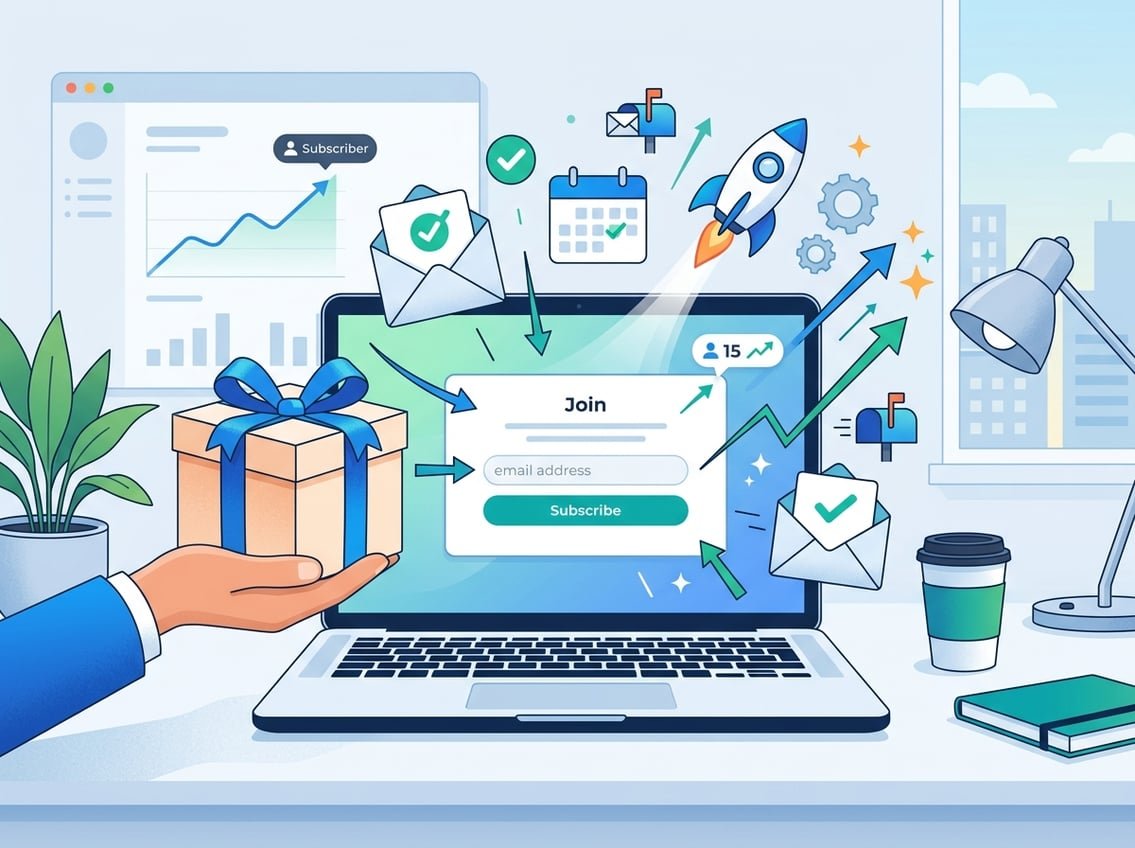
A freebie is not just a nice download. It needs a job, and that job is to convert the right visitor into an email subscriber and move that person one step deeper into your email marketing system.
Before you make anything, decide what result the free resource should create, who it should attract, and what your call to action will be. That clarity keeps you from making an opt-in freebie that looks useful but does not help your business.
What an Opt-In Freebie Is and Why It Works
An opt-in freebie is a resource someone receives after joining your list. It works because the value exchange is clear, a person gives you an email address, and you give them something useful right away.
Good lead magnets do not try to solve every problem. They solve one specific problem well enough to earn attention and trust.
Why Email Subscribers Matter More Than Social Followers
Email subscribers are easier to reach than social followers because you are not depending on an algorithm. That matters when you want to sell affiliate offers, send content updates, or launch a product later.
A smaller list of engaged email subscribers often performs better than a larger group of passive followers. According to Aweber’s guide to opt-in email lists, permission-based email lists help you build a more engaged audience you can communicate with directly.
How a Free Resource Fits Into a Long-Term Business System
Your free resource should connect to the rest of your business. If you run a blog, it can support SEO traffic. If you use affiliate marketing, it can point subscribers toward tools, tutorials, and problem-solving recommendations.
That is why iProfitLab focuses so much on systems instead of random tactics. A good freebie fits into your content, your welcome sequence, and your monetization plan.
The Difference Between More Subscribers and Better Subscribers
More subscribers are not always better if they are the wrong fit. A freebie that attracts bargain hunters, freebie collectors, or people outside your niche can hurt engagement and sales.
Better subscribers care about the topic, open your emails, and click on the next step. That is the kind of list that supports stable email list growth.
Choose a Topic That Attracts the Right People
The best freebie ideas start with a clear audience, a real pain point, and a future business goal. When you line those up, your lead magnet is more likely to attract people who are ready for your content and offers.
The topic should feel useful now and relevant later. If it only gets attention because it is broad or trendy, it may not help you build a strong list.
Define Your Target Audience, Ideal Client, or Ideal Customer
Start by naming who you want on your list. You may be targeting beginner bloggers, affiliate marketers, creators using AI tools, or online business owners who want recurring income systems.
When you define your target audience, you can shape the freebie around their level, goals, and biggest frustration. That is much better than guessing and hoping the right people show up.
Pick One Specific Problem to Solve Fast
A strong freebie solves one problem in a short time. That might be choosing a blog niche, setting up a first opt-in form, picking a hosting platform, or planning a simple content upgrade.
If the problem is too broad, the freebie feels vague. If the problem is specific, the freebie feels useful and easy to finish.
Match the Topic to Your Future Offer or Affiliate Funnel
Your freebie should connect to what comes next. If you plan to recommend Beehiiv, Kit, Canva, Hostinger, Koala AI, or Invideo AI, your freebie can naturally lead into that next step.
That alignment helps you monetize later without forcing the pitch. It also makes your list easier to segment for future affiliate offers and content.
Use Blog Posts, SEO Data, and Audience Questions to Validate Ideas
Look at your blog topics, search queries, and comments or emails from readers. A freebie that matches an existing question usually converts better than one based on guesswork.
For example, if a post brings traffic to a topic like blogging or email marketing, a content upgrade can work well. A simple PDF checklist or template attached to that post can turn readers into subscribers fast.
Pick the Best Format for a Quick Win
The best freebie format is usually the one that helps your reader finish faster. For beginners, that usually means something simple, clear, and easy to use right away.
You do not need a large ebook to grow your list. In many cases, the easiest formats convert better because they feel lighter and more practical.
Best Freebie Formats for Beginners
The simplest options are often the best:
- Checklists
- Workbooks
- Templates
- Printables
- Swipe files
- Mini guides
- Mini email courses
These types of freebies are easy to create and easy to consume. They also work well when you want to test freebie ideas before spending too much time on design.
When to Use Checklists, Workbooks, Templates, and Printables
Use a checklist when the goal is step-by-step completion. Use a workbook when you want the reader to answer questions or make a choice.
Templates and printables are strong when you want to save time or reduce confusion. A swipe file works well when your audience needs examples they can copy and adapt.
When an Email Course or Mini Email Course Works Better Than a PDF
An email course or mini email course works well when the topic needs guidance over several days. It is also a strong fit when your goal is to build trust before a pitch or affiliate recommendation.
This format keeps people opening emails after the opt-in. If you use Kit, ConvertKit, Beehiiv, or Flodesk, a short automated sequence can deliver the lessons cleanly without extra manual work.
How to Keep the Freebie Simple, Useful, and Actionable
Your freebie should help someone take one clear action. If it tries to do too much, people may save it and never use it.
A good test is this: can your reader get a result in 10 to 20 minutes? If yes, the format is probably simple enough.
Create the Asset and Set Up the Opt-In
Once the topic and format are clear, build the freebie and the opt-in flow together. That way, the delivery, landing page, and call to action all support the same result.
A strong setup makes it easy for someone to join your list and get the free resource without confusion.
How to Create a Freebie Without Overcomplicating It
Start with a title, a promise, and a short outline. Then build only the pages or steps needed to deliver that promise.
If you are learning how to create a freebie for the first time, keep the scope small. A useful one-page checklist often works better than a long, polished PDF that takes weeks to finish.
Design It in Canva With a Clear Outcome in Mind
Canva is a practical place to build most beginner freebies. Canva templates can help you move quickly while keeping the design clean and consistent.
Focus on readability first. Use simple headings, short sections, and a layout that makes the result obvious at a glance.
Build a Landing Page and Opt-In Form That Convert
Your landing page should answer three things fast: what the freebie is, who it is for, and what result it helps create. Then your opt-in form should ask for as little as possible, usually just a name and email.
If you use Stan, Kit, Beehiiv, or similar tools, keep the form simple and the page focused. Too many choices can lower sign-ups.
Write a Strong Call to Action and Delivery Experience
Your call to action should say what the reader gets and why it matters now. For example, “Get the checklist” is weaker than “Get the checklist and plan your first email freebie in 15 minutes.”
The delivery email should feel immediate and helpful. A clear subject line, a direct download link, and a short welcome note make the experience feel polished and trustworthy.
Deliver the Freebie and Nurture New Subscribers
The opt-in is only the start. What happens after someone joins your list matters just as much as the freebie itself.
A strong welcome process turns a download into a real relationship. It also sets up future email marketing, affiliate clicks, and sales.
Send the Freebie Immediately With a Welcome Email
Send the freebie right away. People expect instant access, and a fast delivery email builds trust.
A simple welcome email can also tell the reader what to do next, where to find the download, and what kind of emails they can expect from you.
Build a Welcome Sequence That Builds Trust
A welcome sequence gives new subscribers a reason to keep reading. Start with the download, then share a useful tip, a common mistake, and a next step that connects to your content or tools.
A short automated email sequence can introduce your best blog posts, your preferred resources, and your affiliate recommendations in a natural way. That is easier to trust than a sudden sales email.
Use Email Templates to Save Time and Stay Consistent
Email templates help you stay consistent when you are busy. They also make it easier to send a clean welcome message, a tip email, or a content email without starting from scratch every time.
If your business relies on recurring content, templates save time and keep your tone steady. That matters when you are building an audience around clarity and trust.
Set Up an Automated Email Sequence That Leads to the Next Step
Automation turns your freebie into a system. Your sequence can lead readers to a blog post, a tool recommendation, or the next free resource.
This is where the business side matters. A well-built opt-in freebie should not just collect names, it should move new subscribers toward the next logical action.
Promote, Measure, and Improve Over Time
A good freebie still needs visibility. Once it is live, use your content and channels to keep putting it in front of the right people.
Then watch the numbers and improve what does not perform well. Small changes can make a real difference in email list growth.
Add Content Upgrades to High-Traffic Blog Posts
Content upgrades work best when they match the blog post topic closely. If a post gets steady traffic, a related checklist, template, or worksheet can turn readers into subscribers at a higher rate.
This is one of the most practical ways to grow your email list from SEO traffic. A content upgrade feels like the next step, not a random offer.
Promote on Pinterest, Social Platforms, and Resource Pages
Pinterest can drive consistent traffic to blog freebies, especially when the freebie matches a search-style topic. Social platforms can help too, as long as the promotion is repeated and clear.
You can also add the freebie to a resource page, a homepage banner, or a pinned post. That keeps it visible without needing constant new content.
Track Opt-In Rate, Engagement, and Subscriber Quality
Do not only track sign-ups. Watch how many visitors join, how many open your emails, and how many click the next link.
Subscriber quality matters just as much as volume. If a freebie brings in lots of people who never open emails, it may be attracting the wrong audience.
Refresh or Replace Underperforming Freebies
If a freebie stops converting, test a new title, a different format, or a narrower topic. Sometimes a small change is enough to improve results.
If the topic is weak, replace it. A freebie that no longer fits your content or audience can slow down your list growth instead of helping it.
Frequently Asked Questions
What types of lead magnets convert best for building an email list quickly?
Lead magnets that give a fast win usually convert well. Checklists, templates, swipe files, mini email courses, and short workbooks are often easier for people to say yes to than long ebooks.
The best choice depends on your audience and offer. If your readers want speed, pick a format that saves time and shows a clear result.
How do I choose a freebie topic that matches what my audience actually wants?
Start with the questions your readers already ask. Blog comments, email replies, search data, and content performance can show you what people care about most.
Then narrow the topic to one problem that can be solved quickly. If you also want the freebie to support affiliate income, choose a topic that connects to tools or systems you already recommend.
What’s the best format for a freebie, checklist, template, quiz, or mini-course, for higher sign-up rates?
The best format is the one that feels easiest to use. Checklists and templates often convert well because they are simple and practical.
A mini-course works better when the topic needs a little teaching and trust-building. If speed matters most, keep the format short and direct.
How do I write opt-in copy and a headline that makes people want to subscribe?
Focus on the result, not the file type. A strong headline says what the freebie helps the reader do and why that matters.
Keep the copy specific, clear, and simple. If you promise a quick win, make sure the content delivers it.
Where should I promote my freebie to get consistent subscribers without paying for ads?
Start with your blog, especially your highest-traffic posts. Then add the freebie to Pinterest, social posts, resource pages, and email links inside your existing content.
If your site gets SEO traffic, a content upgrade can be one of the most reliable ways to build your list over time. It works well because it meets the reader exactly where they already are.
How do I use a welcome sequence to turn new subscribers into engaged readers and customers?
Use the welcome sequence to introduce yourself, deliver a useful win, and point to the next step. A simple sequence can share the freebie, a related tip, a useful blog post, and a tool or offer that fits the reader’s goal.
This works well in kit, ConvertKit, Beehiiv, Flodesk, and similar tools because the emails can run automatically. If you want a practical starting point, iProfitLab’s Free AI Income Starter Kit can help you map the system, and the Recommended Tools page is a useful place to compare trusted platforms.